

New cardiology guidance for hard-to-treat high blood pressure recommends Transcendental Meditation
For patients whose high blood pressure remains stubbornly elevated despite taking multiple medications, options can feel limited. Now, the nation’s leading cardiology organization has added a new tool to its treatment playbook: Transcendental Meditation.
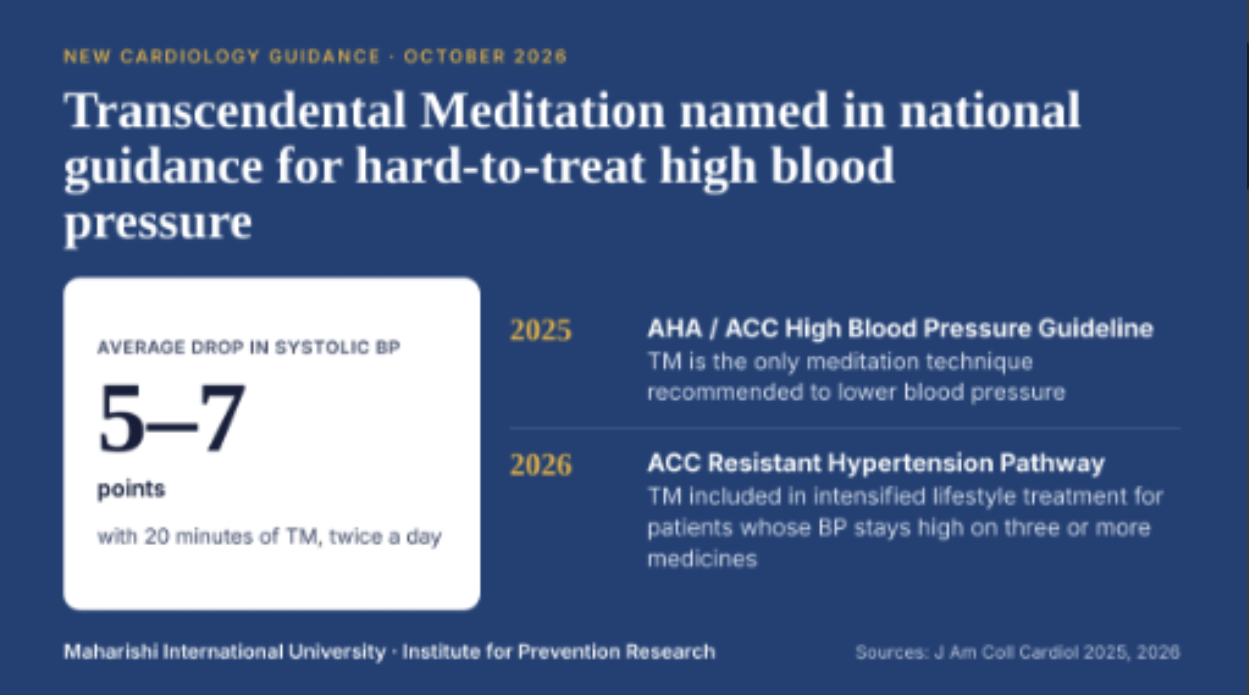
The American College of Cardiology’s new 2026 Expert Consensus Decision Pathway for resistant hypertension includes Transcendental Meditation (TM) as part of an intensified lifestyle treatment strategy, alongside weight loss, a heart-healthy diet, sodium reduction, exercise, and other non-drug approaches.
Resistant hypertension, which affects an estimated 8.5% to 20% of people with high blood pressure, is defined as blood pressure that remains above 130/80 despite treatment with three medications or requires four or more drugs to stay under control. The condition significantly increases the risk of heart attack, stroke, kidney disease, and cardiovascular death.
The ACC pathway cites research showing that TM practice can lower systolic blood pressure by about 5 to 7 points on average, a benefit comparable to several established lifestyle interventions. Transcendental Meditation was the only meditation practice included in the guideline’s table of recommended lifestyle measures.
Those few points can matter. A major analysis involving nearly 350,000 patients found that every 5-point reduction in systolic blood pressure is associated with about a 10% reduction in the risk of major cardiovascular events.
Building on a earlier work
The new recommendation builds on a milestone reached in 2025, when the American Heart Association, American College of Cardiology, and eleven partner organizations included TM in the national high blood pressure guideline. That document described TM as the only meditation technique supported by consistent moderate- to high-quality evidence for lowering blood pressure.
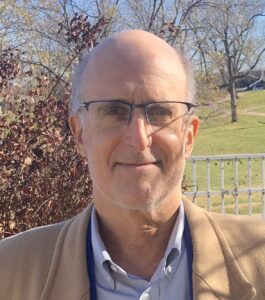
Over the past three decades, Robert Schneider, Dr. Sanford Nidich, Dr. John Salerno, Dr. Carolyn Gaylord-King, Maxwell Rainforth, and the late Charles Alexander have helped lead studies examining the effects of TM on blood pressure and cardiovascular health. Their work has been supported by approximately $25 million in primarily NIH-funded research grants.
The evidence includes randomized clinical trials showing reductions in blood pressure, studies reporting fewer heart attacks, strokes, and deaths among long-term TM practitioners, and investigations suggesting that the practice may reduce stress-related activation of the nervous system while improving blood vessel function.
A shift in the mainstream view
“The new resistant hypertension pathway recognizes the importance of addressing stress alongside medication and other lifestyle measures,” said Keith Norris, MD, PhD, of UCLA. “Including Transcendental Meditation gives clinicians an evidence-based, nonpharmacologic option to consider for patients whose blood pressure remains difficult to control.”
“The recommendation represents a significant shift in mainstream medicine’s view of mind-body approaches, said Robert Schneider, a cardiologist, Distinguished Professor of Integrative Medicine and Health, and Director of the Institute for Prevention Research at MIU. “Resistant hypertension is where patients and doctors feel they have run out of options. Seeing Transcendental Meditation in the American College of Cardiology’s pathway for these patients tells clinicians that a safe and effective mind-body practice belongs alongside medication in their repertoire.”
“The recommendation represents a significant shift in mainstream medicine’s view of mind-body approaches.”
— Robert Schneider
The new pathway doesn’t suggest replacing medication. Instead, it recognizes that for patients with the most difficult-to-control blood pressure, addressing chronic stress may be one more avenue for improving outcomes. And with two major cardiology recommendations now citing TM within the span of a year, what was once considered an alternative approach is increasingly finding a place in mainstream cardiovascular care.