
MIU students win awards at International Intercollegiate Mediation Tournament; Professor Vicki Alexander Herriott honored
Over the break between the January and February blocks, Professor Vicki Alexander Herriott took a team of MIU’s Fairfield undergraduates to the University of Central Florida in Orlando to compete in the 2025-26 International Intercollegiate Mediation Tournament, held February 7–9 and hosted by the International Association for Dispute Resolution (INADR).
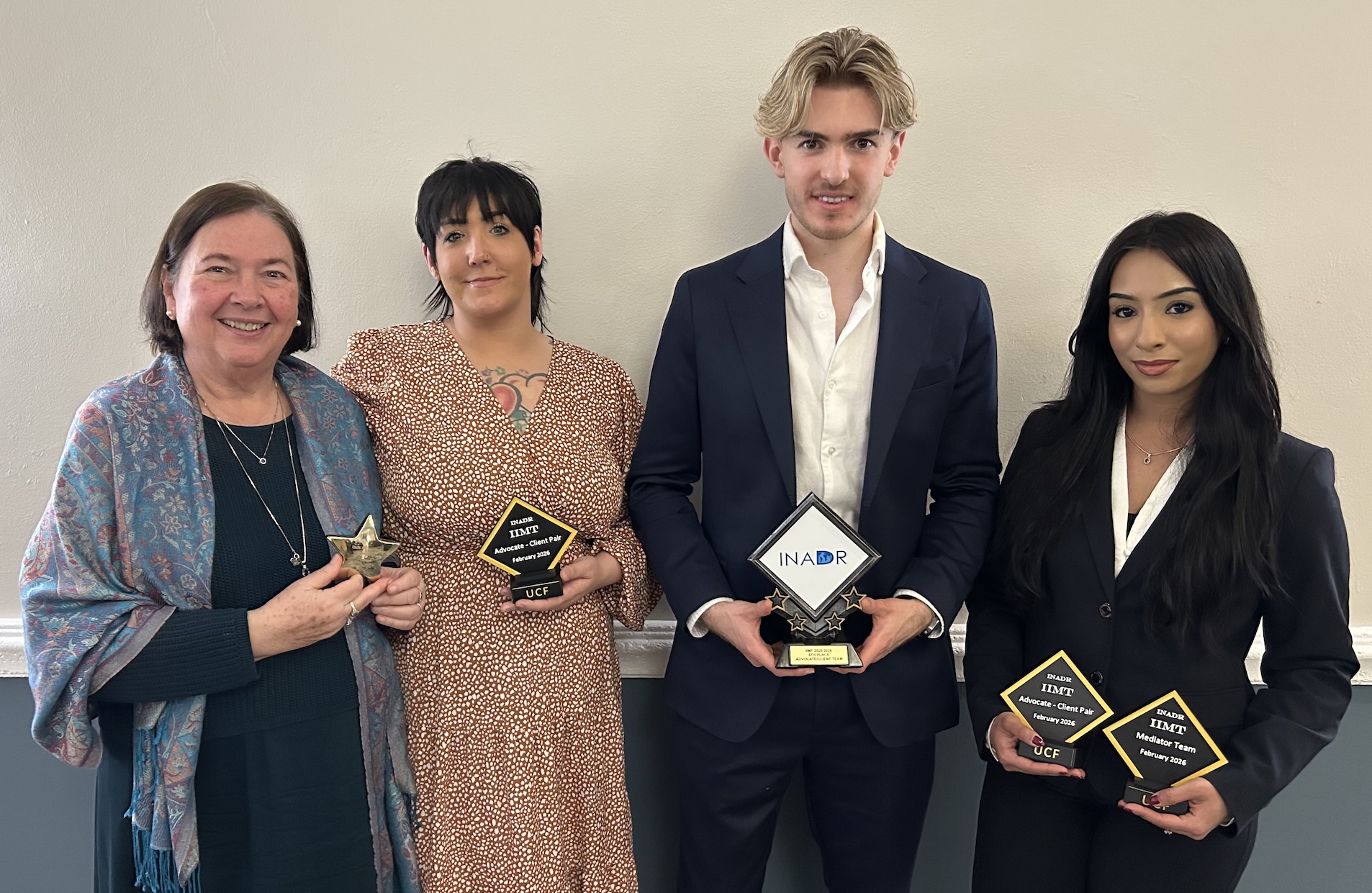
Pictured above: Professor Vicki Alexander Herriott, Kozbie Lamb, Polo Altynksky-Ross, and Caresse Rodriguez.
The tournament is open to law, graduate, and undergraduate students worldwide.
MIU’s team consisted of undergraduate students Polo Altynski-Ross, Kozbie Lamb, and Caresse Rodriguez. They competed against 18 other three-person teams from the USA and Singapore over four rounds spanning two days. MIU’s team was the smallest school in the tournament.
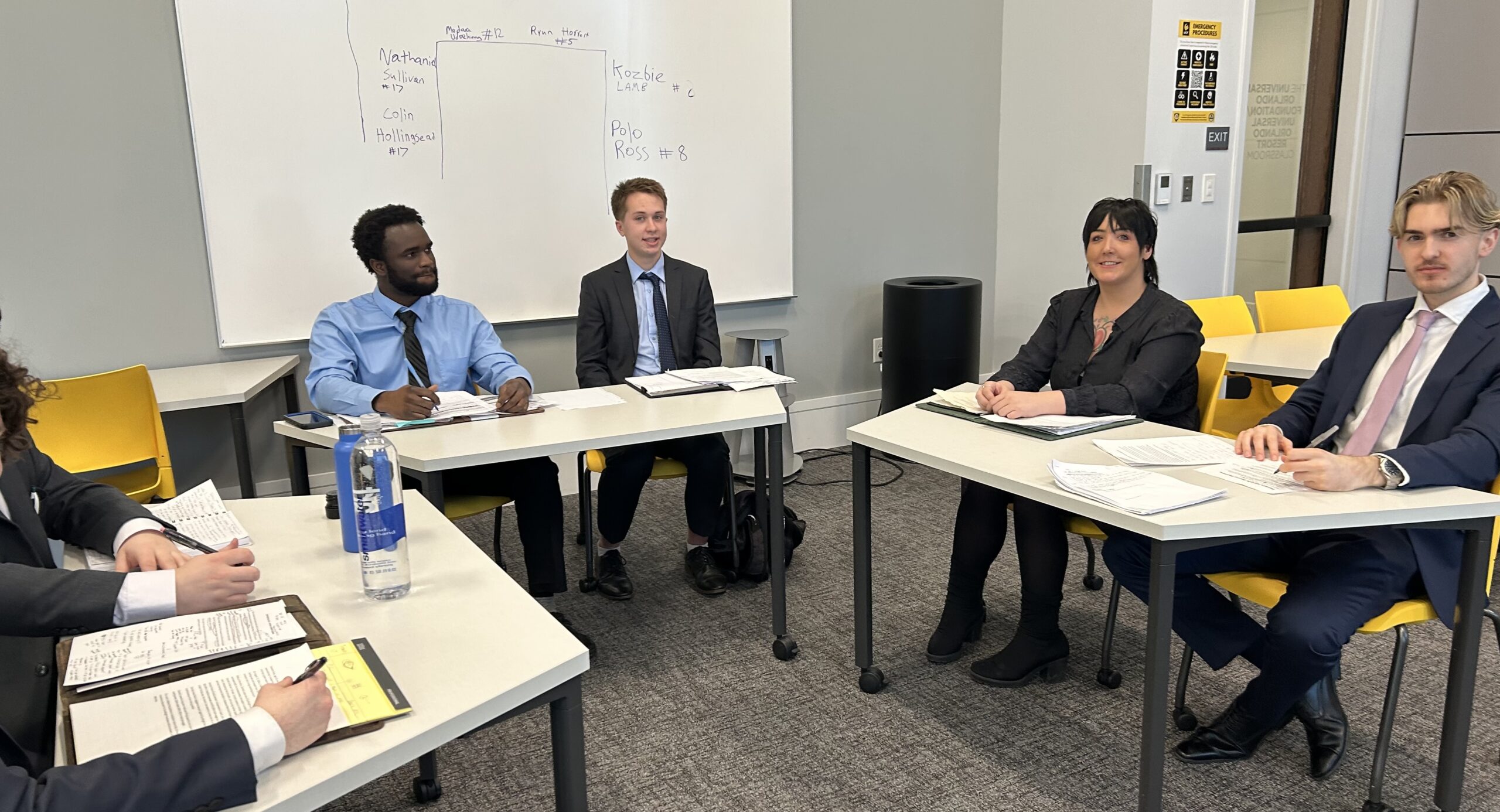
Students played the roles of mediators and disputants in cases drawn from real life. Their performances were evaluated by experienced mediators who observed the 90-minute mediation sessions.
MIU came away with two awards:
- 5th-place team award for Mediator — awarded based on the combined performance of a school’s student mediators as they serve in the neutral facilitator role, guiding both sides through the dispute‑resolution process with skills such as listening, neutrality, collaboration with a co‑mediator, and helping the parties move toward mutually acceptable solutions.
- 7th-place team award for Advocate-Client — awarded based on how effectively a school’s advocate‑client pairs work together during mediation, including how clearly they present their side of the dispute, communicate their interests, collaborate as a pair, and engage constructively with the mediator to pursue resolution. INADR scores advocates and clients jointly because their performance is interdependent.
Professor Alexander Herriott receives INADR’s Coach of the Year award
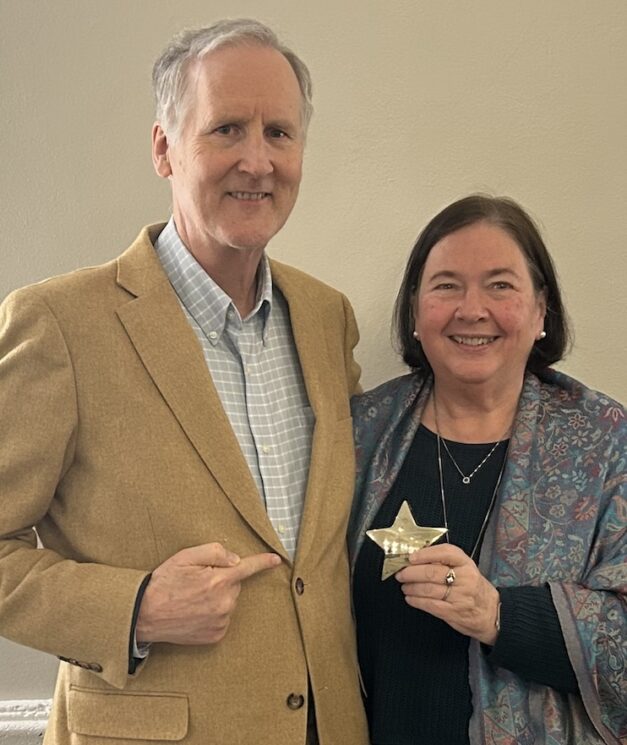
In the awards ceremony, Professor Alexander Herriott was given the INADR’s Coach of the Year award in recognition of her service to INADR through the Midwest regional mediation tournaments that she has hosted at MIU and her teaching of the course MGT 484 Mediation and Negotiation over the past 18 years.
“I’m very proud of our team,” Professor Herriott said. “We were one of only four schools that made the semifinals in both categories. This meant that all three team members were very strong as mediators and as advocate-clients. They were all very well prepared and very professional. They were calm, friendly, willing to think outside the box to solve the problem — ideal examples of Consciousness-Based Education.”
“An incredibly meaningful experience”
“Participating in the mediation tournament was an incredibly meaningful experience,” said Kozbie Lamb. “It deepened my understanding of conscious communication and reminded me how powerful empathy and presence can be in resolving conflict. I’m grateful to represent MIU in a space that reflects the principles we study every day.”
“We’d recommend this experience to all future MIU students. And anyone else, for that matter — conflict resolution strategies are important for everyone.”
— Polo Altynski-Ross
“It was a pleasure to represent MIU and compete against the other schools at the tournament,” Polo Altynski-Ross said. “Since roughly 90–95% of civil cases are resolved before trial — often through mediation! — it’s a powerful way to settle disputes amicably. It can be nerve-racking to be judged by veteran professionals in the field, but they were very encouraging, and we’d recommend this experience to all future MIU students. And anyone else, for that matter — conflict resolution strategies are important for everyone.”
How a mediation tournament works
At the INADR mediation tournament, student teams participate in simulated dispute‑resolution sessions designed to mirror real‑world mediation practice. Competitors rotate through different roles — mediator, advocate, and client — allowing each participant to experience mediation from multiple perspectives. The event typically includes three preliminary rounds, followed by semi‑final and championship rounds for the highest‑scoring teams.
Mediation rounds are structured to emphasize professionalism, collaboration, and problem‑solving. Students acting as mediators often work with co-mediators from different schools, encouraging cooperation across institutional lines. Judges evaluate them on skills such as listening, clarity, neutrality, teamwork, and their ability to guide parties toward mutually acceptable solutions without being adversarial or inventing facts.
The focus throughout is on educational growth, ethical practice, and the cultivation of real mediation skills rather than winning at any cost.
When serving as advocates or clients, students present their side of a dispute, communicate interests (not just positions), and work with mediators to explore resolutions. Judges score participants individually and in teams, awarding distinctions for mediator performance, advocate/client pairs, and overall team achievement. The focus throughout is on educational growth, ethical practice, and the cultivation of real mediation skills rather than winning at any cost.