

MIU researchers publish landmark studies on Maharishi Amrit Kalash and cardiovascular health
A team of medical scientists from MIU’s Institute for Natual Medicine and Prevention has published two major new peer-reviewed scientific papers on Maharishi Amrit Kalash (MAK), an Ayurvedic herbal formulation traditionally used to support health, resilience, and healthy aging.
The publications represent a milestone in the scientific study of Maharishi Ayurveda and cardiovascular disease, combining modern clinical research with traditional Ayurvedic knowledge.
The research team included MIU faculty Dr. John Salerno, Dr. Robert Schneider, Dr. Sanford Nidich, and Dr. Maxwell Rainforth, along with collaborators from Howard University Hospital Heart Center in Washington, DC, and Maharishi Ayurveda research groups in India and Europe. Dr. Carolyn Gaylord King and Dr. Charles Alexander of MIU contributed to the overall project’s direction.
Clinical trial highlights potential cardiovascular benefits of Ayurvedic formula
The first article, published in the international journal Medicina, reported results from a randomized, double-blind, placebo-controlled clinical trial evaluating Maharishi Amrit Kalash in older adults with cardiovascular disease or high cardiovascular risk.
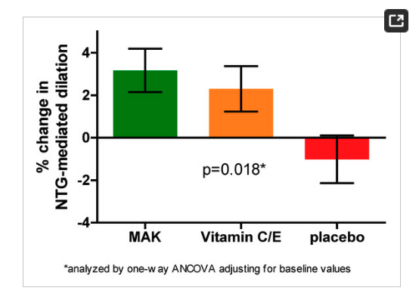
The study found that participants taking Maharishi Amrit Kalash demonstrated significant improvement in vascular smooth muscle function, an important marker related to vascular aging and cardiovascular health. Researchers noted that the findings suggest possible beneficial effects on biological pathways involved in vascular aging.
The clinical trial was conducted in collaboration with Howard University and reflected years of work integrating modern cardiovascular science with traditional systems of natural medicine.
“These publications help advance the rigorous scientific evaluation of traditional Ayurvedic approaches within modern medicine.”
— Dr. Robert Schneider
“Ayurveda has long emphasized prevention, balance, and healthy aging,” said Robert Schneider, MD, FACC, and senior author of the study. “These publications help advance the rigorous scientific evaluation of traditional Ayurvedic approaches within modern medicine.” Schneider is Distinguished Professor of Integrative Medicine and Health at MIU and Director of the Institute for Natural Medicine and Prevention.
The study was funded by a center grant from the National Institutes of Health-National Center for Complementary and Integrative Health to MIU’s Institute for Natural Medicine and Prevention.
Comprehensive study highlights antioxidant and cardioprotective effects
The second article, published in Frontiers in Pharmacology, was a scoping review of experimental and clinical studies on Maharishi Amrit Kalash and cardiovascular disease (a scoping review maps and summarizes the existing research on a topic to show what evidence is available and where further study is needed).
The review summarized evidence suggesting antioxidant, anti-atherogenic, and cardioprotective effects of the formulation, including studies on oxidative stress, LDL oxidation, vascular function, angina symptoms, and atherosclerosis.
The authors noted that Maharishi Amrit Kalash is based on the classical Ayurvedic concept of rasayana — therapies traditionally used to promote longevity, vitality, and resistance to disease. The formulation was developed from the traditional preparation known as Brahma Rasayana.
Together, the two reports reflect MIU’s longstanding leadership in integrative medicine, consciousness-based health research, and the scientific study of Maharishi Ayurveda.

The publications also highlight the growing international collaboration among researchers in the United States, India, and Europe working to investigate traditional systems of medicine using contemporary scientific methods.
Click here to read the first study, John W. Salerno, Shichen Xu, Maxwell Rainforth, Sanford I. Nidich, and Robert H. Schneider, “A Randomized, Double-Blind, Placebo-Controlled Trial of an Ayurvedic Herbal Formulation and Vitamin C/E on Vascular Function in Patients with Cardiovascular Disease,” Medicina 62, no. 5 (2026): 972.
Click here to read the second study, “Radha Singh, Rini Vohra, Richa Shrivastava, and Robert H. Schneider, “Cardioprotective Potential of Maharishi Amrit Kalash: A Scoping Review of Evidence from Experimental and Clinical Studies,” Frontiers in Pharmacology 17 (May 13, 2026).