
MIU hosts collegiate mediation tournament, continuing an 18-year tradition
In five MIU classrooms last weekend, students from six colleges and universities faced a challenge: Could they help two parties in a dispute find a solution acceptable to both?
The disputes were fictionalized cases drawn from real life. But the skills being tested — listening carefully, understanding opposing viewpoints, managing emotions, and finding common ground — were very real.
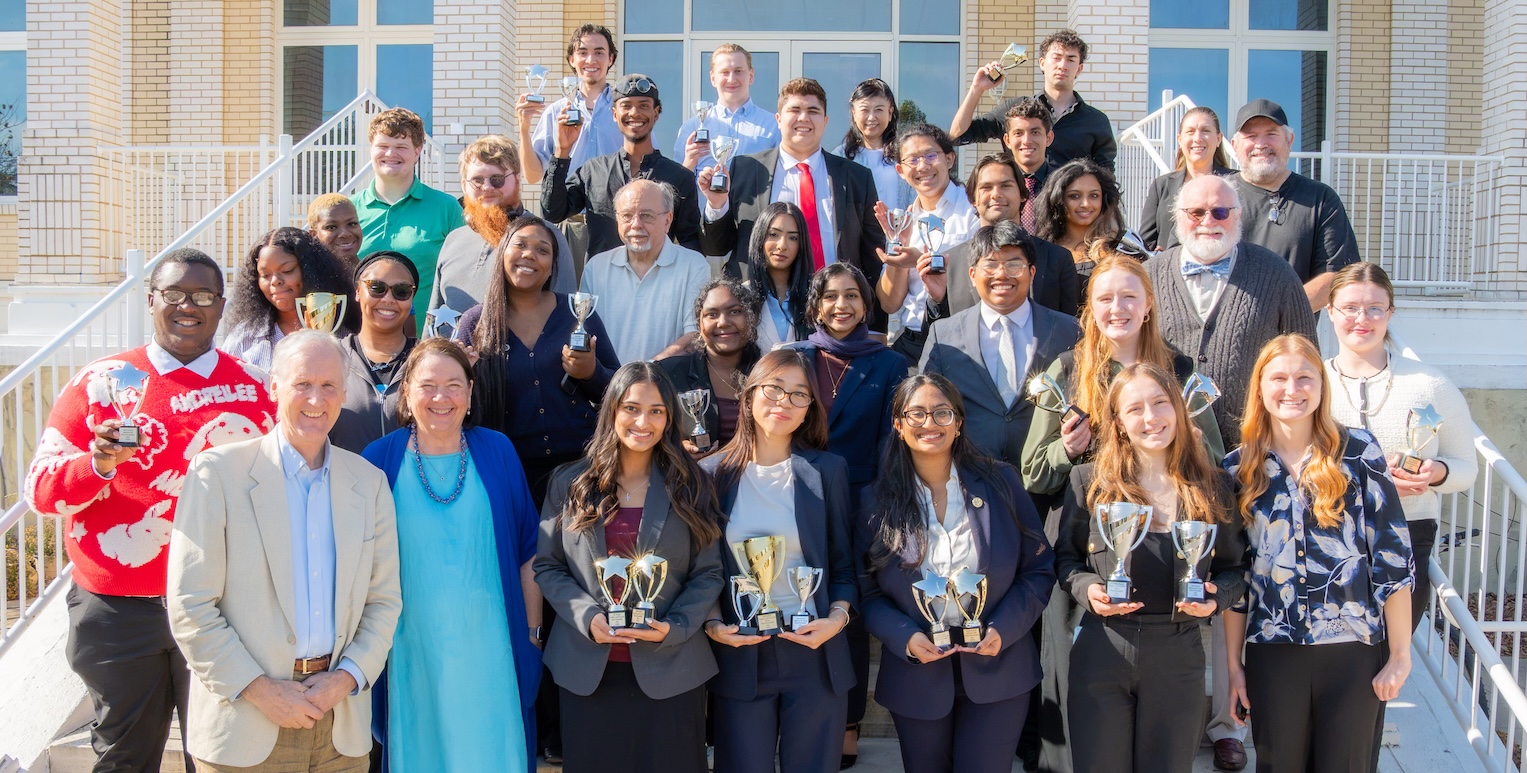
The occasion was MIU’s 18th Annual Peacemakers Invitational Mock-Mediation Tournament, held October 23–24. Thirty-three students representing 10 teams from six states gathered in Fairfield for two days of competition and collaboration.
Participating institutions included MIU, the University of Texas at Dallas, Principia College in Illinois, Lincoln University in Missouri, Grace College in Indiana, and the University of Central Florida.
Learning to resolve conflicts
Unlike a courtroom trial, where opposing attorneys argue their cases before a judge or jury, mediation brings disputing parties together with a neutral facilitator who helps them work toward a mutually acceptable resolution.

The mediator doesn’t decide who wins. Instead, the participants themselves seek an agreement, often discovering possibilities that might not emerge through adversarial proceedings.
Mediation has become an important part of the American legal system, offering a potentially faster, less expensive, and less confrontational alternative to litigation. Courts frequently encourage or require parties to attempt mediation, although the decision to settle remains with the disputants.
The skills are equally valuable outside the courtroom — in business, education, families, workplaces, and communities.
At the MIU tournament
At MIU’s tournament, students worked through three case studies in 90-minute sessions on Friday afternoon, Friday evening, and Saturday morning.
In each round, two teams supplied advocate-client pairs representing opposing sides of a dispute. Two students from other teams served as co-mediators, guiding the discussion and helping participants explore possible solutions.
Experienced mediators from the Fairfield community served as judges, evaluating participants on their communication, professionalism, creativity, and effectiveness in moving toward resolution.
The mediators were also evaluated on their neutrality, ability to keep discussions productive, and respect for confidential information shared during private conversations with the disputing parties.
MIU students earn awards
A team from the University of Texas at Dallas earned first place in the Advocate-Client competition, while Lincoln University of Missouri took first place in the Mediator category.
Other top awards went to teams from Grace College, Principia College, the University of Central Florida, and a second team from UT Dallas.
MIU’s team earned fifth place in the Advocate-Client Team category. MIU students Caresse Rodriguez and Elijah Romero placed fifth and sixth, respectively, in the individual Advocate-Client competition.
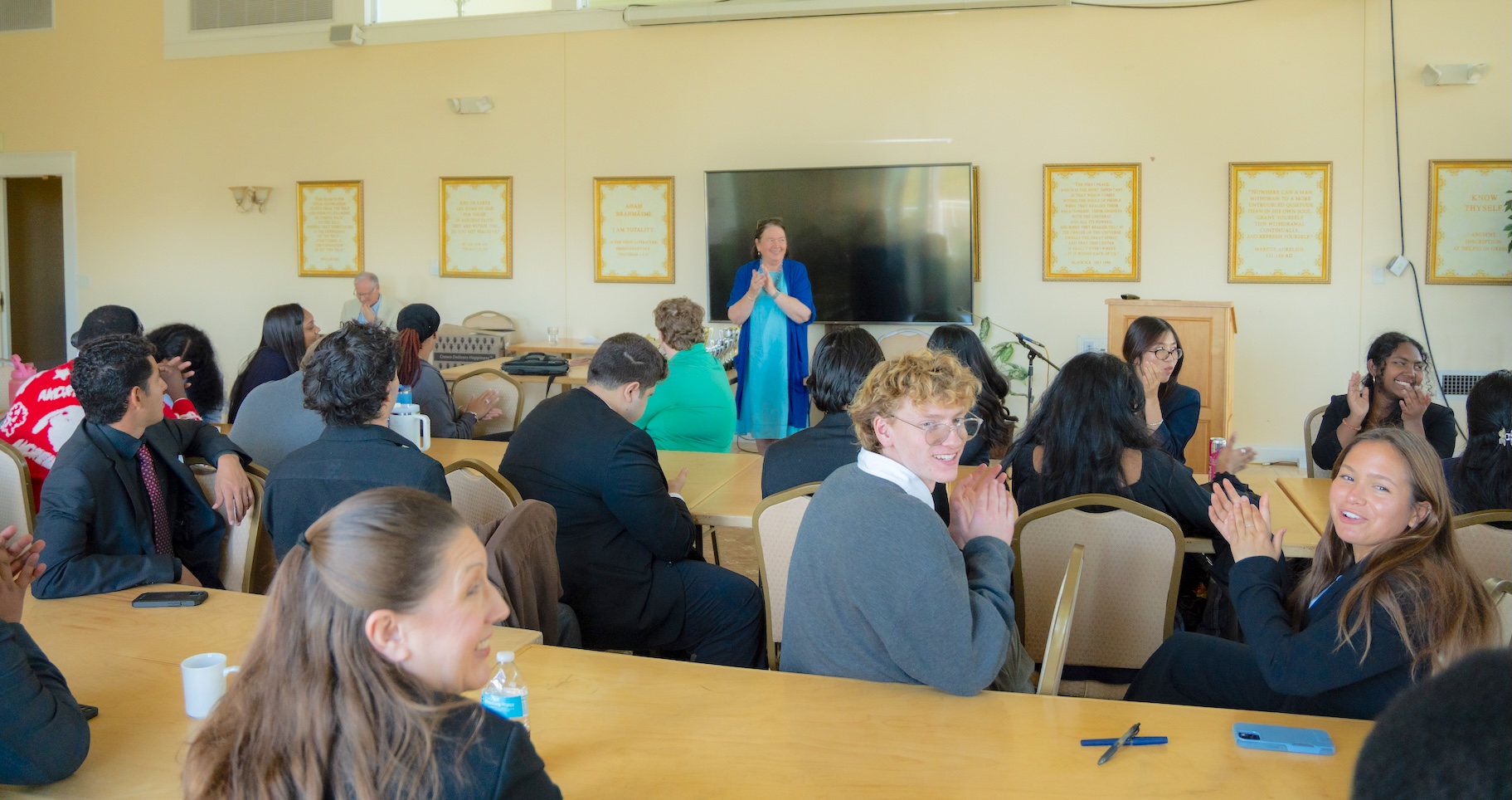
The tournament concluded with a celebratory lunch and awards ceremony at Annapurna Dining Hall.
MIU’s long tradition of mediation leadership
MIU has played a prominent role in collegiate mediation competitions for nearly two decades, largely through the leadership of Professor Vicki Alexander Herriott, who has taught the university’s Mediation and Negotiation course for 18 years.
Alexander Herriott has organized and hosted annual regional mediation tournaments at MIU, helping introduce generations of students to practical techniques for resolving disputes peacefully.
She is also president-elect of the International Academy of Dispute Resolution (INADR), which sponsors the tournaments.
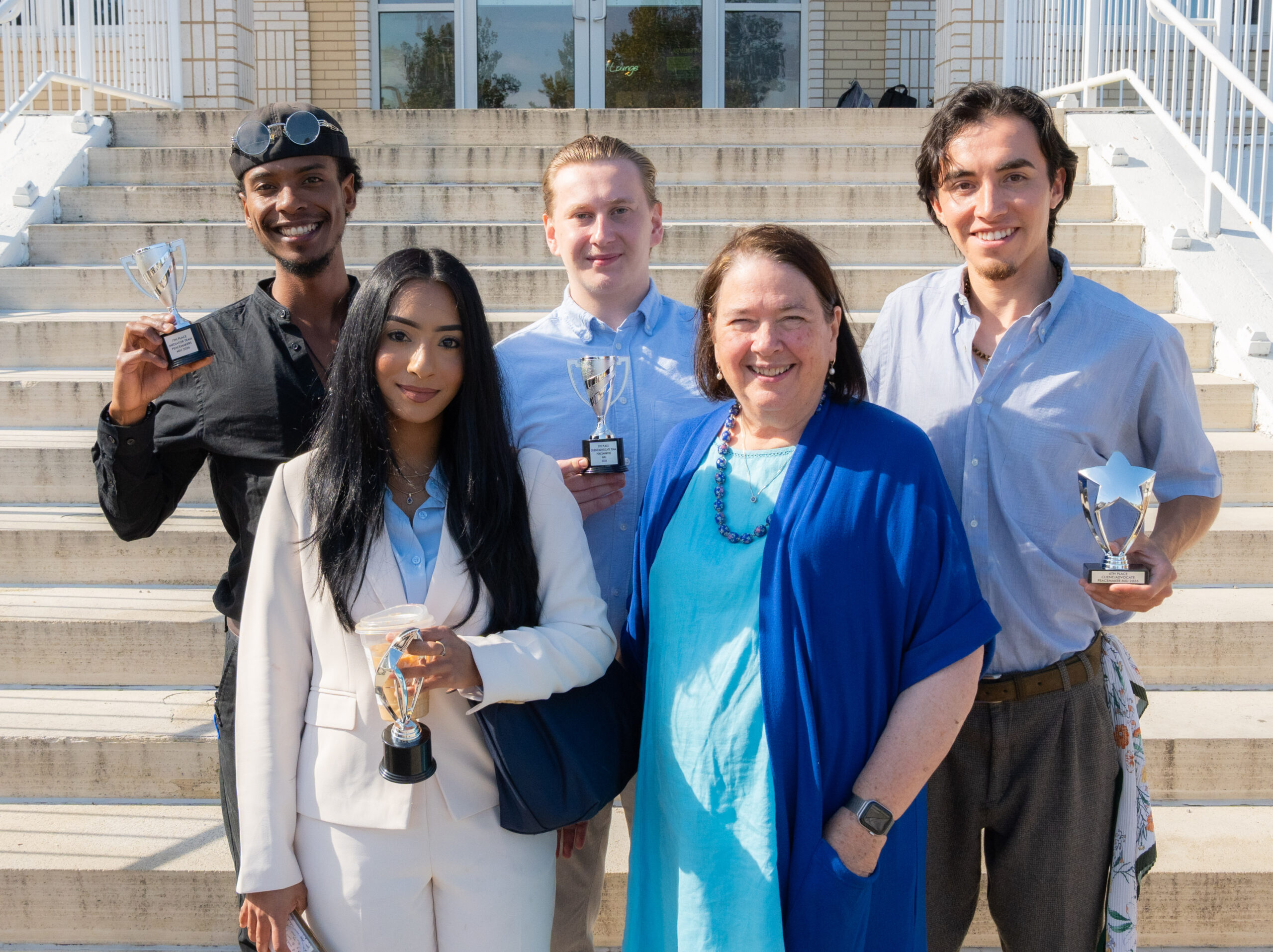
Earlier this year, at the International Intercollegiate Mediation Tournament hosted by the University of Central Florida, Alexander Herriott received INADR’s Coach of the Year Award, recognizing her longstanding contributions to mediation education and the regional tournaments she has organized at MIU.
MIU students also earned fifth place in the Mediator Team competition and seventh place in the Advocate-Client Team competition at that international event.
Reflecting on their performance, Alexander Herriott said, “They were all very well prepared and very professional. They were calm, friendly, willing to think outside the box to solve the problem — ideal examples of Consciousness-Based Education.”
A growing international movement
Collegiate mediation tournaments began in December 2000, when 14 schools participated in the first competition at Drake University in Des Moines, Iowa.
The idea was to create an educational counterpart to mock-trial competitions — one emphasizing peaceful dispute resolution rather than adversarial argument.
Since then, INADR-sponsored tournaments have been held in more than 16 countries, attracting participants and representatives from over 50 countries.
The Peacemakers Invitational is an official INADR regional tournament, helping students prepare for national competition. This year’s national tournament is scheduled for November near Atlanta, Georgia.
For MIU students, however, the value of mediation extends well beyond competition.
“It was my first real opportunity to operate in a simulated professional environment where I could apply theory in real time, think critically under pressure, and better understand what it truly means to advocate, listen, and problem-solve with intention.”
— Caresse Rodriguez
Following the international tournament earlier this year, Rodriguez, an aspiring attorney, described the experience as one of the most meaningful of her education.
“It was my first real opportunity to operate in a simulated professional environment where I could apply theory in real time, think critically under pressure, and better understand what it truly means to advocate, listen, and problem-solve with intention,” she said.
Her experience captures the larger purpose of these tournaments: preparing students not simply to win arguments, but to understand differences, communicate constructively, and help people find solutions together.
# # #
Photographs by Dileep Krishnamoorthy