

From heart health to global resilience: MIU research at United Nations Forum
At an international United Nations academic forum in Lisbon, Portugal, the discussion went far beyond heart disease. The larger question was how individuals, communities, and nations can become more resilient in the face of growing environmental, psychological, and social stress.
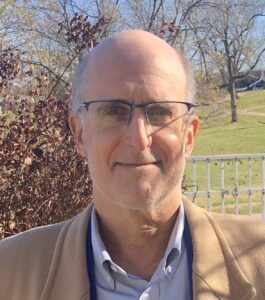
Robert Schneider, MD, FACC, Distinguished Professor of Integrative Medicine and Health and Director of the Institute for Natural Medicine and Prevention at MIU, addressed that challenge during the 39th Annual Meeting of the Academic Council on the United Nations System (ACUNS), held July 1–3 at NOVA University Lisbon.
Participating remotely, he spoke to scholars, policy experts, and representatives of international organizations gathered to discuss sustainable development, public health, climate change, conflict prevention, and other global challenges.
Dr. Schneider’s presentation, Environmental Stress, Cardiovascular Risk, and Human Resilience: Evidence-Based Pathways for Policy and Practice, co-authored with Charlotta Bech, MD, adjunct MIU faculty in physiology, examined how environmental and psychosocial stress contribute to cardiovascular disease, the world’s leading cause of death. Click here to see the presentation.
How human beings can become more resilient
He explained that air pollution, climate change, crowded urban settings, economic hardship, and psychological stress often occur together, placing a cumulative burden on the cardiovascular system and increasing the risk of hypertension, heart attack, stroke, and premature death.
“This is more than cardiovascular research. It is about how human beings and societies can become more resilient.”
— Dr. Robert Schneider
“This is more than cardiovascular research,” Dr. Schneider said. “It is about how human beings and societies can become more resilient in the face of environmental, psychological, and social stress, and how science-based approaches to reducing stress may contribute not only to better health, but also to a more peaceful world.”
Among those approaches, Dr. Schneider highlighted Transcendental Meditation. Research has linked the technique to lower blood pressure and, in NIH-funded clinical trials, a significantly lower risk of major cardiovascular events, including heart attack, stroke, and death.
These findings support the growing view that stress reduction should be considered an integral part of cardiovascular prevention. Dr. Schneider and colleagues recently advanced that position in a commentary published in Nature Reviews Cardiology.
Toward social resilience and peace
The presentation also explored the potential of meditation-based approaches to strengthen social resilience and support peace-building efforts. Dr. Schneider encouraged United Nations policymakers and ACUNS participants to integrate health, environmental policy, sustainable urban development, and evidence-based stress reduction within a unified prevention framework.
The ACUNS meeting provided an international platform for MIU research linking personal health, environmental sustainability, collective well-being, and peace. Dr. Schneider’s presentation highlighted how MIU’s consciousness-based approach may contribute to addressing some of the world’s most pressing challenges.
Banner photo from The Soul of the Matter.