
It was a week of firsts, milestones, and momentum for MIU athletics, as the men’s soccer, men’s basketball, and women’s basketball programs all delivered performances that reflected the continued growth of Pioneer sports.
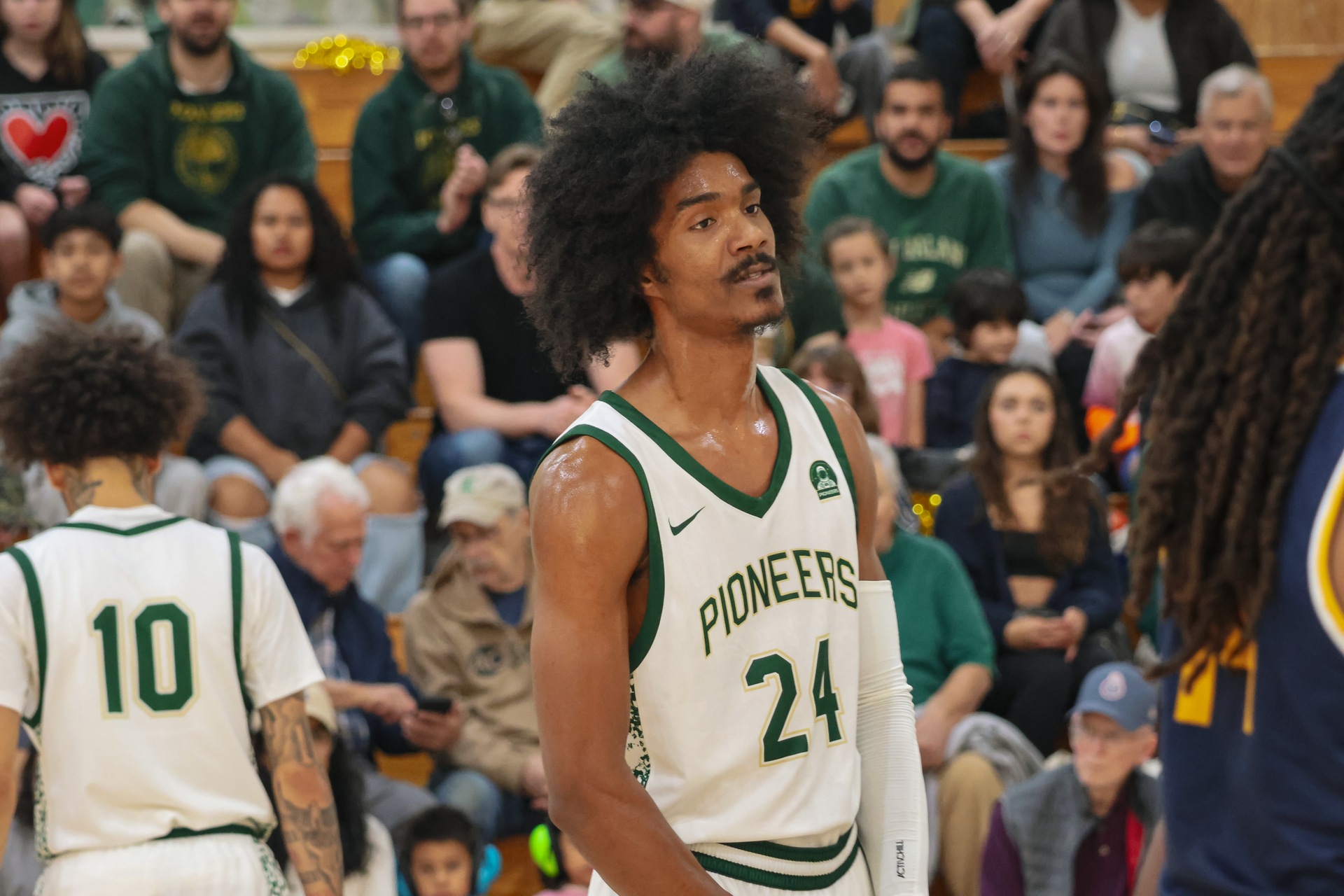
In the photo above, facing forward: MIU women’s basketball players Promise Dunbar, Retha Moshaoa, Amarie Phillips, and Niki Collins. Facing away: Emily Sanmartin, Alexandria Wolff, and Malayah Ward.
From a historic national award in men’s soccer to impressive opening performances on the basketball court, MIU athletes gave fans plenty to celebrate.
The biggest headline came from men’s soccer, where junior forward Estevao Goncalves became the first MIU athlete ever to earn U.S. Collegiate Athletic Association (USCAA) Player of the Week honors. The Week 7 Fall USCAA recognition followed his extraordinary four-goal performance in the Pioneers’ 7-4 road victory over Mount Marty University on October 14.
The historic award represents a significant milestone for a developing soccer program that is continuing to gain national attention.
“Estevao’s contributions throughout the season led up to this award,” said Associate Head Coach Caio Pereira. “His performances have been impressive, and he totally deserves this recognition. It also highlights the development of our program and puts us in the national spotlight. We are so happy for him and hope he can continue to help the program grow.”
For Goncalves, the honor was the culmination of months of dedication and preparation.
“That means everything to me,” he said. “I have been working all season for a moment like this, and finally, I got it.”
“That means everything to me. I have been working all season for a moment like this, and finally, I got it.”
— Estevao Goncalves, on becoming the first MIU athlete to earn U.S. Collegiate Athletic Association (USCAA) Player of the Week honors
He credited the accomplishment to the effort of the entire team.
“I think the key was the hard work that my teammates and I put in during training sessions throughout the week,” Goncalves said. “This success is because of my teammates and all the staff.”
His four-goal explosion came during one of the team’s most impressive performances of the season. The Pioneers defeated NAIA opponent Mount Marty 7-4 behind four goals from Goncalves and four assists from midfielder Martim Soares. MIU built a 4-1 halftime lead and continued to attack throughout the second half despite playing a portion of the match with a player down.
Francesco Puch, Nixon Valencia, and Lucas Nunez also scored for MIU, while Soares played a key role in the attack by contributing directly to more than half of the team’s goals.
“Today was a great display of Pioneer spirit from the boys,” Pereira said after the victory. “They showed great enthusiasm and intensity throughout the whole match and came home with a very deserved win.”
Soares praised the team’s effort and resilience.
“We maintained our intensity for the full 90 minutes and knew how to manage different phases of the game,” he said. “In my opinion, it’s a well-deserved victory, and now we want to keep working hard to win our next games.”
The win ended a lengthy drought for the Pioneers and served as another indication that the program is moving forward as it pursues continued growth and future NAIA aspirations.

Women’s basketball opens inaugural season
While men’s soccer was making history on the pitch, MIU’s women’s basketball team was making a promising debut in its inaugural season. Competing in its first tournament at Culver-Stockton College, the Pioneers finished 2-1 while gaining valuable experience against Culver-Stockton, Missouri Valley, and Clarke.
Several players turned in standout performances throughout the tournament.
Daijahnay Winston led the way offensively in the opening game with 26 points and four steals, then followed with 21 points and five rebounds against Missouri Valley. Emily Sanmartin contributed 14 points against Culver-Stockton, added 16 points, seven rebounds, and four assists against Missouri Valley, and then exploded for 22 points and seven assists against Clarke.
Camryn Walker made an immediate impact, recording double-doubles in two games. She posted 10 points and 12 rebounds against Missouri Valley, then followed with 14 points and 10 rebounds against Clarke. Alexandria Wolff added consistent production throughout the tournament, contributing scoring, rebounding, and defensive pressure.
The Pioneers also received important contributions from Amarie Phillips, Malayah Ward, Promise Dunbar, and Retha Moshaoa, whose defensive effort and teamwork helped establish the foundation of the team’s identity.
For Head Coach Niki Collins, the tournament offered an important early-season evaluation.
“I am happy to now know what we have to build on for the season,” Collins said. “Having limited players, we don’t get a chance to scrimmage as much, but now we know what we need to work on and what we need to build on to be successful.”
The players shared that optimism.
“We may have a short roster, but we’re going to make it work. We have heart, hustle, and determination. We have shooters all around, strong leadership, and players who are ready to step up.”
— Camryn Walker, who posted double-doubles in two games.
“I think we played well as a team,” Winston said. “We have a long season ahead of us, especially with a short roster, but I believe in this team and know we’re going to get the job done.”
Walker believes the team’s best basketball is still ahead.
“We may have a short roster, but we’re going to make it work,” she said. “We have heart, hustle, and determination. We have shooters all around, strong leadership, and players who are ready to step up.”
Men’s basketball dominates home opener
Meanwhile, the men’s basketball team opened its official home schedule in emphatic fashion, defeating Buena Vista University 96-60 at the Yingwu Zhong Sports Center. After holding a narrow 38-36 lead at halftime, the Pioneers dominated the second half, outscoring Buena Vista 58-24 to secure the 36-point victory.
KeeMaryon Hargrow led all scorers with 28 points, while Brandon Lowe controlled the boards with 11 rebounds. Tyler Smith added 11 points, four rebounds, and four steals as MIU displayed balanced contributions on both ends of the court.
Head Coach Romel Bryant viewed the performance as another step in the program’s development.
“I’m proud of these guys,” Bryant said. “Today, we took another step forward in our journey to establish our identity.”
Lowe emphasized the team’s focus on competing together.
“The game is very fun for me, competing, you know, and just trying to make an impact on the game for my team,” he said. “I feel like we did what we were supposed to do, so I feel like it was a good game.”
Momentum across Pioneer Athletics
Taken together, the week offered a snapshot of a growing athletics program. A historic national award, a successful inaugural women’s basketball tournament, and a dominant home-opening victory for men’s basketball all underscored the progress being made across MIU athletics. As the seasons continue, the Pioneers are building not only competitive teams but also a culture of achievement that is beginning to attract attention both on campus and beyond.
Information provided by Maria Eduarda Rodrigues da Silva, Creative Director for the MIU Athletics Department.
Photos – Mekhi Wilson and Maria Eduarda Silva
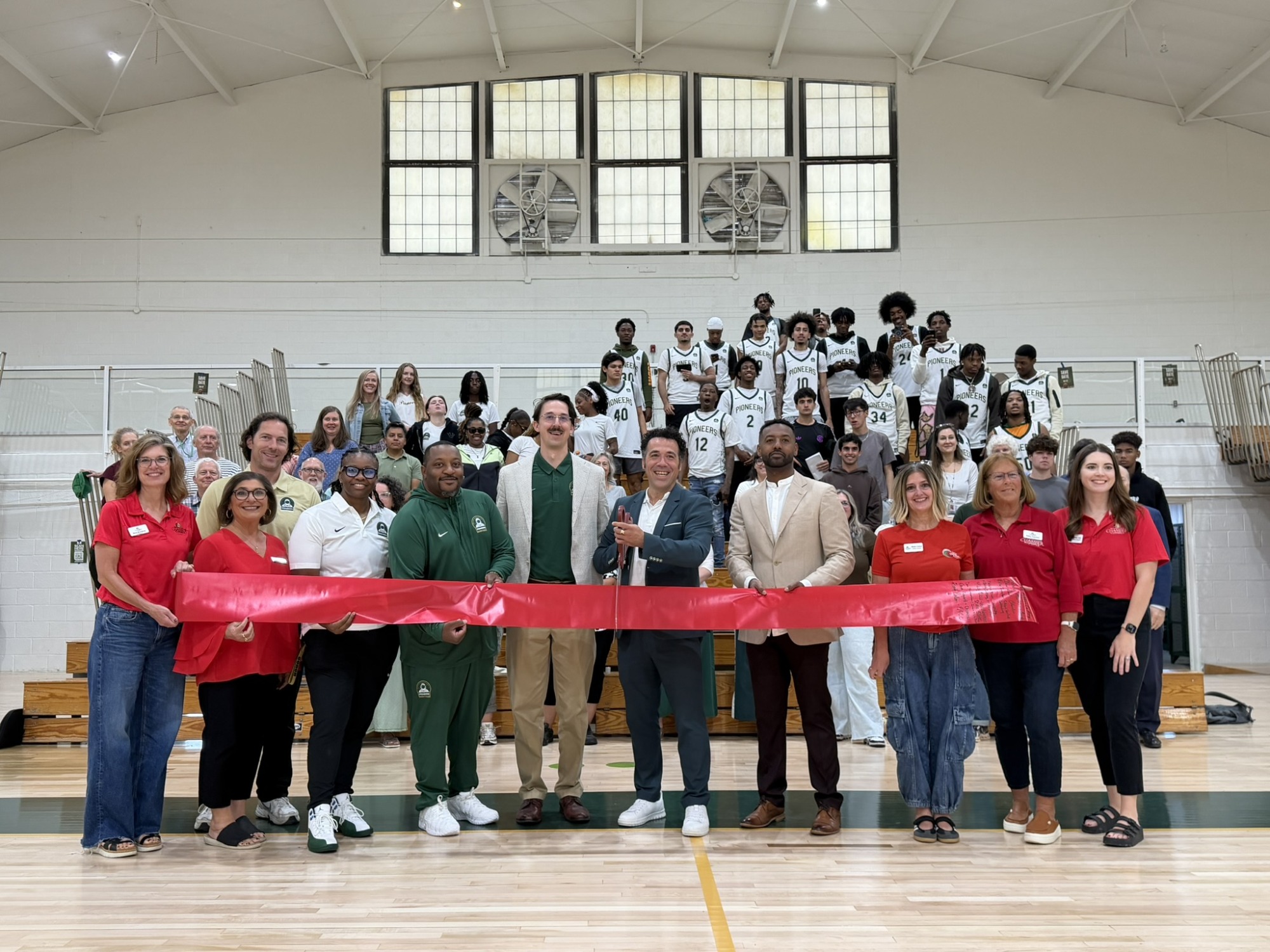
MIU marked a significant athletic milestone on October 9 with the ribbon-cutting and renaming of its former Field House as the Yingwu Zhong Sports Center, a renovated facility that will serve as the home court for MIU’s inaugural men’s and women’s basketball programs.
University staff, student-athletes, local residents, and representatives of the Fairfield Area Chamber of Commerce came together to recognize the completion of the renovation project and the launch of a new chapter for MIU Athletics.
The facility is named in honor of Yingwu Zhong, a 2007 MIU graduate whose gift made the renovations possible. The project addressed longstanding issues including roof leaks, water damage, and deteriorated flooring, transforming the building into a basketball venue ready to host collegiate competition.
The timing is especially significant as MIU prepares for its first season of men’s and women’s basketball competition in the United States Collegiate Athletic Association (USCAA). For Fairfield residents, the upgraded facility creates a new opportunity to watch college basketball locally while supporting MIU student-athletes.
Athletic Director Ruben Sanchez used the occasion to recognize the many individuals who helped bring both the facility improvements and the new basketball programs to fruition. He highlighted the contributions of men’s basketball coach Romel Bryant, whose efforts helped turn the university’s vision into reality. Sanchez also introduced women’s basketball coach Niki Collins, emphasizing the programs’ growing momentum and the support they have received from the campus and wider community.
Representatives from the Fairfield Area Chamber of Commerce joined the celebration, including Executive Director Mendy McAdams, who spoke during the ceremony and introduced attending Chamber Ambassadors. Their participation underscored the project’s collaborative spirit and the role athletics will play in strengthening university and community ties.
Building on momentum across athletics
While the new basketball programs represent a first for MIU at the varsity level, basketball is not entirely new to the university — a small club team composed of students and staff existed during the mid-1970s. The new programs build on that history while establishing a more formal and competitive future through USCAA membership.
Soccer team earns landmark road victory
The men’s soccer team recently earned one of its most notable victories of the season, defeating Mount Marty University (South Dakota) 7-4 on the road. Forward Estevao Goncalves delivered a standout performance, scoring four goals, while teammate Martim Soares contributed four assists.
“Today was a great display of Pioneer spirit from the boys,” said Associate Head Coach Caio Pereira. “They showed great enthusiasm and intensity throughout the whole match and came home with a very deserved win. The team was building momentum, and it’s really important for us to get these types of results. It validates all the work they have put in so far, and I am very proud of every one of them.”
“I thought it was a very well-played game on our part,” Soares said. “We came out strong, eager to win, and were willing to run for each other. We maintained our intensity for the full 90 minutes and knew how to manage different phases of the game.”
The victory ended a lengthy winless stretch and represented an important achievement against an NAIA opponent as MIU continues working toward future NAIA membership.
Basketball program makes strong early impression
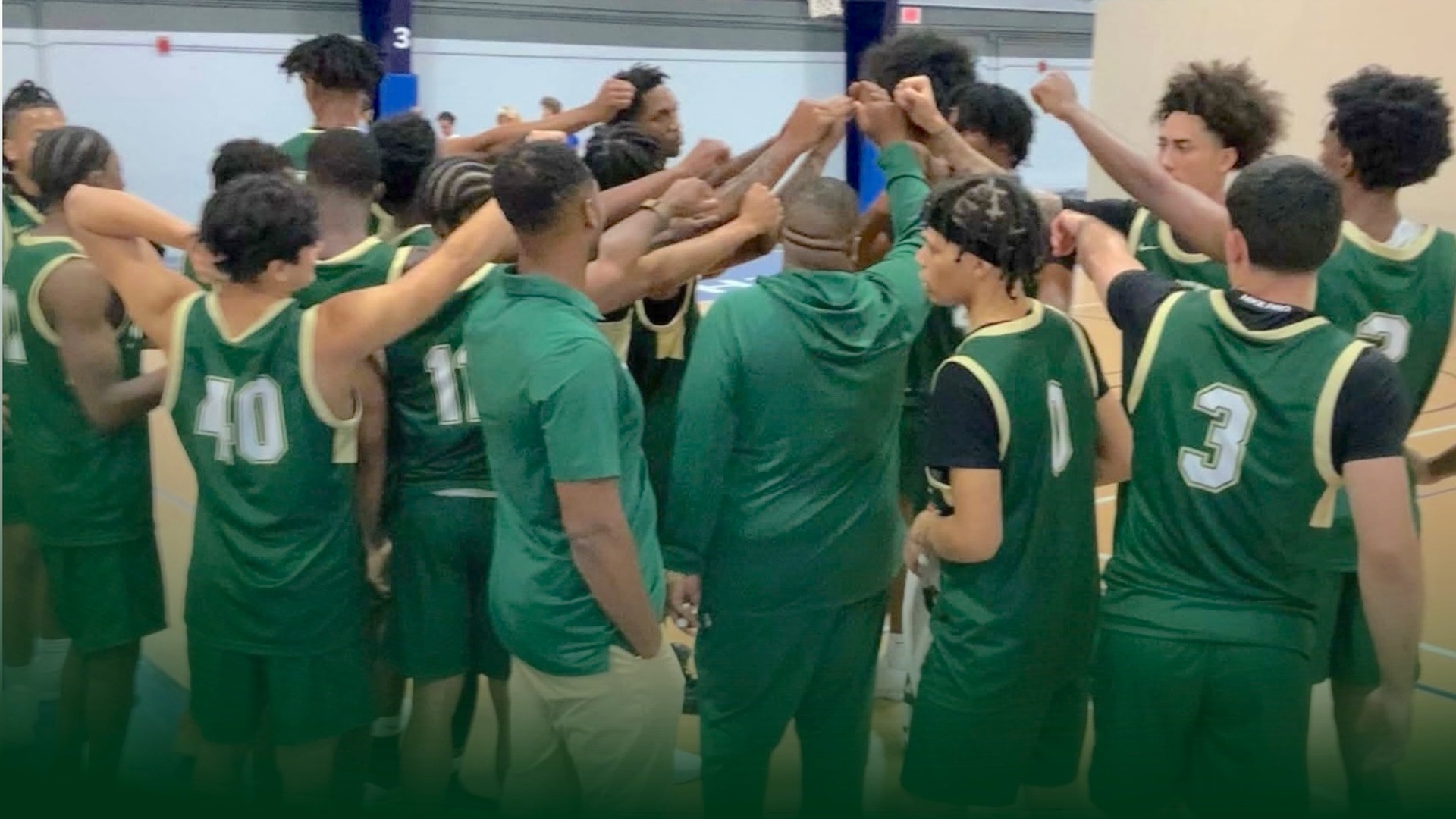
Meanwhile, the university’s new men’s basketball team has already shown promising signs during preseason competition. The Pioneers opened play with an 82-66 comeback victory over the Creighton University Men’s Basketball Club, overcoming a 21-point first-half deficit. A junior varsity squad also earned a 41-38 win, giving both teams successful starts.
Tyler Smith led the varsity team with 20 points, while John Mozele added seven points and 11 rebounds.
“Today we grew as Pioneers,” head coach Bryant said. “I’m proud of these guys.”
Tennis team posts successful fall results
The tennis program also enjoyed a productive fall tournament season, recording 19 combined victories at the Bronco Invite hosted by Hastings College. The Pioneers finished 12-10 in singles play and 7-4 in doubles competition, highlighted by an A Flight doubles championship won by Jared and Jeronimo.

Laying the foundation for the future

As MIU expands its athletics offerings, the university has also welcomed Collins as the founding head coach of women’s basketball. Collins brings more than 12 years of collegiate coaching and athletic administration experience and will be responsible for establishing the program’s culture and identity.
“My goal is to build more than a basketball program,” Collins said. “I want to create an environment where student-athletes can grow in discipline, confidence, self-awareness, and purpose.”
For MIU Athletics, the opening of the Yingwu Zhong Sports Center represents more than a renovated building. It serves as a visible symbol of the university’s expanding athletic ambitions and a gathering place where students, alumni, and community members can come together to support a new generation of Pioneer athletes. As the first basketball season gets underway, university leaders hope the energy of the ribbon-cutting ceremony will carry into packed stands, spirited competition, and a lasting connection between the campus and the Fairfield community.
Information provided by Maria Eduarda Rodrigues da Silva, MIU News sports editor and the Sports Information and Creative Director for the MIU Athletics Department.
The MIU men’s tennis team delivered another strong performance on Saturday, September 26, sweeping Cornell College 7-0 while combining for a 14-1 record across singles and doubles competition, including exhibition matches.
Pictured above: Juan Ignacio Luccione, Nicolas Quercia, Katlego Masa Regoeng, Jared Escobar, Lorenzo Lazarte, Ignacio Romero, Tomas Kurz Cardozo and Jeronimo Arango Restrepo.
The Pioneers opened the day with a strong showing in doubles, winning all five doubles matches played throughout the competition. MIU carried that momentum into singles, finishing with a 9-1 record across the day’s matches.
In the official team competition, MIU secured all three doubles points to take a 3-0 lead over Cornell.
Jared Escobar and Jeronimo Arango Restrepo opened doubles competition with a 6-3 victory over Cornell’s Trent Devore and Trace Turner. Nicolas Quercia and Tomas Kurz Cardoso followed with another 6-3 win over Henry Lambley and Jack Saunders.
Ignacio Romero and Juani Luccione completed the doubles sweep with a 6-2 victory over Matthew Oshiro and Gavin Collyott, giving the Pioneers a 3-0 advantage heading into singles.
MIU continued its dominant performance in singles, winning all six official matches to complete the 7-0 team sweep.
At No. 1 singles, Jared Escobar defeated Trent Devore 6-3, 6-3, 6-3. Jeronimo Arango Restrepo followed with a 6-2, 6-4 victory over Trace Turner at No. 2.
At No. 3 singles, Lorenzo Lazarte earned a three-set victory over Jack Saunders, winning 6-4, 7-5. Tomas Kurz Cardoso added a decisive 6-2, 6-0 victory over Braeden Holmes at No. 4.
Nicolas Quercia posted a 6-0, 6-4 win over Henry Lambley at No. 5, while Ignacio Romero closed out the official singles lineup with a 6-3, 6-1 victory over Andrew Campbell.
“I really liked our intensity and effort. We brought it beginning with doubles and continued into singles. The team played well.”
— MIU head tennis coach Eric Sturgis
Beyond the official team matches, the Pioneers continued competing in exhibition matches throughout the day, adding to their overall success. Including those matches, MIU finished the day with five doubles victories and nine singles victories, going 14-1 overall.
Head coach Eric Sturgis praised the team’s energy and consistency throughout the competition.
“I really liked our intensity and effort. We brought it beginning with doubles and continued into singles. The team played well,” Sturgis said.
The performance gives the Pioneers another strong result as they continue building momentum during the fall season.
Next up — The Pioneers will return to action next weekend at the Bronco Invite, a two-day tournament, October 2–3, as MIU continues its fall tennis schedule.
Maria Eduarda Rodrigues da Silva is the sports editor for MIU News and the Sports Information and Creative Director for the MIU Athletics Department.
Since its release on July 28, The Power of Caring by Dr. Tony Nader has gained significant national and international attention, earning places on two major bestseller lists, receiving four book awards, and generating a growing stream of media coverage, interviews, and podcast discussions.
Published by Hay House, The Power of Caring became both a USA Today and Los Angeles Times bestseller. The book has also received four major awards: Gold honors from the Living Now Book Awards and Global Ebook Awards, a PenCraft Book Award, and the Literary Titan Gold Book Award.
The book’s central message is that fulfillment comes not from caring more, but from caring better. Nader introduces the concept of “conscious caring,” which emphasizes compassion, healthy boundaries, and inner balance rather than anxiety, over-responsibility, or emotional exhaustion.
That message helped earn the book a five-star review from Literary Titan, which praised The Power of Caring as an expansive exploration of caring that draws on biology, philosophy, relationships, work, grief, technology, environmental concerns, and spiritual life. The review highlighted one of the book’s central themes: the importance of learning to “care better” rather than simply “care more.”
Prominent media appearances
The book’s visibility has been further amplified through a series of prominent media appearances. One of the book’s highest-profile media appearances came in late August, when Dr. Nader appeared on CNN International’s One World. During the interview, he discussed how people can remain deeply engaged with the needs of others while maintaining their own balance and well-being.
Earlier this year, Nader outlined the book’s core ideas in an article published by Medium Magazine. There he argued that many people become emotionally overloaded not because they care too much, but because they confuse caring with anxiety, control, or excessive responsibility. Conscious caring, he wrote, allows people to maintain compassion and connection while preserving their own energy and resilience.
Several widely heard podcast interviews also explored the book’s themes. On the popular Dharmic Life / BAPS Better Living podcast, Nader examined loneliness, distraction, the biology of caring, and the relationship among self-care, love, meditation, and human flourishing. He emphasized that lasting caring requires an inner foundation rather than simply giving more of oneself away.
Another notable appearance came on Your Thoughts Your Reality, where the discussion focused on trauma, veterans, first responders, emotional resilience, and belonging. During that interview, Nader drew a distinction that has become one of the book’s recurring themes.
“Caring means ‘I see you, I’m here, I’ll help where I can, and I know your life is yours to live,'” he said. Carrying, by contrast, involves assuming responsibility for another person’s outcome and feeling compelled to solve their problems.
“Caring means ‘I see you, I’m here, I’ll help where I can, and I know your life is yours to live.'”
— Dr. Tony Nader
To extend these conversations beyond the book itself, Nader launched the podcast Depth Over Noise in early July. The series explores what he describes as the ten major themes underlying The Power of Caring, including purpose, relationships, burnout, leadership, personal transformation, and well-being.
The inaugural episode, “Choosing to Care When Life Gives You Every Reason Not To,” featured bestselling author Hal Elrod, who reflected on surviving two life-threatening experiences and the deliberate choice to continue caring rather than becoming cynical. Their conversation explored how daily practices can restore purpose and engagement even during difficult periods.
Subsequent guests have included Dwayne J. Clark, founder and CEO of Aegis Living, who discussed “Caring Across a Lifetime” — aging, caregiver burnout, elder care, and leadership.
Another episode featured author and researcher Steven Kotler, whose conversation with Nader on “Flow, Neurobiology, and the Science of Caring,” explored empathy, flow states, intuition, neurobiology, and the implications of artificial intelligence. Together they examined the idea that caring has measurable biological and neurological foundations and should not be viewed solely as a moral or philosophical concept.
The value of Transcendental Meditation practice for caring
Throughout these interviews and discussions, Nader has consistently emphasized that the Transcendental Meditation technique plays a central role in developing what he calls conscious caring.
“Overall, the book really defines caring to be something that comes from the inside,” he said in a recent interview. “That’s what I differentiate: just general caring, empathy, and compassion from conscious caring. Conscious caring is something that comes from within.”
Reflecting on the book’s broader purpose, he added, “I’d love the book to be in the hands of everyone because we all care, we are humans. It’s only a matter of allowing that inner value to blossom, and that is what the book teaches.”
With national bestseller recognition, multiple independent awards, an expanding media presence, and a new podcast dedicated to exploring its themes, The Power of Caring continues to bring Nader’s message of conscious caring to an increasingly broad audience.
For many women in Lebanon’s rural Chouf region, stress isn’t something that comes and goes. It’s part of daily life. Economic hardship, political uncertainty, environmental challenges, and family responsibilities can create a constant stream of pressure.
Researchers wondered whether the simple practice of Transcendental Meditation might help.
According to a study published in Women’s Health, it did.
Women who learned the Transcendental Meditation technique reported greater happiness, resilience, and confidence in their ability to handle life’s challenges, along with lower levels of stress, after just three months of practice.
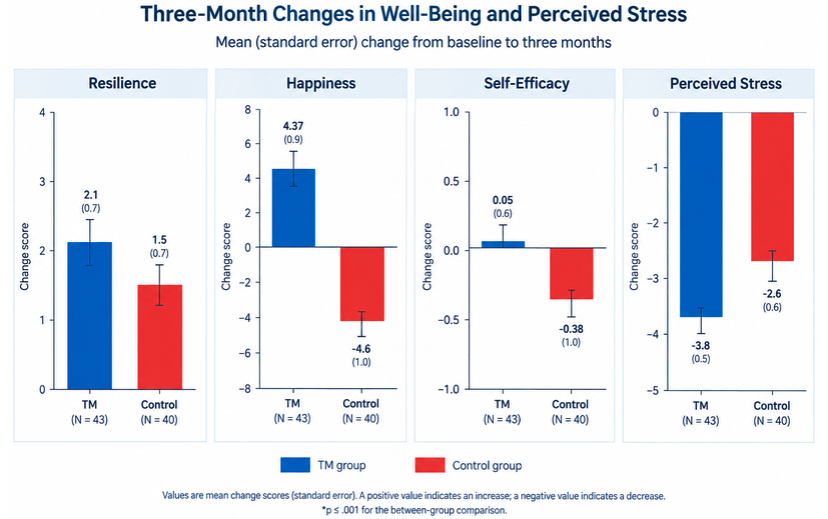
The women were divided into two groups. One learned the Transcendental Meditation technique, while the other received weekly videos focused on personal development and well-being. After three months, the differences were clear. Compared with the control group, women practicing Transcendental Meditation reported higher levels of happiness, resilience, and self-efficacy, along with lower levels of perceived stress.
“This is very encouraging because it shows the women improved across several dimensions of psychological well-being at the same time.”
— Marie Loiselle, principle investigator
“This is a significant study considering the methods: a randomized controlled trial with 114 subjects and statistically significant improvements in every measure,” said Marie Loiselle, PhD, principal investigator and researcher in MIU’s Department of Maharishi Vedic Science. “This is very encouraging because it shows the women improved across several dimensions of psychological well-being at the same time.”

Happiness showed the biggest improvement
Of all the outcomes researchers tracked, happiness showed the largest improvement. Women in the Transcendental Meditation group reported increased happiness after both one month and three months of practice. By contrast, the control group showed a small increase after one month, followed by a substantial decline at three months.
The researchers also found that women who felt more capable of handling life’s challenges tended to report greater happiness. Lower levels of stress were also closely linked to higher happiness levels. Together, these factors accounted for nearly half of the differences in happiness scores among participants.
In simple terms, self-efficacy is a person’s belief that they can successfully deal with challenges and achieve desired results. The study found that this sense of capability increased among women practicing Transcendental Meditation while declining in the control group over the same period.
Strong participation in the practice
Participants were encouraged to practice Transcendental Meditation for 20 minutes twice a day. Participation remained high throughout the study. Sixty percent reported practicing twice daily every day or most days, 18% practiced once daily, and 20% practiced less regularly. No harmful effects related to participation were reported.
“The improvements in self-efficacy and reductions in perceived stress are particularly important because both were related to happiness in our analysis.”
— Fred Travis, co-author
Because the study compared Transcendental Meditation with another structured activity focused on personal growth and well-being, researchers could evaluate whether the observed changes were associated with the meditation practice itself rather than simply participating in a supportive program.
“The improvements in self-efficacy and reductions in perceived stress are particularly important because both were related to happiness in our analysis,” said Fred Travis, PhD, statistician, co-author, and senior advisor on the study. “These findings provide a basis for further research into approaches that may help people cope with persistent environmental stress.”
Inspired by the experiences of local women
The research was conducted in collaboration with the Ladies Foundation for Pure Knowledge, which was nearing completion of a project to teach the Transcendental Meditation technique to approximately 1,000 women in the Chouf region.
After hearing many participants describe positive changes in their lives, the foundation wanted to know whether those experiences could be measured scientifically.
“So many of the participants told me their lives had been transformed in many ways that words could not even begin to describe,” said Susan Hamza, the foundation’s director. “We are deeply grateful for all those who were involved in realizing this project.”
Further research needed
The researchers advise that larger and longer-term studies are needed to confirm the findings. Of the 114 women who initially enrolled, 83 completed both post-study assessments, and participants were followed for three months. The researchers recommend future studies involving larger populations and follow-up periods of six months to a year in Lebanon and elsewhere in the Middle East.
Still, the findings provide early evidence that a simple, twice-daily meditation practice may offer meaningful support for women facing persistent stress in their daily lives.
The Maharishi International University men’s tennis team delivered a dominant performance at the Central Invitational on Saturday, posting an impressive 17-1 record in singles competition and 9-1 in doubles to finish the tournament with 26 total wins and just two losses.
Competing at Central College in Pella, Iowa, the Pioneers faced a strong field that included Grinnell College, Missouri Baptist University, Grand View University, Cornell College, Missouri Valley College, and Central College.
“It was a great day to be a Pioneer. Our men’s team played like champions and I am very proud of our overall performances.”
— MIU head coach Eric Sturgis
From the opening rounds, MIU established its presence across all three singles flights, consistently producing strong results against players from throughout the field.
In Flight A, Jared Escobar opened the tournament with a convincing 6-2, 6-3 victory over Grinnell’s Alex Doane before returning to defeat Gervase Ngo, also of Grinnell, 6-2, 6-1. Lorenzo Lazarte battled through a three-set match against Grinnell’s Joshua Kruger, earning a 5-7, 6-4, 10-6 comeback victory.
J. Arango Restrepo also delivered a strong three-set performance, defeating Missouri Valley’s Felix Ortola 6-1, 5-7, 10-6.
The Pioneers continued their success in Flight B. Tomas Kurtz Cardoso earned a victory over Grinnell’s Keigo Kamata after Kamata retired, then followed with a dominant 6-1, 6-0 win over Missouri Valley’s Sam Andreu.
Ignacio Romero was equally impressive, defeating Cornell’s Henry Lambley 6-2, 6-1 before cruising past Drew Campbell 6-0, 6-1. Katlego Regeong added a 6-2, 6-2 victory over Central’s David Gonzalez.
Flight C featured another strong showing from the Pioneers. Renzo Gianzanti opened with a 6-2, 6-2 win over Missouri Baptist’s Alex Senica and later defeated Drew Black 7-5, 1-6, 10-5 in a hard-fought three-set match.
Yousr Damiri earned a decisive 6-0, 6-2 victory over Cornell’s Eric Dirksmeyer, while Juani Luccione posted two dominant wins, defeating Central’s Aaron Meinders 6-2, 6-0 and Donovan Klish 6-3, 6-0.
The Pioneers were just as effective in doubles competition, finishing 9-1 across the three flights.
Tomas Kurtz Cardoso and Nicolas Quercia recorded two victories in Flight A, defeating Grinnell 6-2 before taking down Central 6-4. Jared Escobar and J. Arango Restrepo also went undefeated, earning victories over Central 6-4 and Cornell 7-5.
In Flight B, Ignacio Romero and Lorenzo Lazarte posted two commanding victories, defeating Grinnell 6-3 before shutting out Cornell 6-0. Katlego Regeong and Juani Luccione also recorded multiple wins, including a 6-1 victory over Central and a 6-0 result in the second round.
In Flight C, Renzo Gianzanti and Yousr Damiri opened with a 6-3 victory over Central before finishing the tournament with their only loss, falling 6-3 to Grinnell.
With a combined 26 victories and only two losses, the Pioneers showed impressive depth throughout the lineup and continued to build momentum during the fall season.
MIU head coach Eric Sturgis expressed his pride in the team’s performance durign the tournament.
“It was a great day to be a Pioneer. Our men’s team played like champions and I am very proud of our overall performances.”
What’s next
The Pioneers will carry the momentum from their dominant performance in Pella into their next competition as they continue their fall tennis schedule.
Next tournament: Simpson College
Date: Saturday, September 19, 2026
Maria Eduarda Rodrigues da Silva is the sports editor for MIU News and the Sports Information and Creative Director for the MIU Athletics Department.
MIU men’s tennis opened its fall 2026 season this weekend at the Emporia State University George Milton Chicken Dinner Invitational, held September 5-6 at the Kossover Family Tennis Center.
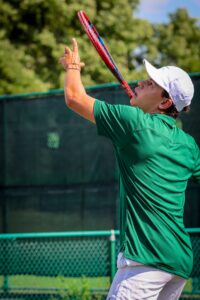
The tournament marked the first competition of the fall season for the MIU men’s tennis program, as the Pioneers competed against Bethel College, the University of Saint Mary and host Emporia State University.
MIU finished the tournament with 18 singles victories and 9 losses, while the Pioneers recorded 5 doubles wins and 8 losses.
The Pioneers made an immediate impact on the opening day, posting a 14-6 record in singles play and going 5-1 in doubles.
Several MIU players advanced deep into their respective flights.
Katlego Regeong advanced to the Flight 4 championship match, while Juan Ignacio Luccione and Renzo Gianzanti reached the Flight 5 championship matches. Jeronimo Arango Restrepo and Ignacio Romero also advanced to compete for third place in their respective flights.

Katlego Regeong was the only Pioneer to win all three of his singles matches on the opening day, including a thrilling semifinal victory over Emporia State’s Evan Goates, 3-6, 6-4, (11-9), to earn a spot in the championship match.
For Regeong, the tournament represented an important milestone — his first collegiate tennis tournament.
“The conditions are different, and I am still adjusting,” Regeong said. “There were some points I couldn’t make through. During the matches, there were mixed emotions — some moments I was angry, and some moments I was happy. It boosted my confidence. It is a dream come true. College tennis is a dream.”

Regeong’s performance also drew recognition from the Botswana National Tennis Association, which celebrated his collegiate debut and his run to the championship match.
The Pioneers continued competition on Sunday, completing the final rounds of singles before competing in two rounds of doubles.
Following the opening day, MIU head coach Eric Sturgis expressed his pride in the team’s performance and the significance of the weekend for the developing program.
“I am extremely happy and proud of the way our whole team competed and represented MIU today,” he said. “MIU tennis is on the map.”

The Emporia State tournament provided the Pioneers with their first opportunity to compete together in the 2026 fall season and offered valuable experience against three collegiate programs.
With the opening tournament now complete, MIU men’s tennis will look to build on its strong start as the Pioneers continue their inaugural fall season. The Pioneers will return to action on September 12 at Central College.
Maria Eduarda Rodrigues da Silva, sports editor for MIU News and the Sports Information and Creative Director for the MIU Athletics Department.
Maharishi International University Athletics is gaining momentum on multiple fronts, highlighted by its recent acceptance into the United States Collegiate Athletic Association (USCAA), a strong start for the men’s soccer program, and the addition of an experienced basketball recruiter and an assistant men’s and women’s tennis coach.
The USCAA announcement marks a significant step forward for MIU’s rapidly growing athletics department. Membership gives Pioneer student-athletes the opportunity to compete for national championships while providing a competitive framework as the university continues building toward future NAIA membership. The university will compete in men’s and women’s soccer, men’s and women’s basketball, tennis, cross country, and esports under the USCAA banner.
Men’s soccer makes strong early statement
That momentum has already been evident on the soccer field.
The strongest indication of the program’s potential came in what MIU Trustee Michael Busch described as “a David versus Goliath event” — a preseason match against William Penn University, a perennial NAIA powerhouse that has reached the national quarterfinals and finals in recent years. MIU earned a draw despite facing one of the strongest programs in the region.
The team opened its inaugural USCAA season with a 4-2 victory over North Iowa Area Community College. After building a 2-0 lead behind two goals from Estevao Goncalves, the Pioneers weathered a second-half comeback before securing the win with late goals from Angel Delgado and Francesco Puch. Goncalves finished with two goals and two assists.
MIU followed that performance with a 1-1 road draw against the University of St. Francis. Goncalves again scored for the Pioneers, netting the equalizer in the first half. Goalkeeper Dylan Stott helped preserve the tie with a series of key saves, including three consecutive stops during a late St. Francis attack. Associate Head Coach Caio Pereira praised his team’s resilience in a demanding road contest.
The Pioneers then faced a setback in a 7-1 loss to Briar Cliff University. Martim Soares scored MIU’s lone goal. Pereira called it a difficult match but said the team intends to learn from the experience and continue improving.
“This team reflects the global character of MIU. Students from many cultures have come together around a shared commitment to education, athletics, and personal development.”
— Michael Busch, MIU Trustee
“This team reflects the global character of MIU,” Busch said. “Students from many cultures have come together around a shared commitment to education, athletics, and personal development.”
The roster includes players from Peru, Chile, Brazil, Germany, Spain, the United Kingdom, and communities across the United States. Busch said the athletics programs are also helping strengthen ties between the university and the Fairfield community.

Building for the future on and off the field
Approximately 90 new students have joined MIU through athletics, bringing added energy to campus life and broadening engagement opportunities both on campus and in the local community.

MIU has also continued building its basketball program, recently hiring Walter Johnson as men’s basketball recruiting coordinator. Johnson brings experience as both a professional player and coach and has helped several programs achieve record-setting success. Most recently, he was part of coaching staffs at East-West University and John Melvin University during historically successful seasons for both programs.
“MIU’s emphasis on Consciousness-Based education and student well-being offers a unique setting where athletes can reach their full potential as competitors and as individuals,” Johnson said.

MIU has also strengthened its tennis program with the hiring of Lawrence Eyre as assistant men’s and women’s tennis coach. A graduate of Yale University and a 30-year USPTA Elite Professional, Eyre brings more than three decades of coaching experience at the high school, collegiate, and professional levels. His collegiate coaching background includes positions at Grinnell College and Knox College, and he has also served as an Intercollegiate Tennis Association umpire in the Big Ten and Big 12 conferences.
Eyre, who was named National High School Coach of the Year during his time at Maharishi School, is known for developing successful players and programs while emphasizing sportsmanship and personal growth. “Maharishi Pioneers invest in rest for tennis success,” Eyre said. “Twice daily TM builds a physiological foundation for peak performance. When athletes live in the Zone, they play in the Zone.” His addition further reflects MIU’s ongoing investment in experienced coaches as its athletics programs continue to expand.
As MIU Athletics enters its first year in the USCAA, the new affiliation, growing enrollment, expanding programs, and early competitive success show the department’s long-term vision taking shape, especially in allowing student-athletes to compete on a national stage while pursuing MIU’s distinctive educational experience.
Stay connected
Stay up to date with MIU Athletics — never miss a moment of the action:
- Facebook: Maharishi International University Athletics
- Instagram: @MIU.Athletics
- Youtube: MIU Athletics
- Website: www.miuathletics.com
Get MIU Athletics updates straight to your inbox — subscribe to the MIU Pioneers Newsletter and sign up for mobile alerts to receive news, scores, highlights, and more.
Information provided by Maria Eduarda Rodrigues da Silva, sports editor for MIU News and the Sports Information and Creative Director for the MIU Athletics Department.
A new documentary by MIU professor and filmmaker Stuart Tanner is drawing international attention for its exploration of Mexico’s struggle to protect native corn varieties, biodiversity, and food sovereignty in the face of pressure to adopt genetically modified crops and industrial agricultural practices.
“This documentary is about more than agriculture — it is about identity, resistance, and the fundamental right to shape our own future.”
— Stuart Tanner
Seeds of Sovereignty, a 50-minute documentary and a standout success on the international film festival circuit, examines the conflict between Mexico and the United States over genetically modified corn and the future of traditional agriculture.

Seeds of Sovereignty examines Mexico’s battle to preserve its native corn and farming traditions in the face of GMO crops and corporate agriculture. The documentary highlights threats to biodiversity, food sovereignty, and cultural identity while making the case that decisions made in Mexico today could affect the future of food globally.

Through interviews with farmers, scientists, activists, and community leaders, the film highlights efforts to preserve native maize varieties that have been cultivated for thousands of years.

“Mexico is at a pivotal moment, fighting to protect its native seeds, land, and people from the threat of genetically modified crops and harmful agrochemicals,” Tanner writes in his director’s statement. “This documentary is about more than agriculture — it is about identity, resistance, and the fundamental right to shape our own future.”
Tanner, an award-winning documentary filmmaker and investigative journalist, has produced films for major broadcasters including the BBC, Channel 4, National Geographic, Discovery, Frontline PBS, and ITV. His work has taken him to more than 20 countries and earned numerous international awards. At MIU he is an assistant professor of Cinematic Arts & New Media.
Cody Olivas, assistant professor of Cinematic Arts & New Media at MIU, was the director of photography, and Amine Kouider, chair of the Cinematic Arts and New Media department, served as sound director.
Concerns about industrial agriculture
According to Tanner, the film grew out of concerns about the environmental and social consequences of industrial agriculture.
“I became increasingly troubled by the question of whether this model of agriculture is really serving the people who live alongside it, or whether it primarily serves large corporations that rarely carry the human and environmental costs of the system they profit from,” he wrote in an article discussing the project.
The documentary argues that the battle over corn in Mexico extends beyond agricultural policy. Native maize is deeply embedded in Mexican culture, cuisine, and identity, making efforts to preserve traditional seed varieties matters of cultural and ecological significance.
Tanner hopes the film will encourage audiences to consider broader questions about food systems and sustainability.
“As a filmmaker, my goal is to bring audiences into this fight, not just to inform, but to inspire action,” he writes. “The battle to protect native seeds in Mexico is part of a larger fight for food sovereignty worldwide. Who controls the food we eat? What are the long-term consequences of prioritizing profit over people and the planet?”
“Food sovereignty is easy to read about or discuss in the abstract,” Olivas says. “It becomes something else entirely when you’re looking out over a milpa or sitting with a family whose seed has been selected by hand for nine thousand years and asking them what contamination would actually cost.”

“We want the world to understand the challenges Mexico faces in protecting a food and agricultural system that is thousands of years old,” says Randall Tolpinrud, founder of the Pax Natura Foundation, which funded the project. “That system is under pressure from multinational corporations seeking to reshape the country’s food production and distribution in ways that serve corporate interests, backed largely by organizations and governments in the United States and Europe. Our goal is to document the people resisting those efforts.”
A standout success on the international film festival circuit
The film has resonated strongly with festival audiences. Pax Natura reports that Seeds of Sovereignty has been selected by 77 film festivals in 35 countries and has received 20 awards and honors. These include awards for Best Documentary, Best Environmental Documentary, Best Director, Best Television Documentary, Best Feature Documentary, and Best Half-Length Film.

Among the many festivals recognizing the documentary are the Madrid Film Festival, the Seattle International Film Festival, the Arizona International Film Festival, the Indie Vegas Film Festival, the Wallachia Film Festival, the Liber Film Festival, the Synergy Film Festival, and the World Culture Film Festival in Los Angeles.
The Arizona International Film Festival awarded the film a Special Jury Award for Activist Filmmaking, citing its exploration of Mexico’s efforts to defend biodiversity, food sovereignty, and cultural heritage. The film won the Best Documentary Award four other film festivals and the Best Environmental Documentary at two more.
Festival organizers and reviewers have praised the documentary’s treatment of a complex global issue. The Auguri Film Festival in Italy described Seeds of Sovereignty as “a powerful and thought-provoking documentary that truly captures the urgency of a global issue, the fight for biodiversity and food sovereignty.”
“This is more than a film. It is a call to defend small-scale, sustainable farming, farming that nourishes people, preserves the environment, and promotes human health.”
— Stuart Tanner
The Organic & Non-GMO Report called the film an exploration of “Mexico’s fight to protect its agricultural heritage,” noting its focus on legal and grassroots efforts to preserve native corn varieties and indigenous farming traditions.
As the documentary continues its international festival run, Tanner believes the issues it raises extend far beyond Mexico.
“This is more than a film,” he writes. “It is a call to defend small-scale, sustainable farming, farming that nourishes people, preserves the environment, and promotes human health.”
Seeds of Sovereignty is an independent production of Oak Alley Productions.
Interested in documentary filmmaking?
Stuart Tanner and Amine Kouider have just launched an MFA in Documentary Filmmaking & Social Transformation.

At an international United Nations academic forum in Lisbon, Portugal, the discussion went far beyond heart disease. The larger question was how individuals, communities, and nations can become more resilient in the face of growing environmental, psychological, and social stress.

Robert Schneider, MD, FACC, Distinguished Professor of Integrative Medicine and Health and Director of the Institute for Natural Medicine and Prevention at MIU, addressed that challenge during the 39th Annual Meeting of the Academic Council on the United Nations System (ACUNS), held July 1–3 at NOVA University Lisbon.
Participating remotely, he spoke to scholars, policy experts, and representatives of international organizations gathered to discuss sustainable development, public health, climate change, conflict prevention, and other global challenges.
Dr. Schneider’s presentation, Environmental Stress, Cardiovascular Risk, and Human Resilience: Evidence-Based Pathways for Policy and Practice, co-authored with Charlotta Bech, MD, adjunct MIU faculty in physiology, examined how environmental and psychosocial stress contribute to cardiovascular disease, the world’s leading cause of death. Click here to see the presentation.
How human beings can become more resilient
He explained that air pollution, climate change, crowded urban settings, economic hardship, and psychological stress often occur together, placing a cumulative burden on the cardiovascular system and increasing the risk of hypertension, heart attack, stroke, and premature death.
“This is more than cardiovascular research. It is about how human beings and societies can become more resilient.”
— Dr. Robert Schneider
“This is more than cardiovascular research,” Dr. Schneider said. “It is about how human beings and societies can become more resilient in the face of environmental, psychological, and social stress, and how science-based approaches to reducing stress may contribute not only to better health, but also to a more peaceful world.”
Among those approaches, Dr. Schneider highlighted Transcendental Meditation. Research has linked the technique to lower blood pressure and, in NIH-funded clinical trials, a significantly lower risk of major cardiovascular events, including heart attack, stroke, and death.
These findings support the growing view that stress reduction should be considered an integral part of cardiovascular prevention. Dr. Schneider and colleagues recently advanced that position in a commentary published in Nature Reviews Cardiology.
Toward social resilience and peace
The presentation also explored the potential of meditation-based approaches to strengthen social resilience and support peace-building efforts. Dr. Schneider encouraged United Nations policymakers and ACUNS participants to integrate health, environmental policy, sustainable urban development, and evidence-based stress reduction within a unified prevention framework.
The ACUNS meeting provided an international platform for MIU research linking personal health, environmental sustainability, collective well-being, and peace. Dr. Schneider’s presentation highlighted how MIU’s consciousness-based approach may contribute to addressing some of the world’s most pressing challenges.
Banner photo from The Soul of the Matter.