
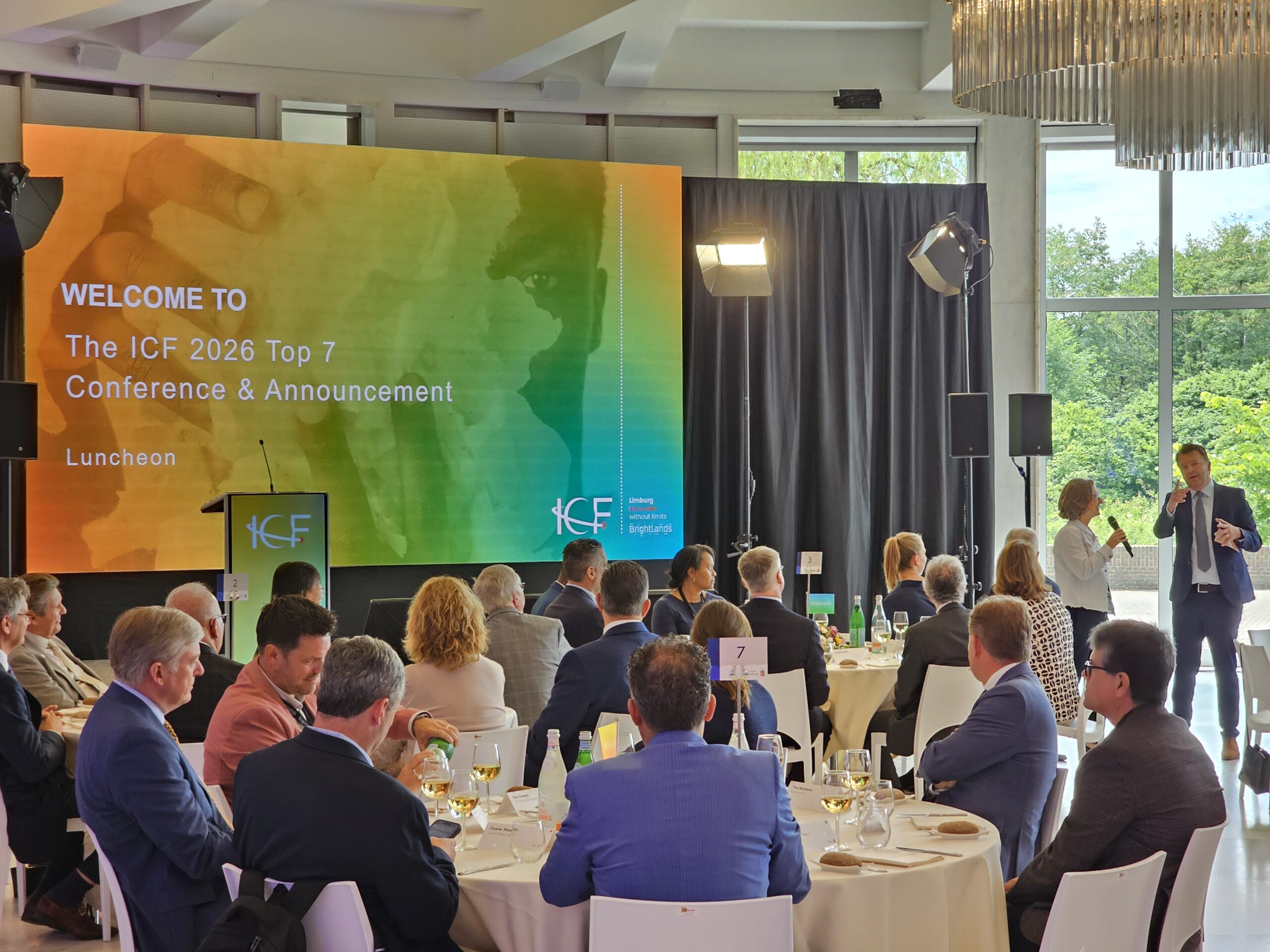
From international recognition to learning: Fairfield delegation returns from Netherlands with new ideas for innovation and growth
Last February, MIU News shared the story of Fairfield’s recognition as one of the Intelligent Community Forum’s (ICF) Top 7 Intelligent Communities of 2025. It marked an important milestone for a small Iowa community recognized alongside metropolitan regions with populations many times its size.
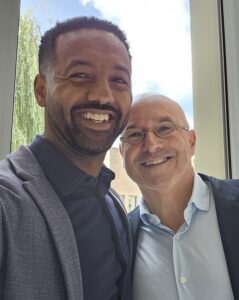
This June, the journey continued.
I was part of the Fairfield delegation that traveled to the Limburg Province of the Netherlands to learn from communities that have spent decades building cultures of innovation, collaboration, and long-term resilience.
The team representing Fairfield included Fairfield City Councilor Bob Ferguson, community resilience leader Margaret Dwyer, Ideal Energy Founder and CEO Troy Van Beek, and me, the Director of Continuous Improvement at MIU.
We joined civic leaders, entrepreneurs, educators, planners, and economic development professionals from North America, Europe, and Asia for the ICF Top7 Conference and an extended VIP delegation through Brightlands-Limburg and Brainport Eindhoven, two internationally recognized innovation ecosystems.
A rich learning experience
During our week in the Netherlands, we visited research campuses, advanced manufacturing facilities, startup incubators, government offices, and the Einstein Telescope Pathfinder, a groundbreaking scientific initiative being developed by partners in the Netherlands, Belgium, and Germany.
Along with the other delegates, we also explored how the region has organized four specialized innovation campuses around health, sustainable materials, digital services, and agriculture, creating what local leaders describe as an “ecosystem of ecosystems.”
We found that the communities attracting international attention are not defined by a technology, industry, or economic development strategy. Instead, they’ve built strong relationships among universities, businesses, government, and residents. Innovation is woven into their community culture.
“Cathedral planning” and “moonshot” ambitions.
Many presenters from successful communities spoke about “cathedral planning” — making decisions that may not fully bear fruit for decades but create lasting benefits for future generations. These communities cultivated a willingness to experiment, accept calculated risks, and move promising ideas into action.
They also challenged communities to think beyond incremental improvements and pursue ambitious “moonshot” ideas that inspire collaboration across sectors.
For Marg, whose work spans environmental stewardship, civic engagement, and community resilience, this long-term, moonshot thinking was one of her strongest impressions — and one example really stood out.
“To me, that’s the peak of human evolution and consciousness — cooperation for mutual success. We must figure out how to reproduce that here!”
— Marg Dwyer
“In Maastricht, we saw an amazing demonstration of collaboration regarding Europe’s ‘moonshot,’ the Einstein Telescope,” Marg said. “The science was mind-blowing, but the most important thing was that multiple industries, universities, and levels of various nations’ governments are working together to ensure their mutual future resilience. They’re sharing the massive costs connected with the Einstein Telescope and have pledged that all will share any scientific or manufacturing breakthroughs that result. To me, that’s the peak of human evolution and consciousness — cooperation for mutual success. We must figure out how to reproduce that here!”
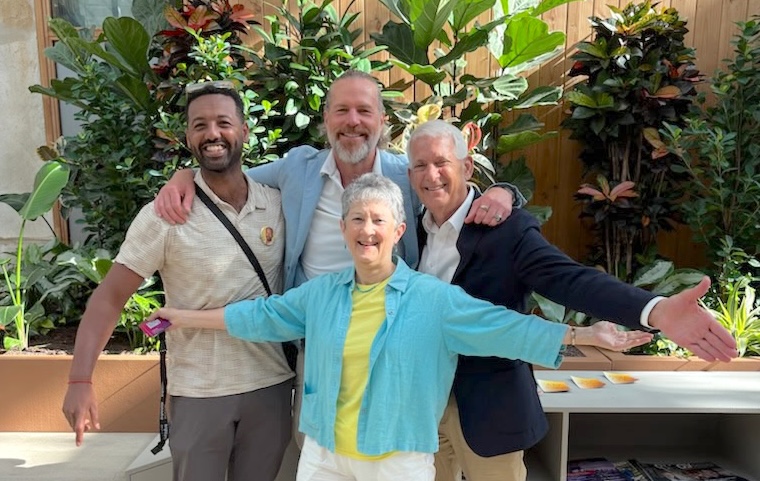
Collaboration is key
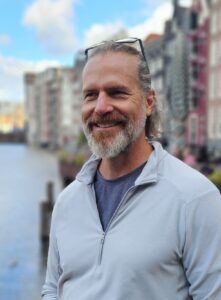
“Our most important takeaway was that building intelligent communities depends far more on collaboration than technology,” Fergusson said.
We learned that breakthrough innovations rarely emerge in isolation. They grow from ecosystems where education, industry, government, and community organizations continuously invest in one another.
Troy looked at this from a Fairfield entrepreneur’s perspective.
“Participating in this delegation helped me understand an actionable and exciting community formula for success: the quadruple helix, which focuses on collaboration among people, government, universities, and businesses,” Van Beek said. “Fairfield is uniquely positioned to benefit from this model. Innovation was at the core of Brightlands’ success, and by using this formula, I expect Fairfield to become a valuable epicenter of innovation for our community and beyond.”
An important issue here is retaining young people. Successful regions have moved beyond trying to attract talent to creating communities where talented young people want to stay.
And this starts with the youth, we found. We encountered examples of students still in school working alongside local governments, businesses, and researchers to solve real-world challenges.
We saw that meaningful work, opportunities to contribute, and a shared sense of purpose can be just as important as economic incentives, and hope itself can become an economic engine when communities give people a compelling vision for the future.
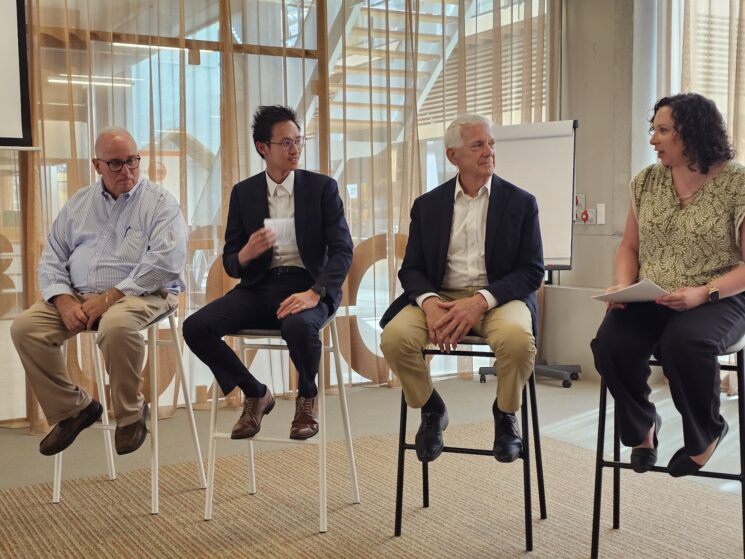
The role of universities

We also saw how universities can play a powerful role in regional development.
Across Brightlands and Brainport, universities functioned not only as educational institutions but also as research partners, talent pipelines, conveners, and catalysts for entrepreneurship. Students, faculty, government leaders, and industry representatives worked together to address practical challenges with direct benefits for their communities.
And we realized again how important it is for MIU to engage with the larger Fairfield community. Through education, workforce development, research, and community partnerships, MIU contributes to Fairfield’s long-term vitality while helping connect organizations around shared opportunities. And we can do more.
Returning to Fairfield, going forward
For Fairfield, Bob outlined opportunities to build stronger connections among organizations working in manufacturing, agriculture, arts and culture, financial services, and energy — helping existing organizations share knowledge, align around common goals, and strengthen Fairfield’s innovation ecosystem.
“We’ve now spent several years participating in the Intelligent Community Forum, first earning recognition as a Smart21 Community and later being named one of the Top 7 Intelligent Communities in the world,” Bob said. “This inspires us to continue learning from some of the world’s best examples of innovation, cooperation, and long-term thinking — not to replicate another community’s model but to build on Fairfield’s own strengths.”
The next ICF Global Summit takes place this October, when it convenes its annual Summit in Columbus, Ohio. Fairfield will be sending a delegation.
Interested in becoming involved?
We encourage interested Fairfield community members to explore the ICF Community Accelerator, a free online learning program made possible by local donor support. Consider nominating yourself or others for future Fairfield delegations. To access the course, you have to register on this special Fairfield community link that will open all the courses at no cost.