
MIU faculty bring Vedic scholarship and neuroscience to Vedic Centennial Conference in India
Two MIU scholars were among a small group of invited international speakers at a major academic conference held last fall in conjunction with the birth centenary of Sri Sathya Sai Baba, one of India’s most influential spiritual leaders.
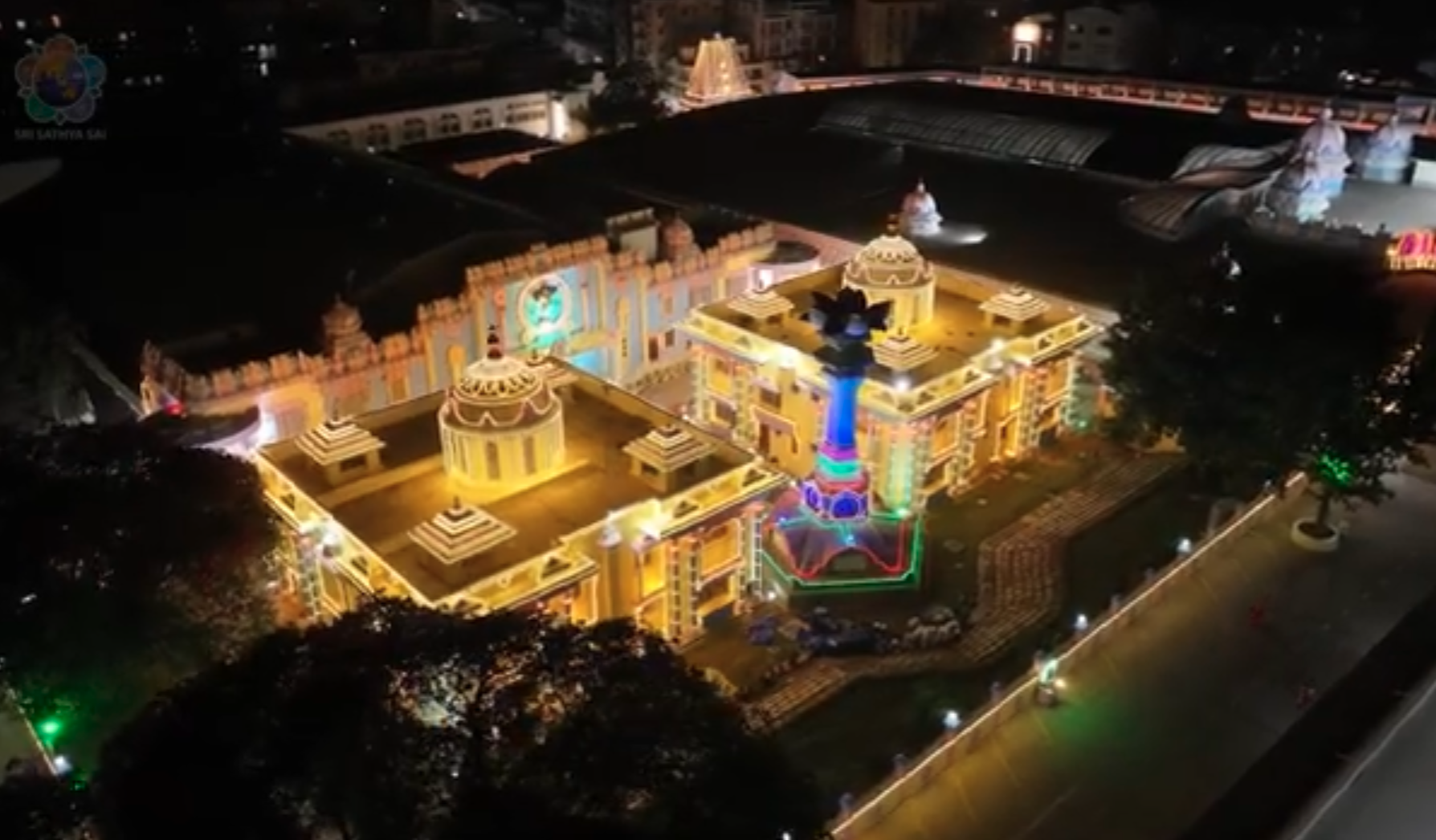
Dr. Fred Travis, Distinguished Professor of Neuroscience and Director of MIU’s Center for Brain, Consciousness, and Cognition, and Ramayan scholar Michael Sternfeld presented their work during a Vedic Centennial Conference held January 23–25, 2026, at Prasanthi Nilayam, the main Sai Baba ashram in Puttaparthi, Andhra Pradesh.
The academic sessions followed large‑scale centenary observances that drew hundreds of thousands of participants from around the world. The main celebration, on November 19, included a visit by Indian Prime Minister Narendra Modi and marked the 100th anniversary of Sai Baba’s birth.
An unexpected invitation
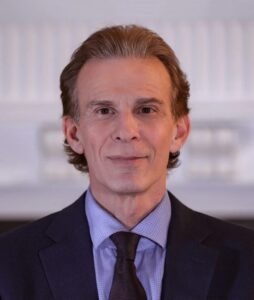
Sternfeld, who has no prior institutional connection to the Sai Baba organization, said the invitation itself was unexpected.
“As a longtime student of Maharishi’s knowledge, I really didn’t feel that familiar or connected with the Sai Baba tradition,” he said. “But they were very intentional about inviting scholars from outside their own lineage, and they were genuinely interested in dialogue.”
Sternfeld earned an MA in Maharishi Vedic Science from MIU, where he became fascinated with the Ramayana and, using his producer skills, went on to create numerous productions of the great epic over the last 30 years, including theatrical productions, a theme park, and the first complete audio production of the unabridged Ramayana of Valmiki — 75 hours long, making it the world’s longest audiobook. His latest production, Sita’s Gems, retells the story from the vantage point of the divine feminine.
Travis was invited soon afterward and flew in briefly to speak at the conference’s central academic venue.
Neuroscience and lived experience
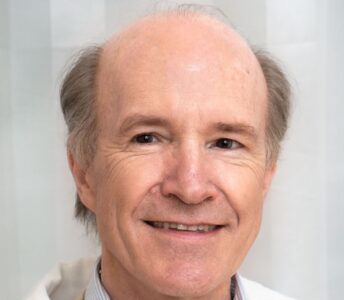
Travis’s presentation focused on the relationship between consciousness and brain functioning, drawing on decades of neuroscientific research on Transcendental Meditation and higher states of consciousness.
“The main point,” Travis said, “is that consciousness is primary. The brain isn’t producing consciousness — consciousness is structuring the brain.”
He emphasized that this perspective is not philosophical speculation but something that can be measured.
“When consciousness interacts with itself, we see it very clearly in patterns of brain functioning,” he said. “We can measure coherence in brainwaves, and we can see consistent changes during meditation and chanting.”
At the organizers’ request, Travis conducted a live demonstration using EEG equipment to show real‑time changes in brain activity during Vedic chanting.
“It wasn’t about convincing anyone,” he said. “It was simply about showing what happens in the nervous system during these experiences.”
Re‑reading the Ramayana
Sternfeld addressed a much larger audience in the ashram’s main gathering hall, speaking to several thousand people during a morning session. His talk explored the Ramayana not as a fixed moral code, but as a living guide to discerning increasingly subtle levels of right action.
“The Ramayana is often described as a textbook of dharma,” he said. “But dharma there isn’t black and white. It’s deliberately ambiguous, and that ambiguity challenges us to open our awareness to finer levels of discrimination.”
Central to Sternfeld’s presentation was what he described as the interweaving of love and dharma throughout the epic.
“This interweaving is much like the double helix of DNA, which acts as the ‘code of life,'” he said. Throughout the Ramayana, its central characters repeatedly encounter this apparent opposition between love and dharma. This dynamic tension serves as a refined crucible through which dharma is clarified, love expands, and consciousness evolves.”
He illustrated this dynamic through key episodes in the epic, including the emotionally charged exchange between Rama and Bharata during Rama’s exile.
“That moment captures the whole teaching,” Sternfeld said. “Bharata speaks from love. Rama speaks from dharma. The resolution honors both.”
Conference organizers asked Sternfeld to speak without slides or prepared text.
“They specifically said, ‘We want you to speak extemporaneously,’” he said. “They wanted it to come from lived understanding, not presentation polish.”
A meeting of traditions
Both speakers said they were struck by the intellectual depth of the conference and by how closely many presentations aligned with Maharishi’s teachings, despite coming from a different lineage.
“The level of scholarship was remarkably high,” Sternfeld said. “Many of the speakers were senior academics, government advisors, or heads of national institutes. And their understanding of Vedic knowledge was extremely refined.”
Travis agreed.
“What stood out was how natural the conversation was,” he said. “There wasn’t any sense of competition between traditions. There was mutual respect.”
At the same time, the differences were clear.
“The orientation there is much more outward — Vedic chanting and service based on devotion,” Travis said. “Maharishi’s emphasis is deeply inward, experience pure consciousness and bring it into your life.”
Conversations beyond the conference
Beyond their formal talks, Sternfeld and Travis met with senior leaders of the Sai Baba organization to explore possible future collaborations.
“We discussed three areas,” Sternfeld said. “Sending delegates to international conferences, potential collaborative research on meditation and chanting, and the importance of large groups practicing together.”
While no formal projects have yet been launched, both speakers saw the conversations as significant.
“The conference wasn’t framed as an endpoint,” Sternfeld said. “They were very explicit: this is meant to lead to ongoing work.”
A broader perspective
For both MIU faculty members, the experience offered a wider lens on how Vedic knowledge is being preserved, interpreted, and lived in different cultural contexts.
“It was valuable to be in another ashram environment and really see how it functions,” Travis said. “It helped clarify what’s essential and what’s stylistic.”
Sternfeld described the visit as affirming, both personally and professionally.
“To speak to thousands of people who are deeply established in a Vedic tradition — and to be received with respect as someone representing Maharishi’s work — that was meaningful,” he said. “It felt like a genuine meeting of knowledge.”
Click here for Michael Sternfeld’s presentation on Love & Dharma, here for his post-conference interview.
Click here for Fred Travis’s presentation on Neuroscientific Insights from Vedic Recitation, here for his post-conference interview.
* * * * * * *
Banner image from “Aerial View of Prasanthi Nilayam Light Decorations | Birthday Lights” (YouTube).