
At an international United Nations academic forum in Lisbon, Portugal, the discussion went far beyond heart disease. The larger question was how individuals, communities, and nations can become more resilient in the face of growing environmental, psychological, and social stress.
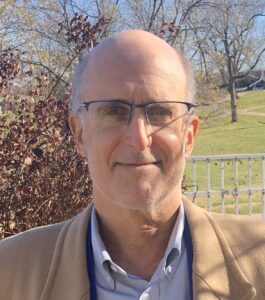
Robert Schneider, MD, FACC, Distinguished Professor of Integrative Medicine and Health and Director of the Institute for Natural Medicine and Prevention at MIU, addressed that challenge during the 39th Annual Meeting of the Academic Council on the United Nations System (ACUNS), held July 1–3 at NOVA University Lisbon.
Participating remotely, he spoke to scholars, policy experts, and representatives of international organizations gathered to discuss sustainable development, public health, climate change, conflict prevention, and other global challenges.
Dr. Schneider’s presentation, Environmental Stress, Cardiovascular Risk, and Human Resilience: Evidence-Based Pathways for Policy and Practice, co-authored with Charlotta Bech, MD, adjunct MIU faculty in physiology, examined how environmental and psychosocial stress contribute to cardiovascular disease, the world’s leading cause of death. Click here to see the presentation.
How human beings can become more resilient
He explained that air pollution, climate change, crowded urban settings, economic hardship, and psychological stress often occur together, placing a cumulative burden on the cardiovascular system and increasing the risk of hypertension, heart attack, stroke, and premature death.
“This is more than cardiovascular research. It is about how human beings and societies can become more resilient.”
— Dr. Robert Schneider
“This is more than cardiovascular research,” Dr. Schneider said. “It is about how human beings and societies can become more resilient in the face of environmental, psychological, and social stress, and how science-based approaches to reducing stress may contribute not only to better health, but also to a more peaceful world.”
Among those approaches, Dr. Schneider highlighted Transcendental Meditation. Research has linked the technique to lower blood pressure and, in NIH-funded clinical trials, a significantly lower risk of major cardiovascular events, including heart attack, stroke, and death.
These findings support the growing view that stress reduction should be considered an integral part of cardiovascular prevention. Dr. Schneider and colleagues recently advanced that position in a commentary published in Nature Reviews Cardiology.
Toward social resilience and peace
The presentation also explored the potential of meditation-based approaches to strengthen social resilience and support peace-building efforts. Dr. Schneider encouraged United Nations policymakers and ACUNS participants to integrate health, environmental policy, sustainable urban development, and evidence-based stress reduction within a unified prevention framework.
The ACUNS meeting provided an international platform for MIU research linking personal health, environmental sustainability, collective well-being, and peace. Dr. Schneider’s presentation highlighted how MIU’s consciousness-based approach may contribute to addressing some of the world’s most pressing challenges.
Banner photo from The Soul of the Matter.
Last February, MIU News shared the story of Fairfield’s recognition as one of the Intelligent Community Forum’s (ICF) Top 7 Intelligent Communities of 2025. It marked an important milestone for a small Iowa community recognized alongside metropolitan regions with populations many times its size.
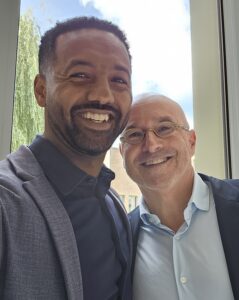
This June, the journey continued.
I was part of the Fairfield delegation that traveled to the Limburg Province of the Netherlands to learn from communities that have spent decades building cultures of innovation, collaboration, and long-term resilience.
The team representing Fairfield included Fairfield City Councilor Bob Ferguson, community resilience leader Margaret Dwyer, Ideal Energy Founder and CEO Troy Van Beek, and me, the Director of Continuous Improvement at MIU.
We joined civic leaders, entrepreneurs, educators, planners, and economic development professionals from North America, Europe, and Asia for the ICF Top7 Conference and an extended VIP delegation through Brightlands-Limburg and Brainport Eindhoven, two internationally recognized innovation ecosystems.
A rich learning experience
During our week in the Netherlands, we visited research campuses, advanced manufacturing facilities, startup incubators, government offices, and the Einstein Telescope Pathfinder, a groundbreaking scientific initiative being developed by partners in the Netherlands, Belgium, and Germany.
Along with the other delegates, we also explored how the region has organized four specialized innovation campuses around health, sustainable materials, digital services, and agriculture, creating what local leaders describe as an “ecosystem of ecosystems.”
We found that the communities attracting international attention are not defined by a technology, industry, or economic development strategy. Instead, they’ve built strong relationships among universities, businesses, government, and residents. Innovation is woven into their community culture.
“Cathedral planning” and “moonshot” ambitions.
Many presenters from successful communities spoke about “cathedral planning” — making decisions that may not fully bear fruit for decades but create lasting benefits for future generations. These communities cultivated a willingness to experiment, accept calculated risks, and move promising ideas into action.
They also challenged communities to think beyond incremental improvements and pursue ambitious “moonshot” ideas that inspire collaboration across sectors.
For Marg, whose work spans environmental stewardship, civic engagement, and community resilience, this long-term, moonshot thinking was one of her strongest impressions — and one example really stood out.
“To me, that’s the peak of human evolution and consciousness — cooperation for mutual success. We must figure out how to reproduce that here!”
— Marg Dwyer
“In Maastricht, we saw an amazing demonstration of collaboration regarding Europe’s ‘moonshot,’ the Einstein Telescope,” Marg said. “The science was mind-blowing, but the most important thing was that multiple industries, universities, and levels of various nations’ governments are working together to ensure their mutual future resilience. They’re sharing the massive costs connected with the Einstein Telescope and have pledged that all will share any scientific or manufacturing breakthroughs that result. To me, that’s the peak of human evolution and consciousness — cooperation for mutual success. We must figure out how to reproduce that here!”
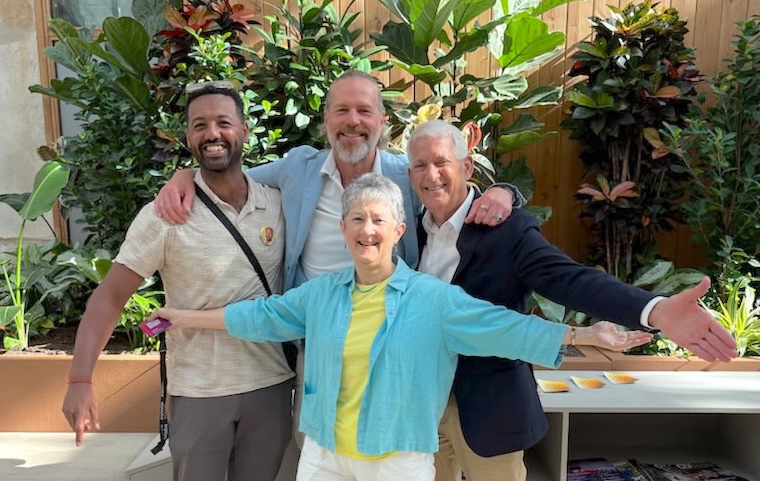
Collaboration is key
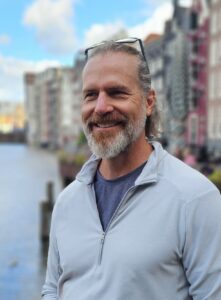
“Our most important takeaway was that building intelligent communities depends far more on collaboration than technology,” Fergusson said.
We learned that breakthrough innovations rarely emerge in isolation. They grow from ecosystems where education, industry, government, and community organizations continuously invest in one another.
Troy looked at this from a Fairfield entrepreneur’s perspective.
“Participating in this delegation helped me understand an actionable and exciting community formula for success: the quadruple helix, which focuses on collaboration among people, government, universities, and businesses,” Van Beek said. “Fairfield is uniquely positioned to benefit from this model. Innovation was at the core of Brightlands’ success, and by using this formula, I expect Fairfield to become a valuable epicenter of innovation for our community and beyond.”
An important issue here is retaining young people. Successful regions have moved beyond trying to attract talent to creating communities where talented young people want to stay.
And this starts with the youth, we found. We encountered examples of students still in school working alongside local governments, businesses, and researchers to solve real-world challenges.
We saw that meaningful work, opportunities to contribute, and a shared sense of purpose can be just as important as economic incentives, and hope itself can become an economic engine when communities give people a compelling vision for the future.
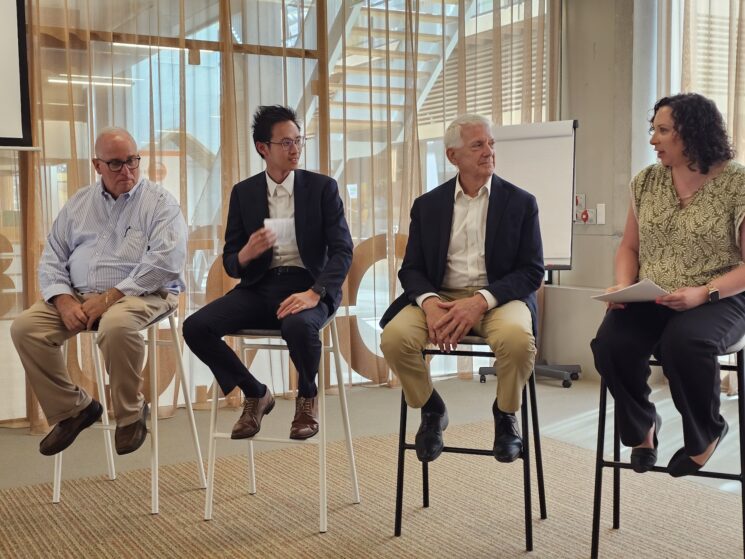
The role of universities

We also saw how universities can play a powerful role in regional development.
Across Brightlands and Brainport, universities functioned not only as educational institutions but also as research partners, talent pipelines, conveners, and catalysts for entrepreneurship. Students, faculty, government leaders, and industry representatives worked together to address practical challenges with direct benefits for their communities.
And we realized again how important it is for MIU to engage with the larger Fairfield community. Through education, workforce development, research, and community partnerships, MIU contributes to Fairfield’s long-term vitality while helping connect organizations around shared opportunities. And we can do more.
Returning to Fairfield, going forward
For Fairfield, Bob outlined opportunities to build stronger connections among organizations working in manufacturing, agriculture, arts and culture, financial services, and energy — helping existing organizations share knowledge, align around common goals, and strengthen Fairfield’s innovation ecosystem.
“We’ve now spent several years participating in the Intelligent Community Forum, first earning recognition as a Smart21 Community and later being named one of the Top 7 Intelligent Communities in the world,” Bob said. “This inspires us to continue learning from some of the world’s best examples of innovation, cooperation, and long-term thinking — not to replicate another community’s model but to build on Fairfield’s own strengths.”
The next ICF Global Summit takes place this October, when it convenes its annual Summit in Columbus, Ohio. Fairfield will be sending a delegation.
Interested in becoming involved?
We encourage interested Fairfield community members to explore the ICF Community Accelerator, a free online learning program made possible by local donor support. Consider nominating yourself or others for future Fairfield delegations. To access the course, you have to register on this special Fairfield community link that will open all the courses at no cost.
MIU Athletics is entering a new phase of growth marked by new sports programs, key coaching hires, national affiliation, and expanded competitive opportunities for student-athletes.
The most significant development is MIU’s acceptance as a full member of the United States Collegiate Athletic Association (USCAA). This milestone allows Pioneer teams to compete for national championships while strengthening the university’s path toward future membership in the National Association of Intercollegiate Athletics (NAIA).
“This achievement reflects the work we’ve done to build a strong foundation for MIU Athletics.”
— Rubén Sanchez, Athletics Director
“This achievement reflects the work we’ve done to build a strong foundation for MIU Athletics,” said Athletics Director Rubén Sanchez. “Joining the USCAA gives our student-athletes the chance to compete at a high level while continuing to grow our program with purpose.”
The USCAA serves small colleges and universities throughout the United States, providing championship competition and a flexible model for developing athletics programs. The affiliation will help establish the compliance and operational framework needed for long-term success while offering postseason opportunities in multiple sports.
Associate Athletics Director Owen Blake said the partnership aligns closely with MIU’s educational mission.
“The USCAA treats athletics as part of the educational experience, not separate from it,” Blake said. “That’s why we’re so excited to partner with them. At MIU, we develop student-athletes on every level, and now they have a national championship structure to test that development against.”
The association itself highlighted MIU’s Consciousness-Based Education model and commitment to academic excellence, leadership, service, and holistic student development as factors that distinguished the university during the membership process. USCAA Chief Executive Officer BJ Bertges called MIU “an outstanding addition” to the association and said the organization looks forward to supporting the continued growth of the athletics program.
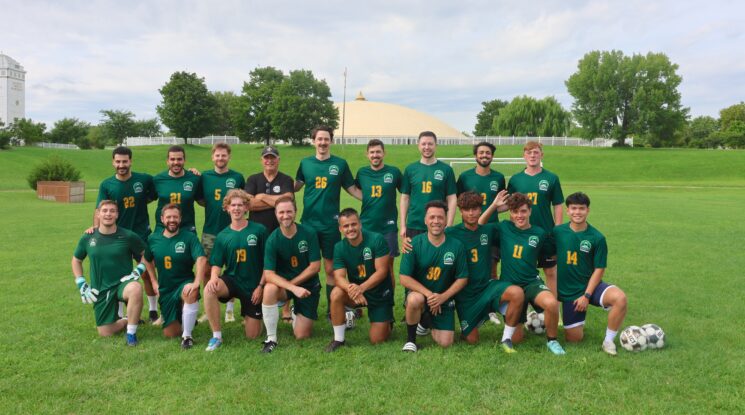
Expanding the sports offered
The announcement comes amid rapid expansion across the athletics department. Beginning this academic year, MIU will field teams in men’s soccer, women’s soccer, men’s basketball, men’s and women’s tennis, men’s and women’s cross country, and esports.
One of the most notable additions is the university’s first-ever men’s and women’s cross-country program. Rafael Muniz, currently head coach of women’s soccer, will also lead the new running program.
“It is a pleasure and a huge responsibility representing MIU and the cross-country program in its first season,” Muniz said.
“It is a pleasure and a huge responsibility representing MIU and the cross-country program in its first season.”
— Rafael Muniz, cross country and women’s soccer coach
Muniz brings more than a decade of coaching experience and a background as a professional soccer player in Brazil. Blake praised his versatility and enthusiasm, saying, “Rafa’s unbounded energy and passion make him an inspiring coach and a natural fit to take on the role of head coach for our cross-country team.”
Expanding the coaching staff
The Athletics Department has also strengthened its coaching staff with two experienced hires.
Walter Johnson has joined MIU men’s basketball as recruiting coordinator. Johnson brings professional playing experience and a coaching résumé that includes helping programs achieve conference championships, national rankings, and historic turnarounds at both the collegiate and high-school levels. Most recently, he helped lead East-West University during the 2025–2026 season to one of the most successful seasons in program history.
Johnson said MIU’s educational philosophy attracted him to the position.
“MIU’s emphasis on Consciousness-Based education and student well-being offers a unique setting where athletes can reach their full potential as competitors and as individuals.”
— Walter Johnson, recruiting coordinator for men’s basketball
“MIU’s emphasis on Consciousness-Based education and student well-being offers a unique setting where athletes can reach their full potential as competitors and as individuals,” he said.
The tennis program has also added veteran coach Lawrence Eyre as assistant men’s and women’s tennis coach. A Yale University graduate and 30-year USPTA Elite Professional, Eyre brings decades of coaching experience, including positions at Grinnell College and Knox College. He was previously named National High School Coach of the Year while coaching at Maharishi School.
“Maharishi Pioneers invest in rest for tennis success,” Eyre said. “Twice daily TM builds a physiological foundation for peak performance. When athletes live in the zone, they play in the zone.”
The upcoming season
Meanwhile, MIU’s teams are preparing for their upcoming seasons under the USCAA banner.
The men’s soccer program recently announced a 19-match schedule that includes six home contests and competition against several established collegiate programs. The season opens August 10 at Hawkeye Community College, followed by the university’s annual alumni game on August 13.
Associate Head Coach Caio Pereira said the team enters the season with optimism.
“It’s a very exciting time for the men’s soccer team. We have a talented group of newcomers alongside a great group of returners ready to lead this team into a successful season.”
— Caio Pereira, Associate Head Soccer Coach
“It’s a very exciting time for the men’s soccer team,” Pereira said. “We have a talented group of newcomers alongside a great group of returners ready to lead this team into a successful season. We’re looking forward to playing some tough competition and showing off the Pioneer spirit.”
The men’s tennis team has also announced a challenging fall schedule featuring competition against NCAA Division II, NCAA Division III, and NAIA opponents. Head Coach Eric Sturgis said the schedule reflects the program’s long-term ambitions.
“As we embark on this tennis season, I am extremely excited to see our players compete with teams from NCAA Division II and NAIA as we look to transition to NAIA in the future,” Sturgis said. “We should be competitive this fall and have some experienced transfers to anchor our lineup.”
For MIU Athletics, these developments show a rapidly growing program focused on student development, competitive excellence, and MIU’s Consciousness-Based approach to education. As new teams take the field, court, and course this year, Pioneer student-athletes will have their first opportunity to compete on a national stage through USCAA competition and championship play.
Stay connected
Stay up to date with MIU Athletics — never miss a moment of the action:
- Facebook: Maharishi International University Athletics
- Instagram: @MIU.Athletics
- Youtube: MIU Athletics
- Website: www.miuathletics.com
Get MIU Athletics updates straight to your inbox — subscribe to the MIU Pioneers Newsletter and sign up for mobile alerts to receive news, scores, highlights, and more.
* * * * * * *
Maria Eduarda Rodrigues da Silva is the sports editor for MIU News and the Sports Information and Creative Director for the MIU Athletics Department.