
For two straight years, 2004 and 2005, the Atlantic Ocean battered the Eastern U.S. coast with seven major hurricanes (Category 3 or higher) — the most in any two years since 1851, when reliable data-keeping started.
Pictured above: A NOAA satellite view of a massive Hurricane Erin churning off the U.S. East Coast on Aug. 20, 2025. Image credit: NOAA Satellites
It was also the only time that five or more hurricanes of any strength made U.S. landfall in consecutive years. In 2005 alone, four major hurricanes struck — the highest single-season total on record.
At the beginning of 2006, meteorologists naturally predicted another severe hurricane season.
But that year, no hurricanes, major or minor, struck the U.S. — the only year since 1851 that the number of major hurricanes hitting the U.S. dropped from four to zero.
“It was almost like we had a hurricane repellent”
This was no one-year wonder. No major hurricanes struck the U.S. for the next nine years.
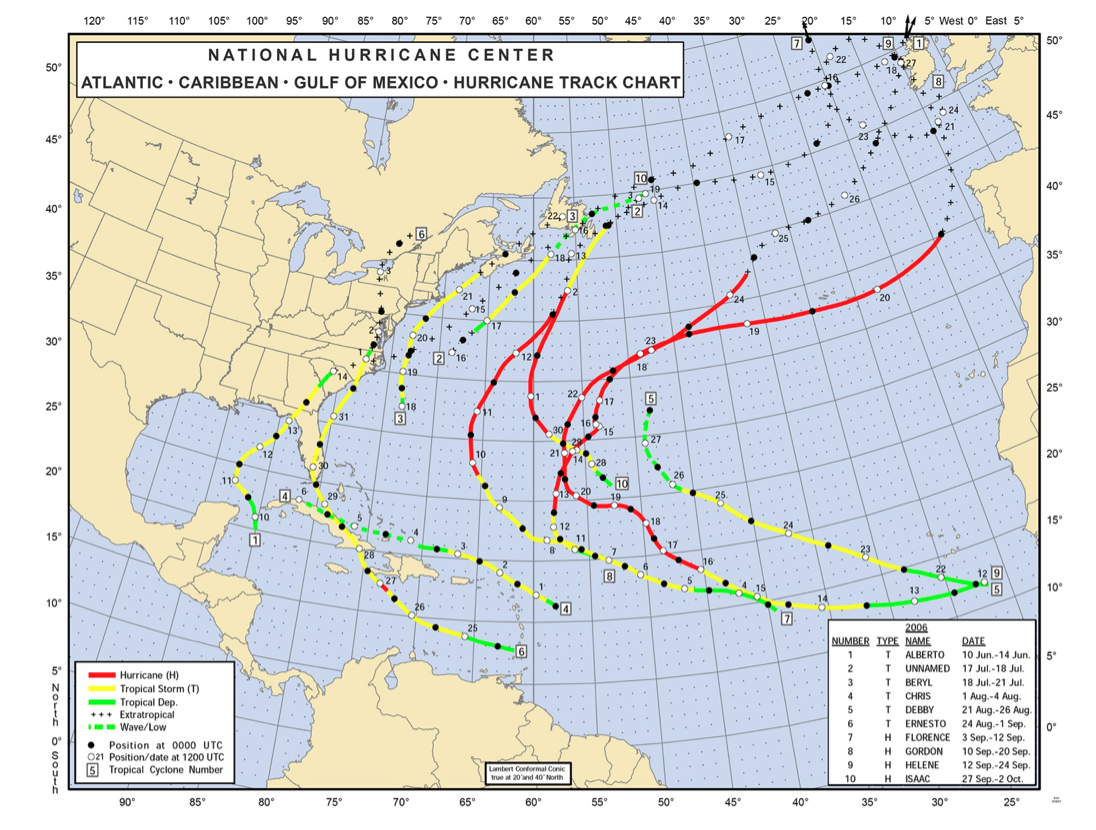
One of those years, 2010, was a particular standout. Twelve hurricanes spun out of the Atlantic basin — five of them major — but none landed. Low-pressure systems kept the storms at sea. Nothing like this had been seen before.
“This was a strange, strange season,” one meteorologist said in a story in National Geographic. “It was almost like we had a hurricane repellent over the U.S. East Coast and Gulf Coast. The storms were out there, but they just didn’t approach the U.S.” (See map below)
Over the nine years from 2006 to 2014, eight minor hurricanes — but no major hurricanes — made landfall in the U.S.
Weather experts describe that nine-year period, 2006–2014, as a hurricane drought — a historically unprecedented event expected to occur only about once every 177 years.
How to explain this?
Weather scientists have been at a loss to account for what happened.
But a recently published statistical study, reviewing 171 years of hurricane records, found a striking pattern: the nine‑year reduction in the annual incidence of landfalling hurricanes coincided with large group practice of Transcendental Meditation (TM) and its advanced programs at MIU in Iowa.
The study was conducted by MIU scientist Dr. Kenneth L. Cavanaugh and Dr. Lee Fergusson, an MIU PhD graduate, professor at Maharishi Vedic Research Institute, and educational researcher at the University of Southern Queensland, Australia.
Human activity affects the weather
Scientists have long accepted that human behavior affects weather and climate through physical means. Industrial chemicals such as chlorofluorocarbons have altered the ozone layer, and greenhouse gas emissions are widely understood to intensify storms and rainfall.
But the new study addresses a more controversial question: whether human consciousness itself might also play a role.
“We asked whether subtler forms of human behavior — particularly collective meditation — could beneficially influence environmental outcomes.”
— Dr. Ken Cavanaugh
“Modern science already recognizes that human activity shapes weather,” Dr. Cavanaugh points out. “We asked whether subtler forms of human behavior — particularly collective meditation — could beneficially influence environmental outcomes.”
Other researchers have explored this idea. For example, in a study entitled “Wishing for Good Weather: A Natural Experiment in Group Consciousness,” Princeton University’s Engineering Anomalies Research (PEAR) lab analyzed 36 years of weather data to compare rainfall in Princeton with rainfall in nearby communities — and found that there was significantly less rain, and less often, in Princeton on days with major outdoor activities, such as graduation, suggesting a possible association between group expectations and weather outcomes.
A prospective demonstration project
A large group began practicing Transcendental Meditation and its advanced techniques daily at MIU in 2006, following the devastating 2004 and 2005 hurricane seasons. One purpose of this prospective demonstration project was to reduce the frequency and intensity of hurricanes striking the continental United States.
The group grew to roughly 1,700 participants — the theoretical threshold the researchers say is needed to influence national trends — and remained in place for the next nine years.
Using interrupted time‑series analysis, the study found that, controlling for other variables, the average number of U.S. landfalling hurricanes dropped sharply during the 2006–2014 period, falling to about 0.7 per year compared with a long‑term baseline of roughly 1.7. This is a reduction of 57.7% from the pre-demonstration period, 1851–2005.
“When we controlled for conventional predictors like storm energy and total Atlantic activity, the decline remained highly significant.”
— Dr. Lee Fergusson
“When we controlled for conventional predictors like storm energy and total Atlantic activity, the decline remained highly significant,” Dr. Fergusson said. “The timing aligns closely with the period of sustained group practice.”
According to Dr. Cavanaugh, the probability is less than 1 in 100 million that these results would be observed if the true effect of the meditation group were actually zero.
The experiment ends — and the major hurricanes return
Notably, after the group program ended in 2015, the pattern reversed — hurricane landfalls and damages increased again, rising 51.2% relative to the demonstration period.
This included the catastrophic 2017 season, when the U.S. was struck by a succession of devastating storms — Harvey, Irma, and Maria — that caused widespread destruction across Texas, Florida, Puerto Rico, and the Caribbean. The season was one of the costliest on record, with damages exceeding $265 billion.
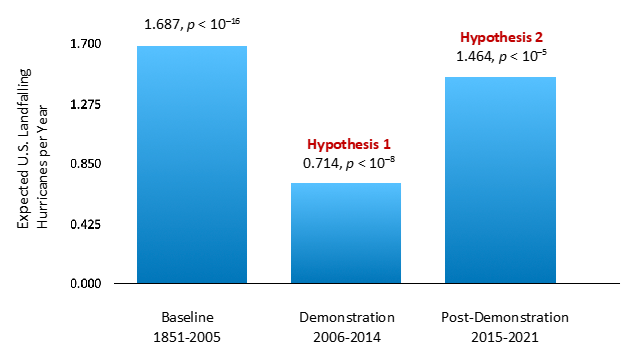
Cavanaugh and Fergusson’s analysis builds on Cavanaugh’s earlier unpublished work. In a 2010 pilot study, he examined NOAA hurricane data from 1851–2010 using similar statistical methods. He found that during the early years of the demonstration period, the number of hurricanes striking the U.S. dropped significantly, with predicted counts falling to more than 60 percent below the historical baseline, after accounting for overall Atlantic storm activity.
Cavanaugh and Fergusson’s study also builds on decades of research into the Maharishi Effect, which has linked large group practice of Transcendental Meditation and the TM‑Sidhi programs with reductions in crime, accidents, and other social indicators. This new analysis extends that idea to the natural environment.
Economic impact: hundreds of billions
In a parallel report, Dr. Howard Settle, CPA, who worked with Maharishi to establish this demonstration project, found a substantial reduction in financial damages associated with this hiatus in landfalling hurricanes.
Analyzing NOAA and federal data, Dr. Settle found that hurricane damage averaged just $18.9 billion per year during the 2006–2014 period — less than half the pre‑2006 average and far below the $77.1 billion annual average seen after 2015.
By comparison, the study estimates that the “quiet” years produced $240 billion in avoided losses, while a return to higher storm activity after 2015 resulted in more than $500 billion in additional costs relative to that benchmark.
“These were not just statistical differences — they translated into real economic relief.”
— Dr. Howard Settle
“These were not just statistical differences — they translated into real economic relief,” Settle said. “Insurance markets stabilized, rebuilding could proceed uninterrupted, and communities had time to recover.”
Competing explanations
Mainstream meteorology has struggled to fully explain the drought. Standard factors such as El Niño cycles, Atlantic temperature patterns, and storm intensity do not account for the sharp drop in U.S. landfalls during those years, according to the study.
Lacking a persuasive explanation from conventional atmospheric science, some prominent hurricane experts simply attribute the drought to “luck.”
For example, two leading experts pointed out that this long stretch without major U.S. hurricanes is surprising. During many of those years, there were still lots of storms, including strong ones, and several hit the Caribbean. In other words, hurricane activity was high — but the U.S. was largely spared. They suggested that current weather science doesn’t fully explain this pattern, and that it would take new ideas to understand how storms could stay active while mostly missing the U.S. but damaging nearby regions.
A broader hypothesis
Cavanaugh and Fergusson acknowledge that the findings are consistent with — but do not prove — causation. But they are consistent with predictions of the Maharishi Effect theory.
This type of study is known as a quasi-experiment. In such studies, researchers introduce an intervention or program but do not randomly assign participants — in contrast to natural experiments, where they retrospectively analyze data on events that unfolded without deliberate intervention. Because the intervention is planned, quasi-experiments often allow researchers to predict outcomes in advance and then test whether those predictions are borne out.
At the core of this research is a broader theoretical framework drawn from Vedic tradition, which proposes that individual and collective consciousness are interconnected with the natural environment. In that model, large‑scale stress in society can foster imbalance in nature, while coherence — enhanced through practices such as meditation — can neutralize stress and promote stability.
“We are not claiming that consciousness directly ‘controls’ the weather,” they say. “But the data are consistent with the hypothesis that reducing collective stress may influence how natural systems behave.”
“This hypothesis challenges conventional thinking,” Cavanaugh said. “But history shows that science advances by investigating anomalies, not ignoring them.”
Given these results, Cavanaugh and Fergusson urge public and private organizations to support replicating this evidence-based approach to mitigating disasters.
For further information
Click here to read the study, “Consciousness and the Environment: Maharishi Technologies of Consciousness and the Incidence of U.S. Landfalling Hurricanes, 1851–2021,” published last December in the Journal of Scientific Exploration.
Click here to read Dr. Howard Settle’s “US Hurricane Damage Analysis 1997–2023.”
A team of medical scientists from MIU’s Institute for Natual Medicine and Prevention has published two major new peer-reviewed scientific papers on Maharishi Amrit Kalash (MAK), an Ayurvedic herbal formulation traditionally used to support health, resilience, and healthy aging.
The publications represent a milestone in the scientific study of Maharishi Ayurveda and cardiovascular disease, combining modern clinical research with traditional Ayurvedic knowledge.
The research team included MIU faculty Dr. John Salerno, Dr. Robert Schneider, Dr. Sanford Nidich, and Dr. Maxwell Rainforth, along with collaborators from Howard University Hospital Heart Center in Washington, DC, and Maharishi Ayurveda research groups in India and Europe. Dr. Carolyn Gaylord King and Dr. Charles Alexander of MIU contributed to the overall project’s direction.
Clinical trial highlights potential cardiovascular benefits of Ayurvedic formula
The first article, published in the international journal Medicina, reported results from a randomized, double-blind, placebo-controlled clinical trial evaluating Maharishi Amrit Kalash in older adults with cardiovascular disease or high cardiovascular risk.
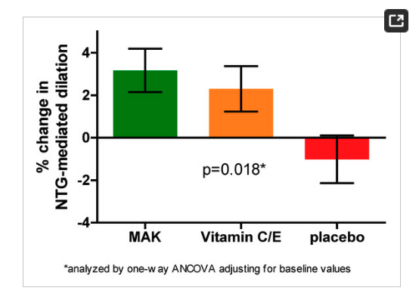
The study found that participants taking Maharishi Amrit Kalash demonstrated significant improvement in vascular smooth muscle function, an important marker related to vascular aging and cardiovascular health. Researchers noted that the findings suggest possible beneficial effects on biological pathways involved in vascular aging.
The clinical trial was conducted in collaboration with Howard University and reflected years of work integrating modern cardiovascular science with traditional systems of natural medicine.
“These publications help advance the rigorous scientific evaluation of traditional Ayurvedic approaches within modern medicine.”
— Dr. Robert Schneider
“Ayurveda has long emphasized prevention, balance, and healthy aging,” said Robert Schneider, MD, FACC, and senior author of the study. “These publications help advance the rigorous scientific evaluation of traditional Ayurvedic approaches within modern medicine.” Schneider is Distinguished Professor of Integrative Medicine and Health at MIU and Director of the Institute for Natural Medicine and Prevention.
The study was funded by a center grant from the National Institutes of Health-National Center for Complementary and Integrative Health to MIU’s Institute for Natural Medicine and Prevention.
Comprehensive study highlights antioxidant and cardioprotective effects
The second article, published in Frontiers in Pharmacology, was a scoping review of experimental and clinical studies on Maharishi Amrit Kalash and cardiovascular disease (a scoping review maps and summarizes the existing research on a topic to show what evidence is available and where further study is needed).
The review summarized evidence suggesting antioxidant, anti-atherogenic, and cardioprotective effects of the formulation, including studies on oxidative stress, LDL oxidation, vascular function, angina symptoms, and atherosclerosis.
The authors noted that Maharishi Amrit Kalash is based on the classical Ayurvedic concept of rasayana — therapies traditionally used to promote longevity, vitality, and resistance to disease. The formulation was developed from the traditional preparation known as Brahma Rasayana.
Together, the two reports reflect MIU’s longstanding leadership in integrative medicine, consciousness-based health research, and the scientific study of Maharishi Ayurveda.

The publications also highlight the growing international collaboration among researchers in the United States, India, and Europe working to investigate traditional systems of medicine using contemporary scientific methods.
Click here to read the first study, John W. Salerno, Shichen Xu, Maxwell Rainforth, Sanford I. Nidich, and Robert H. Schneider, “A Randomized, Double-Blind, Placebo-Controlled Trial of an Ayurvedic Herbal Formulation and Vitamin C/E on Vascular Function in Patients with Cardiovascular Disease,” Medicina 62, no. 5 (2026): 972.
Click here to read the second study, “Radha Singh, Rini Vohra, Richa Shrivastava, and Robert H. Schneider, “Cardioprotective Potential of Maharishi Amrit Kalash: A Scoping Review of Evidence from Experimental and Clinical Studies,” Frontiers in Pharmacology 17 (May 13, 2026).
MIU’S emerging athletics program is vaulting forward. Enrollment is growing. New coaches have signed on. MIU teams have enjoyed success across multiple sports. National visibility is on the rise. And the program is laying the groundwork for joining the National Association of Intercollegiate Athletics (NAIA).
MIU Athletics is positioning itself as a distinctive model in collegiate sports — promoting peak performance through the inner development approach of Consciousness-Based Sports.
Strong first-year growth and impact
In its inaugural year, MIU Athletics enrolled more than 25 student-athletes — 19.5 full-time equivalents — accounting for a significant share of campus growth.
Notably, 13 of the university’s 36 new on-campus undergraduates in Fall 2025 came through athletics, representing roughly 36 percent of new residential enrollment. That proportion held steady into the spring term, highlighting athletics as a key driver of campus expansion.

Financially, the program is outperforming expectations on a per-student basis. Athletics students generate approximately $16,000 in net tuition revenue per FTE — about $1,000 above the average on-campus undergraduate.
This reflects the program’s structured use of merit-based scholarships: Non-athletes receive need-based aid, while athletes receive merit scholarships based on cultural fit with the university, academics, and athletic performance.
Academically, recruited athletes posted a 3.12 average GPA, surpassing the NAIA Scholar Team benchmark — something only about half of NAIA programs nationwide achieve. Four student-athletes individually qualified for the NAIA Daktronics Scholar-Athlete Award.
All athletes, coaches, and staff have learned the TM technique, and four of them are taking the advanced TM-Sidhi program training this summer.
The athletics program has also demonstrated early marketing traction, generating more than 200,000 organic social media impressions per month without paid promotion.
“I’m so proud of how athletics fulfills one of MIU’s key strategic goals — growing our campus enrollment.”
— Owen Blake
“We’re excited about this growth,” said Owen Blake, Associate Athletic Director. “I’m so proud of how athletics fulfills one of MIU’s key strategic goals — growing our campus enrollment.” Blake is also an assistant professor of Maharishi Vedic Science and a Faculty Fellow in the Dr. Tony Nader Institute.
Soccer: Building a competitive foundation

Soccer is emerging as a cornerstone of MIU’s athletics strategy. Rafael Muniz, newly hired as head coach of women’s soccer, brings extensive experience in collegiate coaching and program development.
Muniz previously helped build Wiley University’s men’s and women’s programs into conference champions and became the program’s all-time winningest coach. His international recruiting network, particularly in Brazil and Latin America, should strengthen MIU’s talent pipeline.
“The opportunity to build a strong soccer program from the ground up is something that motivates me greatly,” Muniz said.
Both men’s and women’s soccer will play a central role in MIU’s transition to varsity competition.
Tennis: Leadership and program development

MIU is also launching men’s and women’s tennis under head coach Eric Sturgis, a veteran with more than 30 years of coaching experience.
Sturgis brings a long record of player development and collegiate leadership, along with a background in high-level competition and sports management. His role is to establish the program’s culture and competitive foundation as MIU expands its athletics offerings.
“After speaking with Ruben and Owen, I knew MIU was the perfect fit,” said Sturgis. “The opportunity to start a tennis program from the ground up is something that I truly enjoy. The facilities and support for tennis at MIU also made this an easy decision. I am looking forward to having men’s and women’s teams in the fall.”
Esports: Early national success
MIU’s esports program has quickly reached a national stage. In its first year, the League of Legends team posted a 6–1 regular season record and qualified for the National Esports Collegiate Conference (NECC) Division V National Championship.
The team secured victories against well-established programs, including Indiana University, North Dakota State, and Tarleton State, demonstrating its ability to compete with much larger schools.
Program leaders say the success reflects a holistic coaching approach that emphasizes mental clarity, decision-making, and team coordination alongside technical skill. The esports program will continue as part of MIU’s broader athletics portfolio, with room for further growth.

Expansion toward NAIA competition
Looking ahead, MIU is preparing for a full launch into intercollegiate competition within the National Association of Intercollegiate Athletics (NAIA), the governing body for many smaller four-year colleges. This represents a shift from early-stage program building to fully structured varsity athletics.
The transition includes fielding at least three men’s and three women’s teams, meeting eligibility and compliance standards, and competing in an official conference with access to regional and national championships.
It also requires expanded coaching staffs, fully recruited rosters, scholarship alignment with NAIA guidelines, and the administrative systems needed to sustain varsity competition.
“We’re launching men’s soccer, women’s soccer, men’s basketball, men’s and women’s tennis, and men’s and women’s cross country.”
— Owen Blake
“We plan to meet those requirements by the 2026–27 academic year,” Blake said. “We’re launching men’s soccer, women’s soccer, men’s basketball, men’s and women’s tennis, and men’s and women’s cross country. Adding cross country is a strategic move — it allows athletes from other sports to participate without needing more coaching staff.”
Full NAIA membership is targeted for Fall 2027, with the coming year serving as a critical buildout phase in which these programs begin operating at a varsity level and prepare for conference play.
MIU has also applied to join the USCAA (United States Collegiate Athletic Association). Recommended by NAIA as a step toward full membership, this will allow MIU to compete for post-season play in national tournaments. The USCAA offers significant scheduling flexibility, allowing MIU considerable freedom in choosing opponents, timing, and travel.
“We project the athletics program to grow to approximately 75 student-athletes this fall, supported by a recruiting pipeline of around 120 applicants,” Blake said. “At that scale, we expect athletics to generate about $1.21 million in net tuition revenue every year.”
Long-term projections estimate more than $13.6 million in net tuition revenue over five years, along with significant increases in residential enrollment that help reduce per-student costs and contribute additional room-and-board revenue.
Table tennis opportunity in development
MIU is also exploring the potential addition of a nationally competitive table tennis program, pending donor support. Athletics leaders are in discussions with a highly accomplished coach who recently won the U.S. professional championship and has led collegiate teams to numerous national titles.
Leaders see the opportunity as both competitively significant and mission-aligned, with the potential to bring national visibility to MIU Athletics.
Nike partnership signals next phase of growth
Capping a year of rapid progress, MIU Athletics has announced a partnership with Nike and BSN Sports, making Nike the official provider of uniforms, apparel, and equipment across all varsity programs.
The agreement establishes a unified look across teams and reinforces the program’s national ambitions. University leaders also see the partnership as reflecting a shared philosophy of performance rooted in inner development.
“MIU Athletics is growing and every decision we make, including this one, is intentional,” said Athletics Director Rubén Sanchez. “Nike carries the pioneer spirit. We are the Pioneers. That alignment is powerful.”
“By combining elite athletic branding with Consciousness-Based training, the Nike partnership creates a unique environment for student-athletes.”
— Romel Bryant
“The partnership complements MIU’s broader educational model,” said men’s basketball head coach Romel Bryant. “By combining elite athletic branding with Consciousness-Based training, the Nike partnership creates a unique environment for student-athletes.”
As MIU Athletics moves toward full NAIA competition, the Nike partnership signals both credibility and momentum—marking the program’s transition from launch phase to sustained growth on a national stage.
Stay connected
Stay up to date with MIU Athletics — never miss a moment of the action:
- Facebook: Maharishi International University Athletics
- Instagram: @MIU.Athletics
- Youtube: MIU Athletics
- Website: www.miuathletics.com
Get MIU Athletics updates straight to your inbox — subscribe to the MIU Pioneers Newsletter and sign up for mobile alerts to receive news, scores, highlights, and more.
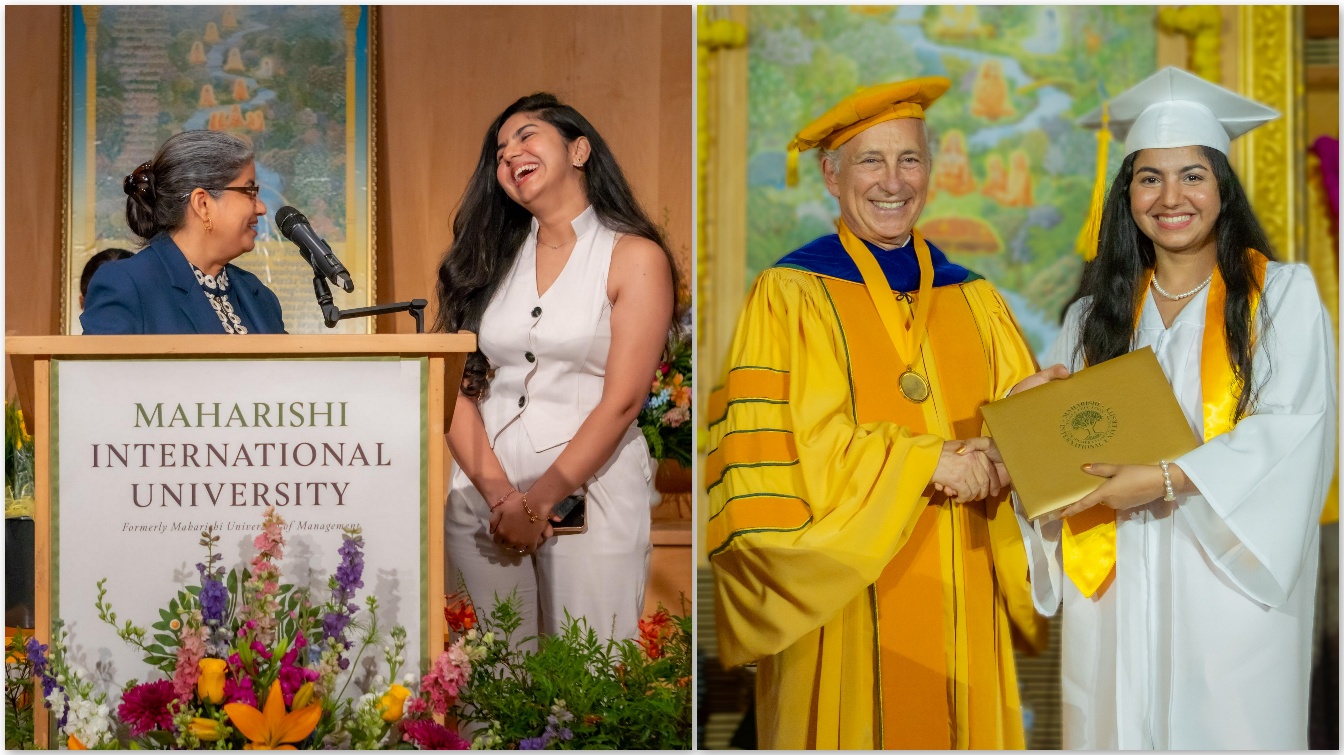
Bhagia Sheri came to MIU from Pakistan in 2022 to pursue a master’s degree in computer science. She received the Outstanding Graduate Award at her 2025 graduation and has been working as a software engineer at Walmart in the United States.
She says that her MIU education transformed her life, leading to significant academic, professional, and personal growth. She believes that Transcendental Meditation®, which she learned when she arrived at MIU, has played a major role in her success.
Q: What stands out to you most about MIU?

Bhagia with her friends at an MIU cultural event
“What I liked most about MIU was the block system, in which I studied one course at a time. This structure allowed me to focus deeply and truly understand each subject instead of studying multiple subjects at the same time. It helped me give my full attention to each course, especially in areas that were new to me, and enabled me to build strong foundational knowledge.
“One of the other aspects that I love about MIU is that learning happens outside the classroom as well. With a diverse campus and students from all around the world, I was able to make lifelong friends, learn a lot about their cultures, and share my own culture with them. I will cherish all the memories I made at MIU.”
Q: How would you describe the quality of instruction from your professors?
“MIU professors are truly exceptional, one of the strongest pillars of the university. They are not only knowledgeable but also incredibly supportive and approachable.
“They genuinely care about students’ success and often go above and beyond to help. Whether it’s answering questions, adapting teaching methods, or providing guidance, they ensure that every student gets the opportunity to grow.
“I always felt encouraged and supported throughout my journey.”
Q: How has TM helped you in your studies and career?
“TM has been one of the most important parts of my journey at MIU. It helped me manage stress, stay focused, and maintain balance.
“TM helped me stay consistent, handle academic pressure, and remain mentally clear while managing multiple responsibilities.”
— Bhagia Sheri
“During my studies, TM helped me stay consistent, handle academic pressure, and remain mentally clear while managing multiple responsibilities such as classes, projects, and applying for a paid practicum. It helped me stay calm and focused even during challenging times.
“Even now in my professional life, TM continues to help me think clearly, make better decisions, and handle stress in a balanced way. In a fast-paced field like technology, having a calm and focused mind is essential for success, and TM plays an important role in maintaining that clarity and balance.”

Q: What encouragement would you give to students worldwide who are considering MIU?
“I recommend MIU and the TM technique, as they can be highly beneficial for those seeking international exposure, career growth, and personal development. MIU is a place for those who want to learn in a stress-free environment and stay balanced.
“MIU provides the right environment and support system that encourages students to take on new challenges.”
— Bhagia Sheri
“Growth happens when you step out of your comfort zone and remain consistent over time. MIU provides the right environment and support system that encourages students to take on new challenges, develop discipline, and steadily build personal and professional skills.”