
MIU is rapidly expanding its visibility and leadership within the United Nations system, with senior university figures participating in a series of high‑level UN‑sponsored events over the past two years.
From keynote addresses at the UN’s inaugural and second annual World Meditation Day observances to an upcoming academic presentation before a major UN scholarly council, MIU is helping shape global conversations on meditation, public health, and human resilience.
“The UN’s recognition of World Meditation Day reflects a growing understanding that inner development and outer peace are inseparably linked.”
— Dr. John Hagelin
“We are witnessing a shift in the global conversation — from meditation as a personal wellness tool to meditation as a strategic resource for public health and conflict prevention,” Dr. John Hagelin said. “The UN’s recognition of World Meditation Day reflects a growing understanding that inner development and outer peace are inseparably linked.”
A historic first: Dr. Tony Nader keynotes the inaugural World Meditation Day
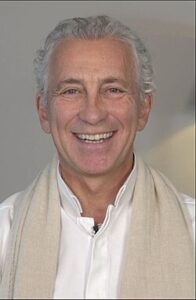
Momentum began on December 20, 2024, when MIU President Dr. Tony Nader was invited as the sole non‑diplomat keynote speaker at the United Nations’ first‑ever World Meditation Day celebration in New York City. The event followed a unanimous General Assembly resolution establishing December 21 as an annual observance dedicated to “Inner Peace, Global Harmony.”
More than 200 attendees — including diplomats from roughly 30 UN member states and leaders of UN‑affiliated NGOs — gathered for the inaugural event. Senior diplomats from the six sponsoring nations — India, Sri Lanka, Liechtenstein, Nepal, Mexico, and Andorra — were prominently represented. Volker Türk, UN High Commissioner for Human Rights, addressed participants live from Zurich.
In his keynote, Dr. Nader emphasized that “meditation is not a luxury — it’s a necessity,” describing the Transcendental Meditation technique as a universal, non‑religious technology for inner renewal. Citing the UNESCO constitution’s assertion that peace must be built in the minds of individuals, he argued that TM provides a systematic means of doing so.
Dr. Nader referenced more than 750 scientific studies on TM’s health benefits, along with over 118 studies showing reductions in crime, illness, and conflict during large‑group practice. He also recalled a landmark 1993 Washington, D.C., study in which researchers documented a significant drop in violent crime coinciding with a large meditation group assembled in the city.
The global observance drew more than one million participants worldwide on December 21, marking the start of what is now an annual UN‑recognized event.
Sustained engagement: Dr. John Hagelin at the International Day of Peace and World Meditation Day in 2025
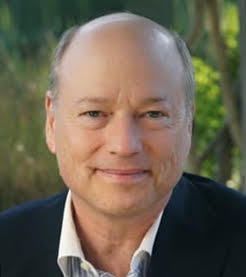
Building on that foundation, MIU leaders again played a central role at the United Nations in 2025.
On September 21, Dr. John Hagelin delivered a keynote address as part of the International Day of Peace global celebration, coordinated internationally in connection with the UN. His talk, “World Peace through Inner Peace: An Evidence‑Based Approach,” outlined five core elements of the brain‑based / Consciousness‑Based® approach to peace. Watch the presentation here.
On December 21, 2025, Hagelin spoke at the second annual World Meditation Day commemorations at UN Headquarters, held in the historic Trusteeship Council Chamber. The gathering reflected growing institutional interest in meditation as a tool for public health, resilience, and peacebuilding. Speaking as a scientist and international president of the Global Union of Scientists for Peace, Hagelin presented research on the mechanisms by which large‑group meditation produces societal coherence, alongside diplomats, academics, and spiritual leaders.

Dr. Robert Schneider, originally scheduled to speak in Dr. Nader’s place on cardiovascular benefits of TM, arrived shortly before the conclusion due to weather‑related delays, and Hagelin presented in his stead.
In his remarks, Hagelin described meditation as a “non‑political, non‑coercive technology of peace — grounded in science and accessible to all,” noting a shift in global discourse toward its relevance for conflict prevention and public health.
Although World Meditation Day is only two years old, participants at the 2025 observance highlighted its role as a catalyst for new institutional pathways within the UN system.
Academic integration and policy impact
Emerging initiatives now involve engagement with the Academic Council on the United Nations System (ACUNS), preparation for future Economic and Social Council (ECOSOC) Consultative Status applications, collaborations around the International Day of Yoga, and potential participation in interfaith and comparative religion conferences.
Central to MIU’s expanding role is the effort to introduce evidence‑based meditation research directly into UN academic and policy networks. Engagement with ACUNS — a key scholarly partner — offers opportunities to integrate meditation into discussions of sustainable development, mental health, environmental stress, and human security.
ECOSOC Consultative Status remains a strategic priority, enabling TM‑affiliated organizations to participate more formally in UN meetings, submit written statements, and host side events across the system.
Looking ahead: MIU to present at ACUNS annual meeting in Portugal

The next milestone comes on June 6, 2026, when Dr. Schneider and Dr. Charlotte Bech present peer‑reviewed research at the ACUNS Annual Meeting in Lisbon, Portugal. Their paper, “Environmental Stress, Cardiovascular Risk, and Human Resilience: Evidence‑Based Pathways for Multilateral Policy Integration,” examines cardiovascular disease as a downstream effect of environmental and psychosocial stressors.
They will outline preventive cardiovascular strategies for climate, environmental, urban, and social policy frameworks, and highlight evidence‑based stress‑reduction interventions — including TM — as components of resilience‑oriented public health policy.
“This places Dr. Schneider and TM in front of a very prestigious audience of academic advisers to UN leadership,” said Craig Hobbs, an organizer of MIU’s UN engagements. “It also adds credibility and visibility to Dr. Hagelin’s and Dr. Nader’s work with global governance bodies.”
“We are at a pivotal moment where meditation is no longer viewed as alternative or adjunctive, but as complementary and integrative within mainstream medical practice.”
— Dr. Robert Schneider
“We are at a pivotal moment where meditation is no longer viewed as alternative or adjunctive, but as complementary and integrative within mainstream medical practice,” Dr. Schneider said. “The data support its inclusion in preventive cardiology, workplace health programs, and trauma-informed care.”
A growing role on the world stage
From keynote speeches at UN headquarters to academic presentations shaping international policy conversations, MIU’s leadership is building a respected presence in multilateral discussions on peace, public health, and human development — and new avenues of engagement continue to open.
* * * * * * *
Banner photo by Gavin Li on Unsplash.
Two MIU scholars were among a small group of invited international speakers at a major academic conference held last fall in conjunction with the birth centenary of Sri Sathya Sai Baba, one of India’s most influential spiritual leaders.
Dr. Fred Travis, Distinguished Professor of Neuroscience and Director of MIU’s Center for Brain, Consciousness, and Cognition, and Ramayan scholar Michael Sternfeld presented their work during a Vedic Centennial Conference held January 23–25, 2026, at Prasanthi Nilayam, the main Sai Baba ashram in Puttaparthi, Andhra Pradesh.
The academic sessions followed large‑scale centenary observances that drew hundreds of thousands of participants from around the world. The main celebration, on November 19, included a visit by Indian Prime Minister Narendra Modi and marked the 100th anniversary of Sai Baba’s birth.
An unexpected invitation
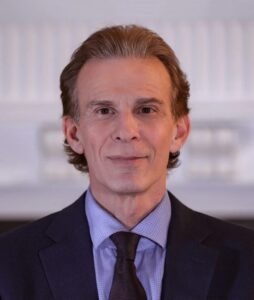
Sternfeld, who has no prior institutional connection to the Sai Baba organization, said the invitation itself was unexpected.
“As a longtime student of Maharishi’s knowledge, I really didn’t feel that familiar or connected with the Sai Baba tradition,” he said. “But they were very intentional about inviting scholars from outside their own lineage, and they were genuinely interested in dialogue.”
Sternfeld earned an MA in Maharishi Vedic Science from MIU, where he became fascinated with the Ramayana and, using his producer skills, went on to create numerous productions of the great epic over the last 30 years, including theatrical productions, a theme park, and the first complete audio production of the unabridged Ramayana of Valmiki — 75 hours long, making it the world’s longest audiobook. His latest production, Sita’s Gems, retells the story from the vantage point of the divine feminine.
Travis was invited soon afterward and flew in briefly to speak at the conference’s central academic venue.
Neuroscience and lived experience
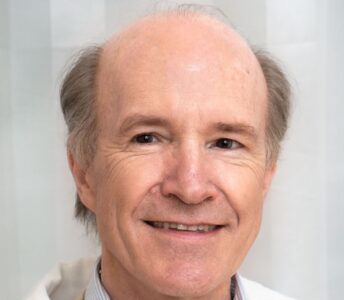
Travis’s presentation focused on the relationship between consciousness and brain functioning, drawing on decades of neuroscientific research on Transcendental Meditation and higher states of consciousness.
“The main point,” Travis said, “is that consciousness is primary. The brain isn’t producing consciousness — consciousness is structuring the brain.”
He emphasized that this perspective is not philosophical speculation but something that can be measured.
“When consciousness interacts with itself, we see it very clearly in patterns of brain functioning,” he said. “We can measure coherence in brainwaves, and we can see consistent changes during meditation and chanting.”
At the organizers’ request, Travis conducted a live demonstration using EEG equipment to show real‑time changes in brain activity during Vedic chanting.
“It wasn’t about convincing anyone,” he said. “It was simply about showing what happens in the nervous system during these experiences.”
Re‑reading the Ramayana
Sternfeld addressed a much larger audience in the ashram’s main gathering hall, speaking to several thousand people during a morning session. His talk explored the Ramayana not as a fixed moral code, but as a living guide to discerning increasingly subtle levels of right action.
“The Ramayana is often described as a textbook of dharma,” he said. “But dharma there isn’t black and white. It’s deliberately ambiguous, and that ambiguity challenges us to open our awareness to finer levels of discrimination.”
Central to Sternfeld’s presentation was what he described as the interweaving of love and dharma throughout the epic.
“This interweaving is much like the double helix of DNA, which acts as the ‘code of life,'” he said. Throughout the Ramayana, its central characters repeatedly encounter this apparent opposition between love and dharma. This dynamic tension serves as a refined crucible through which dharma is clarified, love expands, and consciousness evolves.”
He illustrated this dynamic through key episodes in the epic, including the emotionally charged exchange between Rama and Bharata during Rama’s exile.
“That moment captures the whole teaching,” Sternfeld said. “Bharata speaks from love. Rama speaks from dharma. The resolution honors both.”
Conference organizers asked Sternfeld to speak without slides or prepared text.
“They specifically said, ‘We want you to speak extemporaneously,’” he said. “They wanted it to come from lived understanding, not presentation polish.”
A meeting of traditions
Both speakers said they were struck by the intellectual depth of the conference and by how closely many presentations aligned with Maharishi’s teachings, despite coming from a different lineage.
“The level of scholarship was remarkably high,” Sternfeld said. “Many of the speakers were senior academics, government advisors, or heads of national institutes. And their understanding of Vedic knowledge was extremely refined.”
Travis agreed.
“What stood out was how natural the conversation was,” he said. “There wasn’t any sense of competition between traditions. There was mutual respect.”
At the same time, the differences were clear.
“The orientation there is much more outward — Vedic chanting and service based on devotion,” Travis said. “Maharishi’s emphasis is deeply inward, experience pure consciousness and bring it into your life.”
Conversations beyond the conference
Beyond their formal talks, Sternfeld and Travis met with senior leaders of the Sai Baba organization to explore possible future collaborations.
“We discussed three areas,” Sternfeld said. “Sending delegates to international conferences, potential collaborative research on meditation and chanting, and the importance of large groups practicing together.”
While no formal projects have yet been launched, both speakers saw the conversations as significant.
“The conference wasn’t framed as an endpoint,” Sternfeld said. “They were very explicit: this is meant to lead to ongoing work.”
A broader perspective
For both MIU faculty members, the experience offered a wider lens on how Vedic knowledge is being preserved, interpreted, and lived in different cultural contexts.
“It was valuable to be in another ashram environment and really see how it functions,” Travis said. “It helped clarify what’s essential and what’s stylistic.”
Sternfeld described the visit as affirming, both personally and professionally.
“To speak to thousands of people who are deeply established in a Vedic tradition — and to be received with respect as someone representing Maharishi’s work — that was meaningful,” he said. “It felt like a genuine meeting of knowledge.”
Click here for Michael Sternfeld’s presentation on Love & Dharma, here for his post-conference interview.
Click here for Fred Travis’s presentation on Neuroscientific Insights from Vedic Recitation, here for his post-conference interview.
* * * * * * *
Banner image from “Aerial View of Prasanthi Nilayam Light Decorations | Birthday Lights” (YouTube).
Spring reminds you why community matters. And in May, Maharishi School is marking it with an evening that brings everything together: live performances, alumni recognition, student showcases, bonus giveaways — and four extraordinary grand prizes up for grabs.
The Spring Fusion Live Event on Friday, May 15 is completely free and open to everyone. You don’t need to be a Maharishi School family to attend. You just need to show up — or tune in online — and be ready to celebrate.
Friday, May 15 | 6:00–7:30 PM | Henry Ogden Clark Auditorium, Maharishi School, Fairfield, Iowa Free and open to the public — in person and online
And if you want a shot at one of the grand prizes? Raffle tickets are $30 each, or 4 for $100, and every single dollar raised goes directly toward supporting Maharishi School’s teachers, staff, and tuition scholarships for families in need.
👉 Purchase your raffle tickets at maharishischool.betterworld.org
The evening: highlights you won’t want to miss
The Spring Fusion Live Event is co-hosted by Head of School Brett Potash and Alumni Coordinator Devin Olson, and the lineup is genuinely special:
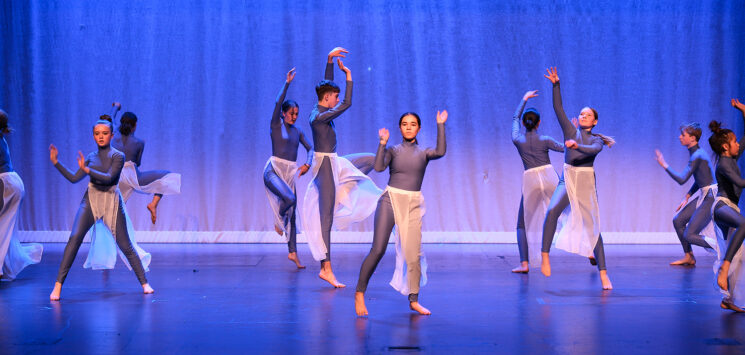
💃 Iowa Dance Collective takes the stage for a captivating dance performance — dynamic, precise, and not to be missed.
🎶 Live music by Meara Rose Oberdieck sets a warm, celebratory tone throughout the evening.
🎤 Student performances from Grades 1–4, led by Madeline Thomas — always the highlight for families and a heartwarming reminder of why we do this work.
🌸 Haiku Poetry Reading by Lawrence Eyre — a quiet, beautiful moment of reflection amid the celebration.
🏆 Alumni Achievement Awards — honoring the Maharishi School graduates who have gone on to make their mark on the world.
🎁 Bonus giveaways throughout the night — eligible for both in-person and online attendees.
🎉 Grand Prize Drawing — four winners announced live. You don’t have to be present to win.
The grand prizes: four reasons to get your tickets now
This year’s raffle prizes were selected to delight — whether you’re a family looking for a summer adventure, a food lover, a bargain hunter, or just someone who deserves a beautiful getaway.
PRIZE #1: Costco membership + $1,000 shopping spree
- Enter to win → This prize includes a one-year Costco Executive Membership plus $1,000 in credit to spend however you like — groceries, electronics, apparel, travel, prescriptions, or all of the above.
- The Executive Membership comes with a 2% annual reward on qualifying purchases, member-only fuel pricing on TOP TIER™ gasoline, discounts on home, auto, and business services, extended warranties on appliances and electronics, and access to Optical and Hearing Aid Centers.
- Whether you’re a household of one or a family of six, a Costco membership pays for itself quickly — and $1,000 to start you off makes this prize even sweeter.
PRIZE #2: Golden Dome Café — $500 gift account
- Enter to win → A $500 gift account at the beloved Golden Dome Café, right here in Fairfield — valid through December 2026 for breakfast, lunch, dinner, and groceries, all 100% organic.
- For those unfamiliar, Golden Dome Café is a Fairfield institution. Open Monday through Friday from 9:00 AM to 8:15 PM, it serves everything from fresh morning pastries, chai, and coffee to a full lunch buffet and dinner buffet.
- The menu rotates weekly and features globally inspired vegetarian dishes — think Spinach Pie, Panang Tofu Curry, Mattar Paneer, Veggie Burgers, and Baked Mac & Cheese.
- With $500 to spend, you could enjoy weeks of incredible, organic meals without a second thought.
PRIZE #3: Waterfront cabin in Moose Lake, Minnesota — six nights
- Enter to win → This one is truly special.
- A six-night stay in a luxurious, custom-built waterfront cabin overlooking Sand Lake in Moose Lake, Minnesota — generously donated by Head of School Brett Potash.
- The cabin was built by a renowned contractor for his own family, with exceptional Swedish-inspired architecture — vertical logs inside and out — and a 1954 stone hearth that gives the space a warm, timeless feel.
- The main floor features a large live-edge oak table (perfect for meals and games), a fully equipped modern kitchen, and expansive windows with west-facing sunset views.
- Three bedrooms, laundry, and thoughtful details throughout.
- The full basement has a ping-pong table, there’s a bunk room for kids, and a second-floor primary suite with a king bed.
- Outside, guests have full lake access with two kayaks, a paddle board, two kids’ kayaks, and a paddle boat.
- Boat rentals are available nearby — and you can even boat directly to Moose Lake Golf Club.
- Biking trails are within three miles, and state parks are a short drive away.
PRIZE #4: Camp Waziyatah —four weeks of overnight camp in Waterford, Maine
- Enter to win → Rated the #1 overnight camp in Maine, Camp Waziyatah is a co-ed sleepaway camp for kids ages 6–16 set on a private lake in Waterford, Maine.
- This prize covers four weeks of camp — a real tuition value of $8,450.
- Since 1922, Camp Waziyatah has been building stronger, more independent kids through a summer of outdoor adventure, community, and genuine connection.
- Days are full — six activity periods with more than 30 choices, including archery, horseback riding, sailing, water skiing, high ropes, zip line, and arts.
- The program is genuinely kid-directed: campers choose what they love and are encouraged to try something new every day.
- What sets Wazi apart is its culture. No tech, no cliques, no bullying — ever.
- Staff members know every camper by name. Lifelong friendships are the norm.
- Disney Channel featured Camp Waziyatah twice as the quintessential sleep-away camp for their show Bug Juice, and it consistently earns top reviews from families across the country.
- For families with kids who love adventure, community, and the outdoors, this prize is genuinely life-changing.
Why your ticket matters
Every raffle ticket purchased is a direct investment in the Maharishi School community. Proceeds support our dedicated teachers and staff and help provide tuition scholarships for families who need them most.
- Maharishi School is a non-sectarian, college-preparatory school serving 160 students from over 30 countries, from preschool through grade 12.
- 100% of graduates are accepted to accredited colleges and universities.
- The school’s programs in STEM, Project-Based Learning, the arts, and athletics have earned recognition at the state and national level — and it’s made possible by a community that shows up for one another.
Tickets: $30 each | $100 for four
Drawing: May 15, 2026 at 7:00 PM CDT No need to be present to win
Join us on May 15
Whether you come for the performances, the prizes, or simply the spirit of community, the Spring Fusion Live Event is an evening worth being part of.
📅 Friday, May 15
🕕 6:00 – 7:30 PM
📍 Henry Ogden Clark Auditorium, Maharishi School, Fairfield, Iowa
💻 Also available online
🎟️ Free admission — all are welcome
👉 Get your raffle tickets now — support our teachers, support our students, and you just might win something extraordinary. Buy Tickets
On April 20, MIU’s Maharishi Vedic Science department will launch a new podcast that aims to bring the university’s long‑standing work on consciousness and human development into a wider global conversation.
April 20 is known in the Vedic calendar as Akshaya Tritiya, the most auspicious day to launch new initiatives.
Pictured above: Owen Blake, podcast director, and Joe Holland, podcast host.
Titled Consciousness & Human Potential, the podcast features in‑depth conversations with scholars, researchers, educators, and practitioners exploring questions at the intersection of consciousness, science, education, and human flourishing.
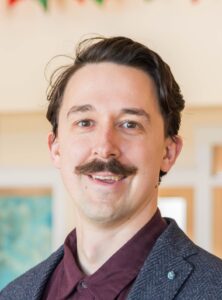
“This podcast places MIU at the center of one of the most significant and growing conversations of our time — the nature of consciousness, the science of human development, and what it truly means to realize our fullest potential as human beings,” said podcast director Owen Blake. Blake holds a PhD in Maharishi Vedic Science, serves as associate athletic director at MIU, and teaches in the MVS department.
“This has been a passion project for a long time,” Blake said. “I’m optimistic this podcast will place the flag of Maharishi Vedic Science within the global field of consciousness, spirituality, and meditation. Right now, MIU isn’t a major voice in the field, and I want to support us sharing more broadly the principles and ideas we care so much about.”
Produced on MIU campus in Fairfield, Iowa, the podcast will be available on YouTube and major podcast platforms, with potential future distribution through the Transcendental Meditation app.
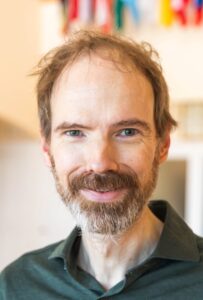
The podcast is hosted by Joe Holland, who holds a master’s degree in Maharishi Vedic Science from MIU and teaches courses in Consciousness and Human Potential. Before joining the MIU faculty, Holland worked in radio broadcasting in London, an experience he says prepared him for the long‑form, exploratory conversations the podcast will feature.
“I used to host radio shows many years ago, but that often involved talking about what my bosses wanted me to talk about, or reacting to what callers were interested in,” Holland said. “I’m looking forward to these expansive conversations and to diving into rich domains of knowledge with fellow explorers.”
Plans for the first season
The first episode features Ed Sarath, a longtime leader in integrating music, higher education, and contemplative practice. Sarath explores improvisation not only as a musical skill but as a way of engaging with life itself, touching on creativity, sports performance, and moments of shared awareness.
Another upcoming guest is Molly Beauregard, a longtime educator at the College for Creative Studies in Detroit and author of Tuning the Student Mind. In her episode, Beauregard and Holland explore consciousness‑centered education, student mental health challenges, the role of meditation in the classroom, and the deeper questions of identity and creativity.
The team
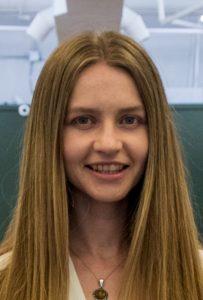
The podcast’s production team also includes Ruta Matuleviciute, a member of the Lithuanian Artists’ Association, with an MFA in Painting from Vilnius Academy of Arts and an MA in Enlightenment and Leadership from MIU. With experience in curatorial practice, website creation, and project management, she is the director of Visual Arts for the NextGen Arts for Enlightenment project.
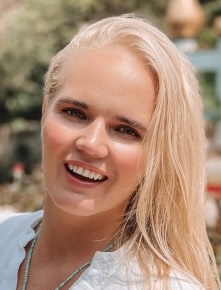
Rounding out the team is brand manager Marta-Kristi Põld, who brings a background in digital marketing and branding together with experience with Silicon Valley tech start-ups and Consciousness-Based businesses and nonprofits. She holds an MA in Consciousness and Human Potential from MIU.
A platform for dialogue and cross‑pollination
The timing of the podcast reflects broader cultural shifts, Blake said. Interest in meditation, spirituality, and consciousness research has expanded in recent years, driven in part by mental health concerns and renewed philosophical questions raised by advances in artificial intelligence.
“Questions about consciousness, the nature of reality, and what it means to be human have taken on new urgency,” Blake said. “MIU holds a distinctive position in this conversation, but our perspective is often underrepresented or misunderstood.”
“MIU holds a distinctive position in this conversation, but our perspective is often underrepresented or misunderstood.”
— Owen Blake
Rather than presenting a single authoritative viewpoint, the podcast is intended as a platform for dialogue and cross‑pollination, engaging voices from within and beyond MIU’s academic community. The team hopes it will encourage collaboration, inspire new research, and contribute to broader understanding of consciousness‑based approaches to education and human development.
Ultimately, Blake said, the goal is not only to expand MIU’s visibility, but to contribute meaningfully to conversations that are increasingly shaping education, science, and society at large.
“We want this to be a valued voice in the field,” he said, “and a place where real curiosity and meaningful inquiry can thrive.”
To follow the podcast:
- Instagram — Instagram page for the Maharishi Vedic Science Department, where announcements of episodes and “shorts” from each podcast episode will be posted:
- Maharishi Vedic Science department – YouTube – YouTube account for the MVS department where the podcasts will be posted.
Help the podcast get visibility — follow / subscribe to the accounts and interact with the content.
Information and photos provided by Owen Blake.
There’s something special about spring at Maharishi School. It’s not just the shift in seasons — it’s the return of science fair season, where months of curiosity, research, and innovation come to life.
And once again, our students have risen to the occasion with an incredible showing at both the State Science & Technology Fair of Iowa (SSTFI) and the Eastern Iowa Science & Engineering Fair (EISEF).
A season of innovation and recognition
From local competition to international recognition, our students demonstrated not only academic excellence but also creativity, persistence, and a deep commitment to solving real-world problems.
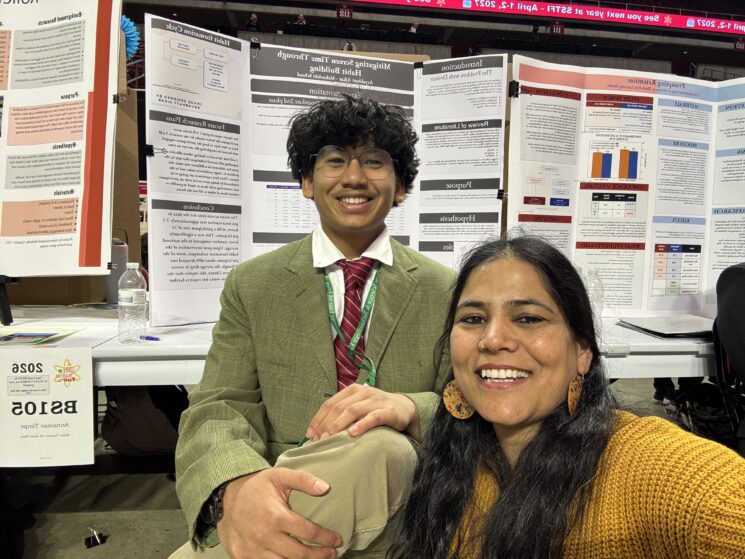
At SSTFI, Maharishi School students earned an impressive range of honors across multiple disciplines — from behavioral science and engineering to environmental studies and computer science. Highlights:
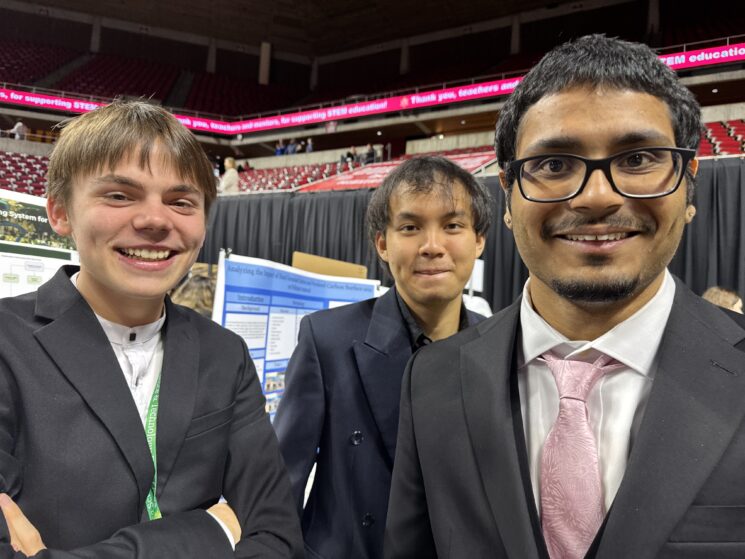
- Adham & Pranit earned 1st Place in Computer Science, earning multiple Loras College scholarships (to protect student privacy, this story uses first names only, in keeping with school policy)
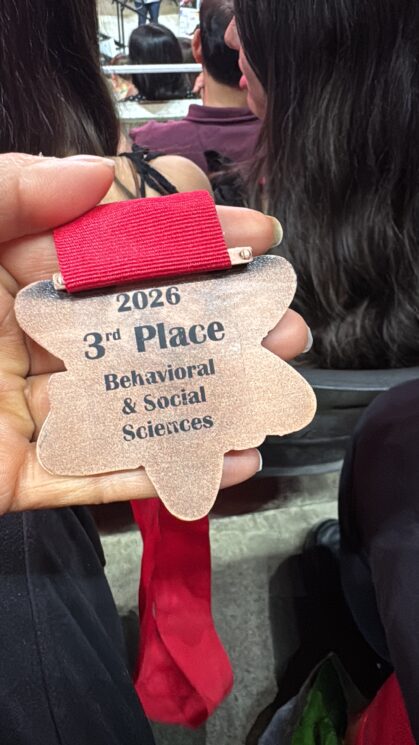
- Kyran secured 2nd Place in Behavioral & Social Science
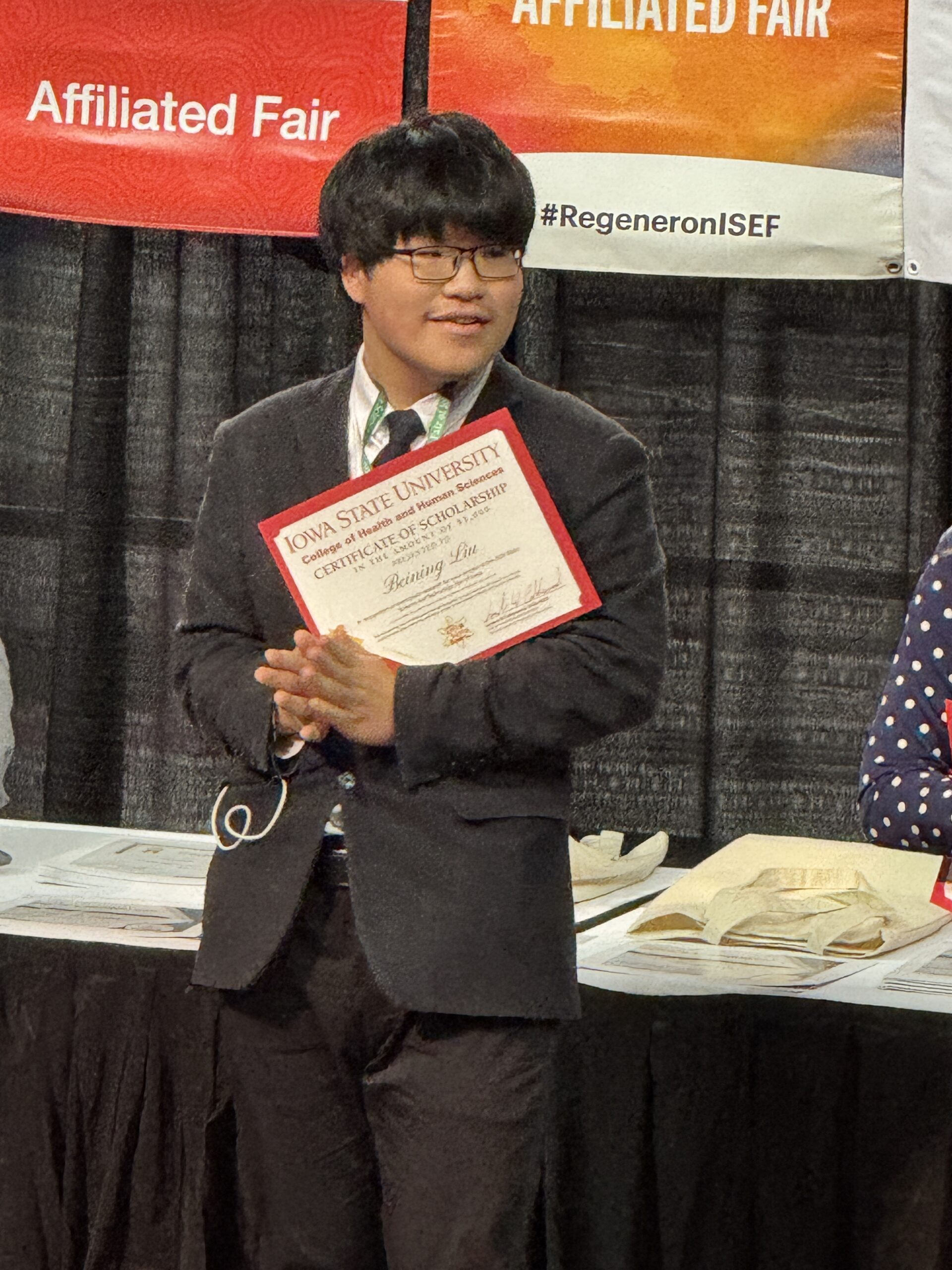
- Beining Liu placed 3rd in Behavioral & Social Science and earned a scholarship from Iowa State University
- Ken received multiple prestigious awards, including the NASA Earth Systems Science Award and Citadel Securities Innovation Prize
- Additional students earned recognition across categories, including microbiology, geosciences, food technology, and mathematics
Big ideas, real impact: students tackling tomorrow’s challenges today
Our students brought remarkable focus and purpose to this year’s science fair competitions, presenting innovative, real-world solutions to complex global challenges.
Projects ranged from a colorimetric lateral flow assay to detect neurodegeneration from tears (Phase II) to The Home Unleft, an education initiative addressing social barriers faced by first-generation immigrant students.
Others explored cutting-edge technology, including multimodal deep learning for early health risk screening using skin, tongue, and nail biomarker fusion, alongside practical sustainability tools like SortWise, a platform designed to guide smarter recycling.
Each project reflected not only scientific rigor but a deep commitment to impact, showcasing our students’ ability to think critically, communicate effectively, and apply their learning meaningfully.
These achievements reflect not only strong academic preparation but a willingness to explore, question, and innovate.
Taking it to the international stage
Our students also shone at EISEF, where their work was recognized among top young scientists from around the world.
- Antariksha stood out as a Senior Champion, earning the Regeneron Biomedical Sciences Award and a U.S. Air Force Award, marking her 7th year of participation
- Kostiantyn received the Ricoh Corporation Award
- Ken earned recognition from the Institute of Electrical & Electronics Engineers (IEEE)
- Huy and Nhi were honored with EISEF Honorable Mentions
- Additional students received awards and recognition across biological and physical sciences
These accomplishments highlight the depth of talent and dedication within our student body — and their ability to compete and excel on a global stage.
More than just awards
While the recognition is impressive, what matters most is the process behind it. Students spend months developing their ideas — asking questions, testing hypotheses, analyzing data, and refining their work. They learn how to think critically, communicate clearly, and persist through challenges.
This makes learning real.
At Maharishi School, this kind of experience is part of a larger vision — one that prepares students not only for college but for meaningful contribution. With our Consciousness-Based Education foundation and programs such as the Global Impact Diploma, students are encouraged to connect their academic work to purpose and real-world impact.
Looking ahead
As another spring science season wraps up, one thing is clear: our students are not just participating — they’re leading, innovating, and making their mark.
We couldn’t be prouder of their hard work, curiosity, and drive. And if this season is any indication, the future they’re stepping into is full of possibilities.
Nationally recognized education scholar and reform leader Dr. Pedro Noguera will serve as the commencement speaker for the Class of 2026. The graduation ceremony will take place on Saturday, June 20, beginning at 1:00 p.m., in the university’s iconic Golden Dome and will also be live‑streamed for remote viewers.
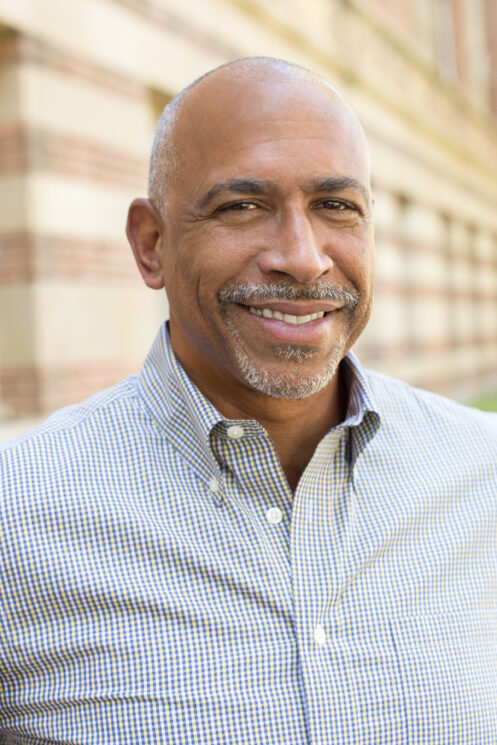
As part of the ceremony, MIU’s Board of Trustees will confer upon Dr. Noguera the degree of Doctor of Education honoris causa, in recognition of his lifelong service and leadership in advancing educational equity, engagement, and opportunity for the nation’s youth.
A sociologist whose work has focused on how schools can become more responsive to students’ academic, emotional, and social needs, Dr. Noguera is one of the country’s leading voices on urban education, school reform, and the social conditions that shape student success.
He is currently the Emery Stoops and Joyce King Stoops Dean of the Rossier School of Education at the University of Southern California.
The importance of student engagement and well-being
Throughout a career spanning more than four decades, Dr. Noguera has emphasized that academic achievement cannot be separated from student engagement and well-being.
In a recent interview, he noted that schools have “focused so much on measures of student achievement” while overlooking the fact that “the path to achievement is getting kids more engaged in learning.” He has consistently argued that meaningful learning begins when educators connect emotionally with students and inspire them to become self‑motivated learners.
Dr. Noguera has also spoken about the importance of practices that help students develop emotional regulation and inner stability — principles that resonate strongly with MIU’s educational philosophy.
“Transcendental Meditation is one tool that schools can draw upon to help kids get some control of their emotions.”
— Dr. Pedro Noguera
“Transcendental Meditation is one tool that schools can draw upon to help kids get some control of their emotions and bring calm to the individual and by extension the classroom,” he said. He emphasized that “anyone can meditate,” calling it an “incredible resource” in a society that focuses heavily on constant activity rather than cultivating “groundedness and peace of mind before we engage in doing.”
A prolific scholar, Dr. Noguera has written or edited 13 books and has published more than 250 research articles, chapters, and reports. His commentary on education frequently appears in major national media outlets, including The New York Times, The Washington Post, The Wall Street Journal, and the Los Angeles Times. He has also served on the boards of numerous national and local education organizations.
“His work exemplifies a commitment to educating the whole person.”
— Dr. Tony Nader
MIU President Dr. Tony Nader said the university is honored to welcome Dr. Noguera. “His work exemplifies a commitment to educating the whole person,” Dr. Nader said. “His vision speaks directly to the kind of graduates MIU seeks to educate — thoughtful, engaged, and grounded individuals prepared to uplift society.”
Members of the MIU community, families, and guests are invited to attend the ceremony in person or via live stream as the university celebrates its graduates and honors a distinguished leader in American education.
Click here for an interview with Dr. Noguera on Enjoy TM News.
* * * * *
Photographs: https://www.pedronoguera.com/.