
MIU leaders recently met with top officials from the University of Iowa to explore potential collaborations bridging integrative and conventional medicine. The discussions centered on developing innovative models of team-based clinical care, research, and education.
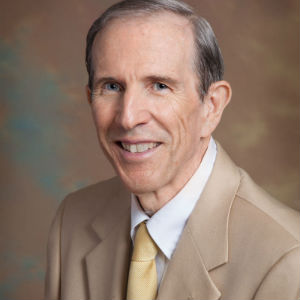
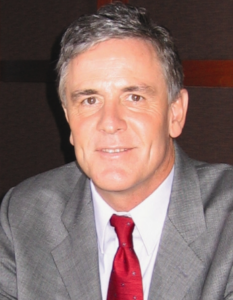
Pictured above: Dr. Robert Schneider, Dr. Denise Jamieson, Dr. Edith Parker, and Murali Prasanna, cofounder of Total Health Centers LLC.
Dr. Robert Schneider, Director of the Institute for Natural Medicine and Prevention and Dean Emeritus of the College of Integrative Medicine, met with Dr. Denise Jamieson, Vice President for Medical Affairs and Dean of the Carver College of Medicine, and Dr. Edith Parker, Dean of the College of Public Health.
Dr. Jamieson and Dr. Parker had visited MIU last November for an initial meeting, leading to this recent follow-up in January.
According to Dr. Schneider, the follow-up meeting concentrated on “practical implications and next steps” for collaboration among the UI Carver College of Medicine, the UI College of Public Health, and Total Health Centers — launching soon in Iowa City/Coralville.
“Very open and engaged”
“The University of Iowa leaders are very open and engaged,” Dr. Schneider said. “Our discussions focused on how integrative and systems-based approaches to health care can complement academic medicine and public health. This is an important step toward establishing cross-institutional partnerships.”
The discussions identified three primary domains of potential cooperation: clinical care, education, and research. Dr. Parker proposed that MIU present its work to the College of Public Health faculty as part of a “Spotlight presentation” or other college-wide session designed to highlight shared research and teaching interests.
Meanwhile, Dr. Jamieson connected the MIU team with several key figures at UI Health Care, including the UI Health Care Chief Clinical Strategy Officer and the Associate Dean for Medical Education Integration and Innovation at UI Carver College of Medicine.
These introductions, Dr. Schneider said, will help “explore collaborative care models and educational opportunities for medical and graduate students, residents, fellows, and faculty as well as continuing medical education for practicing clinicians.
Dr. Schneider described the interactions as “constructive and well aligned,” noting that both institutions emphasized the development of “a systems-oriented, team-based model that serves patients and advances the goals of both institutions.”
During the Fairfield visit, the UI delegation learned about MIU’s research on group meditation and its physiological and societal effects.
“These collaborations are about transforming health care — building on MIU’s leadership in whole-person health to create evidence-based models that can reach many people and elevate society’s health.”
— Dr. Robert Schneider
“The visiting leaders of medicine and public health in Iowa were impressed by the scientific foundation of group meditation for individual and collective stress reduction,” Dr. Schneider said.
He also shared MIU’s recent commentary in Nature Reviews Cardiology, which places the American Heart Association’s recommendation of Transcendental Meditation in a broader scientific context, grounded in decades of NIH-funded research by MIU scientists and collaborators at leading medical centers across the United States.
“These collaborations are about transforming health care — building on MIU’s leadership in whole-person health to create evidence-based models that can reach many people and elevate society’s health,” Dr. Schneider said.
Photo by Craig Pearson
Dr. Anne Dow and Dr. Cathy Gorini participated the Joint Mathematics Meeting, the world’s largest gathering of mathematicians, held January 4–7 in Washington, DC.
The annual meeting, sponsored by the American Mathematical Society in partnership with more than seventeen other mathematics organizations, offers an unparalleled range of research presentations, educational exchange, professional panel discussions, and gathering opportunities for colleagues, collaborators, and students.
Anne presented a paper describing a course entitled “Mathematics for Sustainable and Regenerative Living” that she developed for MIU students in the Sustainable and Regenerative Living major. She also participated in a panel discussion on using modeling in the undergraduate curriculum.
Cathy gave a presentation on the applications of topology in art, illustrating her talk with work from El Greco, Dalí, Picasso, M.C. Escher, and others.
The editor of the journal UMAP (Undergraduate Mathematics and Its Applications) invited Anne to write a paper on the project she described in her talk and submit it for publication.
“Both talks were well-received, with requests for more information,” Anne said. “We also gained highly useful knowledge from other talks and panel discussions about new directions in undergraduate mathematics teaching. We can apply this at MIU to better prepare our students for the job market.”
Dr. Dow chairs the MIU mathematics department. Dr. Gorini is a professor of mathematics and dean of faculty at MIU. She received an Award for Outstanding College Teaching from the Mathematical Association of America in 2001 and has published many articles on mathematics, especially geometry. Her most recent book, published in 2022, is Geometry for the Artist.
Financial support for Drs. Dow and Gorini to participate in this conference came from the Wege Foundation, of Grand Rapids, Michigan.
Almost exactly two years ago — from December 29, 2023, to January 12, 2024 — nearly 11,000 people representing 139 countries came together in Hyderabad, India, for a “10,000 for World Peace” assembly.
The assembly had several goals:
- To boost peace and harmony in society during a tumultuous period in history
- To build public awareness of the power of the Transcendental Meditation and TM-Sidhi programs to create this effect
- To inaugurate efforts to create several permanent 10,000 groups in India and Mexico.
The assembly may have succeeded in its first goal, according to new peer-reviewed published research. During the two weeks of the assembly, there were sharp, statistically significant drops in political violence across some of the world’s most conflicted nations — confirming a prediction the researchers had publicly announced in advance.
This outcome is known as the Maharishi Effect.
The underlying premise is that large meditation groups reduce social stress, thereby reducing social violence and disorder. According to the theory, the Maharishi Effect becomes objectively measurable when the size of the group equals or exceeds the square root of one percent of a given population. The number 10,000 exceeds the square root of 1% of the world’s population of just over eight billion people.
The research was conducted by Dr. Ken Cavanaugh, Director of Collective Consciousness Research at the Dr. Tony Nader Institute for Consciousness, and Dr. Lee Fergusson, professor of Maharishi Vedic Science, education, and environment, and founding director of the Maharishi Vedic Research Institute in Australia.
This study joins the more than 90 empirical studies conducted on the Maharishi Effect to date.
Focus on world’s most violent countries
To test the prediction, Cavanaugh and Fergusson obtained monthly data on political violence from January 2021 through January 2025 from the Armed Conflict Location & Event Data (ACLED) project, a database widely used in conflict research. According to its website, ACLED is “an independent, impartial global monitor that collects, analyses, and maps data on conflict and protest. ACLED provides detailed information to help identify, understand, and track patterns and trends in conflict and crisis situations around the world.”
Cavanaugh and Fergusson began by focusing on the world’s three countries with the most extreme levels of internal disorder and violence. According to ACLED, those countries were Palestine, Myanmar (Burma), and Syria.
Sharp trend reversal and statistical strength
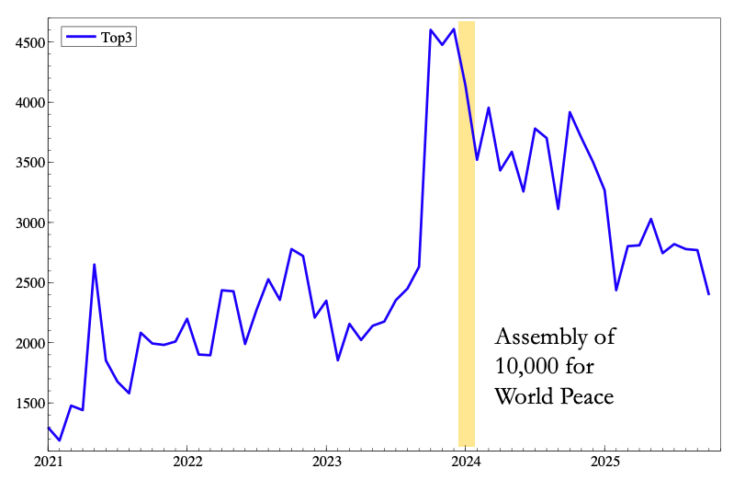
Using state-of-the-art statistical methods, Cavanaugh and Fergusson tracked how monthly violent events changed during and after the Hyderabad assembly. They found that violence across the three countries was rising steeply before the assembly, leveled off around the time of the assembly, and then steadily declined after the assembly, with the decline continuing for another year, through January 2025.
“The data strongly supported the research hypothesis,” Cavanaugh said. “The observed reversal was highly statistically significant, with a p-value of less than 0.001. This means that the chances that this reduction was a fluke are less than one in a thousand.”

Additional data, stronger trend
After the article was published, Cavanaugh and Fergusson expanded the study. They looked at nine additional months of data, through October 2025, and found that the downward trend not only continued but grew stronger — from December 2023 to October 2025, political violence in Palestine, Myanmar, and Syria plummeted 48%.
“This was an even larger and more robust decline than the 29.2% we initially reported,” Cavanaugh said. “A 48% reduction is remarkable in countries that had been experiencing some of the most extreme levels of collective political violence in the world.”
Similar patterns across 30 countries and globally
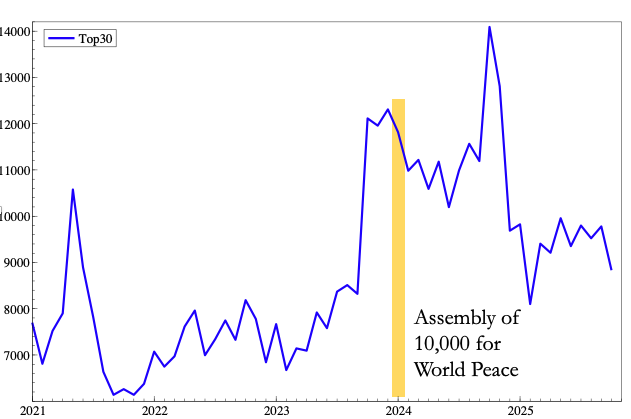
Cavanaugh and Fergusson expanded the study further still. They looked at the 30 countries with the highest levels of internal political violence, again using ACLED data from January 2021 through October 2025.
They found a similar pattern. Monthly violence climbed steeply through 2023, then flattened out and began to decline after the Hyderabad assembly, with only a brief two-month spike in October–November 2024 when group participation in existing large Super-Radiance groups in India dropped during national holidays.
Overall collective violence across these 30 countries fell by 28.2% between December 2023 and October 2025, a highly statistically significant outcome.
What caused these changes? The need for a new paradigm
“The idea that a meditation group in one location could affect violence worldwide challenges conventional scientific assumptions,” Cavanaugh acknowledges. “The dominant materialistic paradigm of modern science can’t plausibly explain these results. But they are consistent with a new theoretical framework in which consciousness is primary.”
This framework derives from Maharishi Vedic Science and the ongoing work of Dr. Tony Nader, which postulates that “consciousness is all there is.”
“The idea is that large meditation groups enliven the universal field of pure consciousness at the basis of society’s collective consciousness,” Cavanaugh said. “This is the simplest, most parsimonious explanation for the wide range of positive societal changes we observe with the Maharishi Effect.”
“Small islands of coherence”
Situating the findings in a broader scientific context, Cavanaugh cites Nobel laureate chemist Ilya Prigogine, who wrote, “When a complex system is far from equilibrium, small islands of coherence in a sea of chaos have the capacity to shift the entire system to a higher order.”
“When a complex system is far from equilibrium, small islands of coherence in a sea of chaos have the capacity to shift the entire system to a higher order.”
— Ilya Prigogine, Nobel laureate chemist
“The assembly of 10,000 for world peace functioned as just such an island of coherence in a world that is clearly far from equilibrium,” Cavanaugh said.
“These results strengthen the case for establishing permanent 10,000 groups in India and other regions as a practical strategy for reducing violence and enhancing societal harmony,” Cavanaugh said. “The science is clear: When we systematically enliven collective consciousness, we can reverse negative social trends — even in the most violent places on Earth.”
Groups in India expanding
After the 10,000 for World Peace Assembly, the number of participants in the Yogic Flying groups throughout India continued to expand. Click here for details about the progress on this project. Presenters include:
- Dr. Tony Nader, Patron of Global Super-Radiance, head of the global Transcendental Meditation organizations, and president of MIU
- Dr. John Hagelin, quantum physicist, researcher, and international president of the Global Union of Scientists for Peace
- Dr. Luis Alvarez, operational director of Super-Radiance programs
- Dr. Alison Plaut, founder and director of the Himalayan Devis project
- Dr. Howard Settle, administrative director of global Super-Radiance programs
The hallways of Maharishi School are buzzing with more than just the usual academic energy this week. On Saturday, December 6, five of our students traveled to the FBLA District 5 competition at Fairfield Middle School, and the results were nothing short of spectacular.
Facing off against seven other schools, our students secured a staggering number of top-three finishes. While the trophies and certificates are a point of immense pride, they represent something much deeper: the cultivation of the next generation of conscious, capable business leaders.
The winners’ circle
Our small but mighty team proved that focus and preparation are the keys to success. Please join us in celebrating:
- Sohani:
- 1st place: Introduction to Business Concepts
- 2nd place: Introduction to Marketing Concepts
- Clary:
- 1st place: Public Administration
- 2nd place: Agribusiness
- Sonhi
- 1st place: Real Estate
- 1st place: Securities and Investments
- Camille:
- 1st place: Marketing
- 2nd place: Advertising
- CiCi:
- 3rd place: Visual Design
- Team event (Camille & Clary):
- 4th Place: Graphic Design
- 4th Place: Graphic Design
What is FBLA?
For those new to the name, Future Business Leaders of America (FBLA) is the largest business career and technical student organization in the world. It is designed to bridge the gap between the classroom and the corporate world, helping students in middle school and high school develop “aggressive” business leadership skills.
FBLA is built on three main pillars: service, education, and progress.
1. Real-world competitive events
The competitions our students just conquered are not just “tests.” They are industry-validated events that simulate the workforce. Students can compete in over 60 categories, ranging from Artificial Intelligence and Coding to Public Speaking and Financial Math. These events require students to apply classroom concepts to real-world scenarios, often presenting their solutions to a panel of judges who are professionals in their fields.
2. Leadership development
FBLA isn’t just for future CEOs. It’s for anyone who wants to lead with confidence. Members have the opportunity to hold officer positions at the local, state, and even national levels. They attend leadership conferences where they network with thousands of peers from across the country, learning how to direct a group, manage projects, and communicate effectively.
3. Scholarship and career opportunities
Being a member of FBLA opens doors. Many universities recognize the dedication required to succeed in this program, offering exclusive scholarships to active FBLA members. Additionally, through their Business Achievement Awards (BAA) program, students can build a professional portfolio that gives them a significant head start on college applications and internships.
Why FBLA fits at Maharishi School
At Maharishi School, we often talk about “cultivating the knower.” FBLA provides the perfect “field of action” for this. By combining our Consciousness-Based Education — which develops the student’s inner clarity and creativity — with the practical, high-stakes environment of FBLA, our students learn to perform under pressure with a sense of calm and focus.
“Watching our students take home these awards is wonderful,” says Brett Potash, Maharishi Head of School. “But watching them walk into a room of experts and speak with such poise and deep understanding of global business issues is the real victory.”
What’s next?
This District win is just the beginning. Many of our students have now qualified for the State Leadership Conference, where they will compete for a chance to represent Iowa at the National Leadership Conference this summer.
Did you know that there is a K-12 Consciousness-Based™ education opportunity? To learn more about Maharishi School, visit www.maharishischool.org
* * *
Rhian Tomassetti is the MIU News editor for Maharishi School